Dental office HVAC in San Diego costs more than a comparable general office system because the scope is different, not because someone marked up the same rooftop unit. That extra work pays for ASHRAE 170 air change rates, properly zoned operatories, HEPA filtration for aerosol-generating procedures, a separate sterilization zone, and pressure relationships that meet Cal/OSHA infection control standards. Skip that scope and you either fail a state inspection or recirculate aerosols through staff and patient areas.
Climate Pros SD matches practice owners with licensed HVAC companies. We do not design clinics, set a dental-TI price list, or promise inspection outcomes.
Here’s what dental practice owners across Scripps Ranch, Sorrento Valley, Mira Mesa, La Jolla, and Hillcrest medical clusters actually need to know.
ASHRAE 170: the standard your HVAC needs to meet
ASHRAE Standard 170 (Ventilation of Health Care Facilities) is the design standard California Department of Public Health references for licensed dental and medical facilities. The 2021 update added explicit guidance for dental operatories that didn’t exist before. Here’s what matters:
Air changes per hour (ACH):
| Space type | Total ACH | Outdoor air ACH | Pressure |
|---|---|---|---|
| Dental operatory | 6 minimum | 2 | Neutral or negative |
| Sterilization (dirty side) | 10 minimum | 2 | Negative to corridor |
| Sterilization (clean side) | 4 minimum | 2 | Positive to dirty side |
| Waiting room | 6 minimum | 2 | Neutral |
| Lab / x-ray | 6 minimum | 2 | Neutral |
A typical 1,800 sqft general office in San Diego runs 1 to 2 ACH on standard HVAC. A dental office at 1,800 sqft needs 6 ACH in operatories with proper outdoor air mixing. That’s 3 to 6 times the ventilation rate, which drives most of the cost difference.
Why ACH matters in 2026: post-COVID, Cal/OSHA Aerosol Transmissible Diseases (ATD) standard applies to dental practices performing aerosol-generating procedures, which is essentially every operatory. ATD requires either source control (high-volume evacuation at the patient) plus engineering controls (air changes and filtration), or full negative pressure isolation. Most San Diego dental offices comply through the source control plus engineering controls path, which means your HVAC has to actually hit those ACH numbers.
Pressure relationships and why they’re hard to get right
Code-required pressure relationships in a dental office:
Sterilization room: dirty side negative to corridor, clean side positive to dirty side. This means you need a small zone with two separate pressure controls, often a transfer grille between the two sides, and a sealed door system.
Operatories: ASHRAE 170 allows neutral or negative. Most San Diego designs specify slightly negative (-0.01 to -0.03 inches w.c.) to the corridor so aerosols stay in the room. Some designs specify neutral with directional airflow from clean to dirty zones inside the room.
X-ray and lab: typically neutral.
The hard part is maintaining these relationships when doors open, when the building HVAC cycles, and when adjacent tenants run their own HVAC. San Diego dental offices designed for negative operatories often run slightly positive most of the day because the building’s central HVAC overpowers the dental zone’s exhaust fan.
Fix: dedicated dental HVAC zone with its own air handler, dedicated exhaust path, and constant-volume or variable-volume controls that maintain pressure regardless of building HVAC behavior. This is the single biggest reason dental HVAC costs more than office HVAC.
HEPA filtration and what it actually does
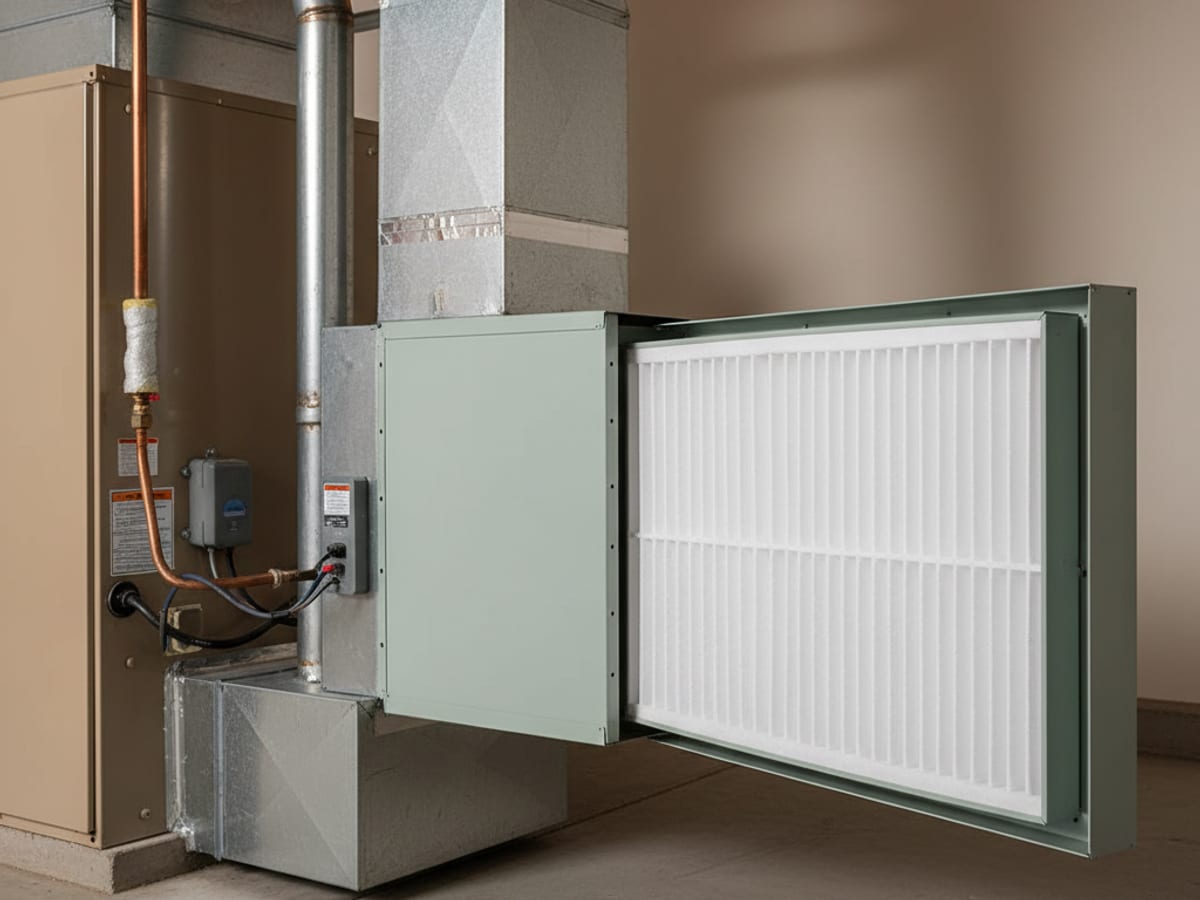
ASHRAE 170 requires MERV 14 minimum on supply air for dental operatories. Cal/OSHA ATD effectively requires HEPA (MERV 17, 99.97 percent at 0.3 microns) on supply or in-room HEPA filtration for aerosol-generating procedures.
Options used in San Diego dental offices:
- Centralized HEPA in the AHU. Best filtration, highest first cost, requires the air handler to be sized for the extra static pressure.
- In-room HEPA recirculation units. Lower install cost, works with existing HVAC, requires regular filter changes.
- MERV 14 supply plus portable HEPA. Code minimum plus extra aerosol protection during high-risk procedures.
Option 2 is the most common retrofit path because it works with existing HVAC. Option 1 is standard for new construction and major tenant improvements.
Filter cost reality: HEPA filters in dental applications need quarterly inspection, then semi-annual to annual replacement depending on use. Climate Pros SD does not publish a per-operatory filter budget. Ask the matched contractor for filter model, change interval, and a written replacement quote.
What a San Diego dental HVAC project actually costs
Climate Pros SD does not publish a dental-TI job table. Real 2026 bids depend on existing equipment, ACH gaps, HEPA path, and whether this is a retrofit after a failed inspection or a planned tenant improvement.
Ask every bidder for:
- Dedicated zone plus controls versus a new dedicated air handler with HEPA
- How they will prove ACH and pressure relationships after install
- Filter schedule and who owns replacements
- Mechanical permit, engineering stamps, and CDPH facility review if your clinic type needs it
- Coastal extras (La Jolla, Coronado): corrosion-resistant coils
- Surgery-room extras if you do procedures that trigger higher ASHRAE 170 ACH
Higher costs apply at coastal locations (salt air) and at any practice doing surgical procedures requiring surgery-room compliance (much higher ACH).
Decision framework: what kind of practice you are determines what HVAC you need
General dentistry, no surgery, low-volume aerosol procedures: ASHRAE 170 operatory compliance, MERV 14 supply, dedicated sterilization zone.
General dentistry with regular aerosol-generating procedures (ultrasonic scaling, high-speed drilling): above plus HEPA filtration (centralized or in-room) and verified pressure relationships.
Pediatric or special-needs dentistry with nitrous: above plus dedicated nitrous scavenging exhaust per Cal/OSHA.
Oral surgery, periodontal surgery, sedation: ASHRAE 170 surgery requirements (15 to 20 ACH, positive pressure to corridor, dedicated AHU). This is closer to an ambulatory surgery center than a typical dental office.
For most San Diego TI projects, getting HVAC scope right at design is cheaper than doing it as a corrective project after a failed inspection. Get an HVAC contractor involved before architectural plans go to plan check.
FAQs
How much does dental office HVAC cost in San Diego?
Climate Pros SD does not publish a 4-to-6-operatory price. Compliant HVAC costs more than a comparable general office because of dedicated zoning, higher air change rates, HEPA filtration, and sterilization pressure controls. Ask the matched licensed contractor for a written scope after a site walk.
Does ASHRAE 170 apply to my dental office?
Yes if your office is licensed by California for dental services, which is every practicing dental office. ASHRAE 170 is the design reference standard used by CDPH and most San Diego County plan check departments for dental and medical TI work.
Do I need HEPA filtration in a dental operatory?
Cal/OSHA ATD requirements effectively mandate HEPA-equivalent protection for aerosol-generating procedures, which includes ultrasonic scaling and most restorative work. You can meet this through centralized HEPA in the AHU or in-room HEPA recirculation units, but it has to be in place somewhere.
What air changes per hour do I need in a dental operatory?
6 ACH total with 2 ACH outdoor air per ASHRAE 170. Sterilization dirty-side needs 10 ACH. Surgery operatories need 15 to 20 ACH. Most existing general office HVAC delivers 1 to 2 ACH, which is why retrofits usually require dedicated zoning.
Can I retrofit my existing office HVAC to meet dental code?
Sometimes yes, often no. Adding a dedicated dental zone with its own controls to an existing system works for some buildings. Hitting 6 ACH with proper outdoor air usually requires a dedicated dental air handler. A site walk-through with measurements is the only honest way to know.
How long does dental HVAC equipment last in San Diego?
With proper maintenance, 12 to 18 years for the air handler is a common expected service life, not a warranty from Climate Pros SD. HEPA filters need semi-annual to annual replacement. Operatory diffusers and grilles last the life of the building. Coastal sites (La Jolla, Coronado, Pacific Beach) see shorter coil life due to salt-air corrosion.
Who pulls the permit for dental HVAC work in San Diego?
The HVAC contractor pulls the mechanical permit. For new construction or major TI, the project’s general contractor coordinates plans signed by a California-licensed mechanical engineer. CDPH may also require a separate facility plan review for licensed dental clinics.
What rebates apply to dental office HVAC?
SDG&E commercial efficiency rebates can apply to high-efficiency air handlers, VFD-controlled exhaust, and high-MERV filtration upgrades. Dental-specific rebates aren’t separated out. Amounts are set by the current SDG&E business programs, not by this page. Confirm eligibility on sdge.com before you treat a rebate as part of the bid.
Related service: commercial HVAC.
When to call us
The company you are matched with handle dental office HVAC retrofits, tenant improvements, and code-compliance work across San Diego County. If your practice is failing pressure tests, planning a TI, or opening a new location, call (442) 777-6440 or check our indoor air quality service page for related scope. We also publish commercial HVAC for small businesses for general office HVAC context, and practices with an imaging or server closet should read server room cooling, since that equipment load runs after hours when the office system is off.