Carlsbad homeowners often enjoy mild temperatures year-round, which means your furnace might not work as hard as units in inland communities. However, this doesn’t make it immune to problems. In fact, coastal conditions like salt air exposure and infrequent use create unique challenges that can lead to unexpected repair needs and affect your system’s lifespan.
Climate Pros SD matches you with licensed HVAC companies. We do not repair equipment, own trucks, or publish repair prices.
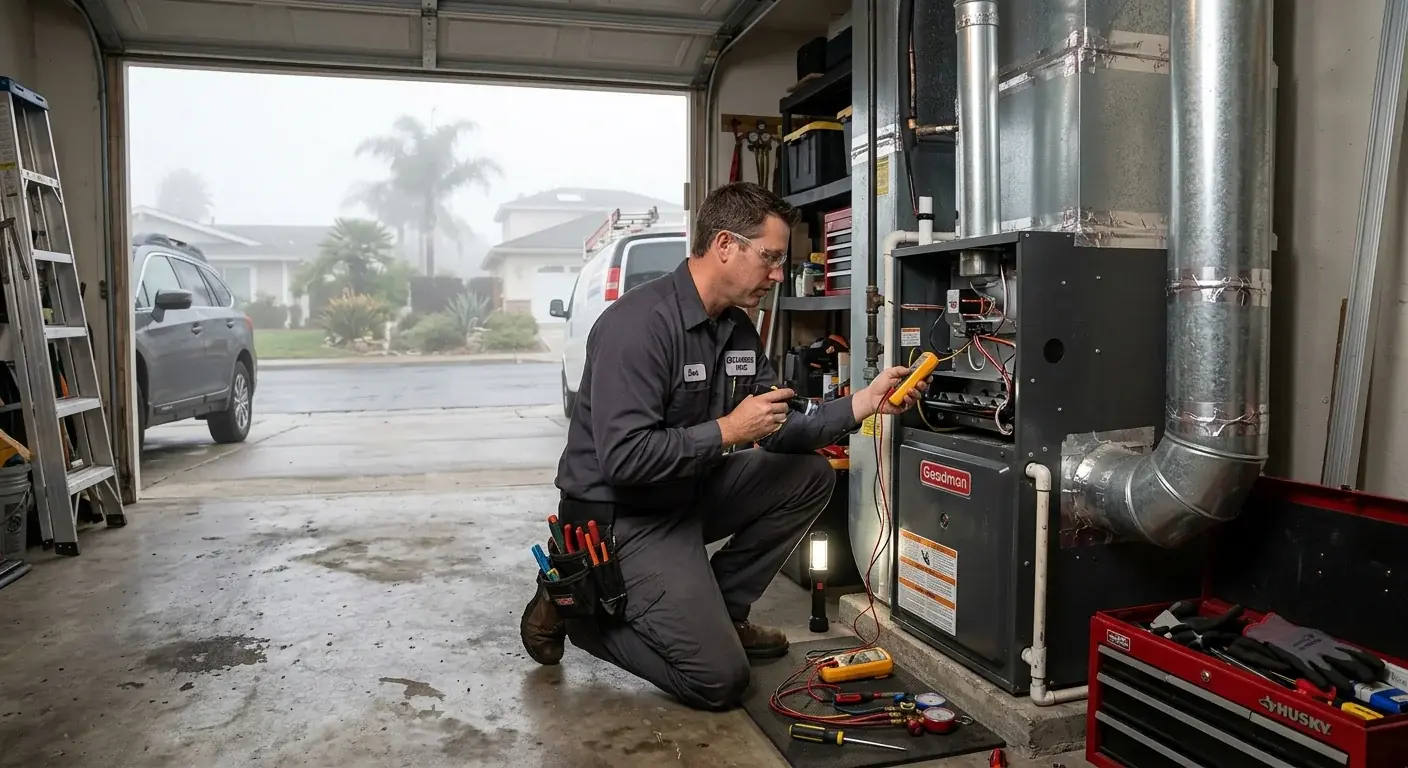
Do coastal furnaces even need repairs?
Absolutely, coastal furnaces need repairs, sometimes for reasons unique to their environment. While your Carlsbad furnace might only run for a few weeks out of the year, that doesn’t mean it’s exempt from wear and tear. The dry season might offer a reprieve, but the moist, salt-laden air characteristic of our coastline can be surprisingly corrosive to metal components.
Homes located west of I-5, closer to the ocean, experience more direct salt air exposure. This can lead to faster degradation of external and internal metal parts. Even homes east of I-5 still contend with elevated humidity levels and the general effects of being near the coast, coupled with prolonged periods of inactivity for their heating systems.
A furnace that sits unused for months can develop issues from lack of lubrication, dust accumulation, or even pest intrusion. When winter finally arrives and you flip on the thermostat, you expect reliable heat, not a breakdown. That’s why even in Carlsbad’s mild climate, regular maintenance and timely furnace repair are crucial for ensuring your system is ready when you need it most.
Common furnace problems caused by salt air and low use
The unique environment of Carlsbad homes dictates a different set of common furnace issues compared to more arid or colder regions. Salt air and low usage patterns combine to create specific failure modes in coastal heating systems.
Corrosion
This is arguably the biggest culprit for furnaces near the ocean. Salt particles carried in the air are highly corrosive to metals. Techs often find rust on furnace cabinets, burners, heat exchangers, and electrical terminals. A rusted heat exchanger is a critical safety hazard, as it can crack and leak carbon monoxide. Corroded wiring can lead to intermittent electrical faults or complete system shutdowns. Homes directly on the coast (like in zip codes 92008 or 92011) are most susceptible, but even a few miles inland (92009, 92010) can still see these effects over time.
Seized components
Furnaces have moving parts like blower motors and inducer motors. When these components sit idle for extended periods, especially in humid conditions, they can seize up. Bearings can dry out, or minor corrosion can bind the motor shaft. This often results in a loud hum when the furnace tries to start, followed by no air movement.
Ignition failures
The components responsible for igniting the gas, such as the pilot light or hot surface igniter, are delicate. Salt air can cause corrosion on the igniter surface or associated wiring, preventing it from heating up sufficiently. Similarly, dust and debris accumulation during periods of low use can clog pilot orifices or obscure flame sensors, leading to ignition lockout errors.
Pest intrusion
A warm, dark, infrequently disturbed furnace cabinet can be an inviting home for spiders, insects, or even small rodents. They can chew through wires, build nests that block airflow, or interfere with delicate control components. This is more common in homes that don’t regularly run their HVAC systems for cooling during warmer months, allowing pests undisturbed access.
These specific challenges highlight why a general furnace inspection might miss key issues in a Carlsbad home. The pros we connect you with look for these coastal-specific problems.
What a 2026 repair quote in Carlsbad zip codes should include
Understanding furnace repair in Carlsbad means knowing which jobs come up, not a published menu. Actual costs depend on parts, labor, and specific system diagnostics. Climate Pros SD does not publish dollar ranges for 92008, 92009, 92010, or 92011.
Typical line items:
- Igniter replacement: furnace isn’t lighting, often due to corrosion or simple wear.
- Flame sensor cleaning or replacement: a corroded or dirty flame sensor can mistakenly signal that there’s no flame.
- Blower motor replacement (seized): a motor seized from inactivity or minor rust. Cost varies by motor type (single-speed, multi-speed, variable-speed).
- Inducer motor replacement: this motor helps vent exhaust gases. If it seizes or corrodes, your furnace won’t start for safety reasons.
- Minor component replacement / rust remediation: corroded wire harness, a specific relay, or surface rust on a non-critical part.
- Heat exchanger: a major safety finding. Age plus corrosion often triggers a replace-vs-repair decision, as discussed below.
Ask for an upfront, detailed estimate after a thorough inspection. Emergency service availability is the matched company’s, quoted before they roll. This brand does not guarantee same-day arrival.
Repair vs. replace for an older, coastal furnace
Deciding whether to repair your existing furnace or invest in a new one is a common dilemma for Carlsbad homeowners, especially with older units exposed to coastal conditions. While the mild climate means your furnace might not have accumulated as many runtime hours as inland systems, its age and exposure to salt air are critical factors.
Here’s how to approach the decision:
- Age of the furnace: Furnaces generally last 15-20 years. If your coastal furnace is approaching or well into its service life, even with lighter use, it’s nearing the end of its projected lifespan. Components naturally degrade over time, and a major repair on an aging unit might be a short-term fix.
- Frequency and cost of repairs: Are you calling for service every year? Is the current repair cost significant? A good rule of thumb is the “50% rule”: if the repair cost is 50% or more of the cost of a new system, replacement is generally the more economical choice in the long run. Use the actual quotes.
- Extent of corrosion: For coastal furnaces, widespread corrosion, especially affecting critical components like the heat exchanger, is a strong indicator for replacement. A compromised heat exchanger is a safety hazard. Attempting to repair heavily corroded internal structures is often impractical and won’t prevent future corrosion-related issues.
- Energy efficiency: Older furnaces are significantly less efficient than today’s models. Even if your furnace isn’t running constantly, a new high-efficiency model can use less gas during the weeks you do use it. This page does not publish a dollar savings.
- Warranty: A new system provides years of manufacturer and installing-contractor coverage. Climate Pros SD does not warrant equipment.
When considering a replacement, it’s also a good time to think about your home’s overall heating and cooling needs. You might also be considering your options for AC repair in Carlsbad for 2026, making a combined decision more strategic. When choosing an HVAC professional for a significant investment like a furnace replacement, always verify their license with the California Contractors State License Board (CSLB) at cslb.ca.gov. The matched licensed contractor installs the equipment.
When a heat pump makes more sense than a new furnace
For many Carlsbad homeowners, especially those replacing an older, ailing furnace, a heat pump system often represents a smarter investment than simply installing a new conventional furnace. The mild San Diego climate is well suited for heat pump technology.
A heat pump provides both heating and cooling from a single, highly efficient unit. In heating mode, it extracts heat from the outdoor air (even cool air has heat energy) and transfers it indoors. In cooling mode, it reverses the process, acting like a traditional air conditioner. This dual functionality means you consolidate your HVAC systems.
Here’s why a heat pump might be ideal for your Carlsbad home:
- Energy efficiency: Heat pumps move heat rather than burning fuel. That can cut energy use compared with even high-efficiency furnaces, especially when you use the same machine for cooling. DOE states actual savings vary with usage.
- Coastal resilience: While not entirely immune to salt air, many heat pump outdoor units are designed with enhanced corrosion resistance. They also eliminate the combustion-related issues (like corroded heat exchangers or igniters) that plague gas furnaces.
- Environmental benefits: By reducing natural gas consumption, heat pumps have a lower carbon footprint. Do not budget a 2026 federal 25C credit, a TECH single-family reservation, or a HEEHRA single-family rebate as currently open money. Section 25C does not apply to property placed in service after December 31, 2025. TECH stopped new single-family reservations November 14, 2025. HEEHRA single-family applications were not being accepted as of February 24, 2026. SDG&E Golden State retail rebate offerings have ended. Recheck status before purchase.
- Consistent comfort: Heat pumps deliver a steady warmth rather than a blast of hot air. They’re excellent at maintaining a comfortable indoor temperature without wide fluctuations.
If your furnace is at the end of its life, exploring a heat pump is highly recommended. You can learn more in our guide to heat pump installation in Carlsbad coastal.
When to call us
When you notice your furnace acting unusual, making strange noises, or failing to heat your Carlsbad home, it’s time to call. Delaying furnace repair can lead to more extensive damage or safety hazards. The pros we match know how to diagnose coastal-specific furnace issues.
Call us at (442) 777-6440 to get matched with a licensed pro. Or read the full breakdown on the furnace repair in Carlsbad service page, which covers the cool-snap rush pattern and why a heat pump is worth pricing alongside any furnace replacement quote.