A heat pump outdoor unit caked in ice means the system has stopped pulling useful heat from outdoor air. Indoors you feel cooler registers or a slow drop even though the thermostat says Heat. In San Diego County this is uncommon on the immediate coast and more familiar on inland cold mornings. It is almost always one of four problems, not “the climate is too cold for heat pumps” by itself.
Climate Pros SD matches you with licensed HVAC companies. We do not repair equipment, own trucks, or publish repair prices.
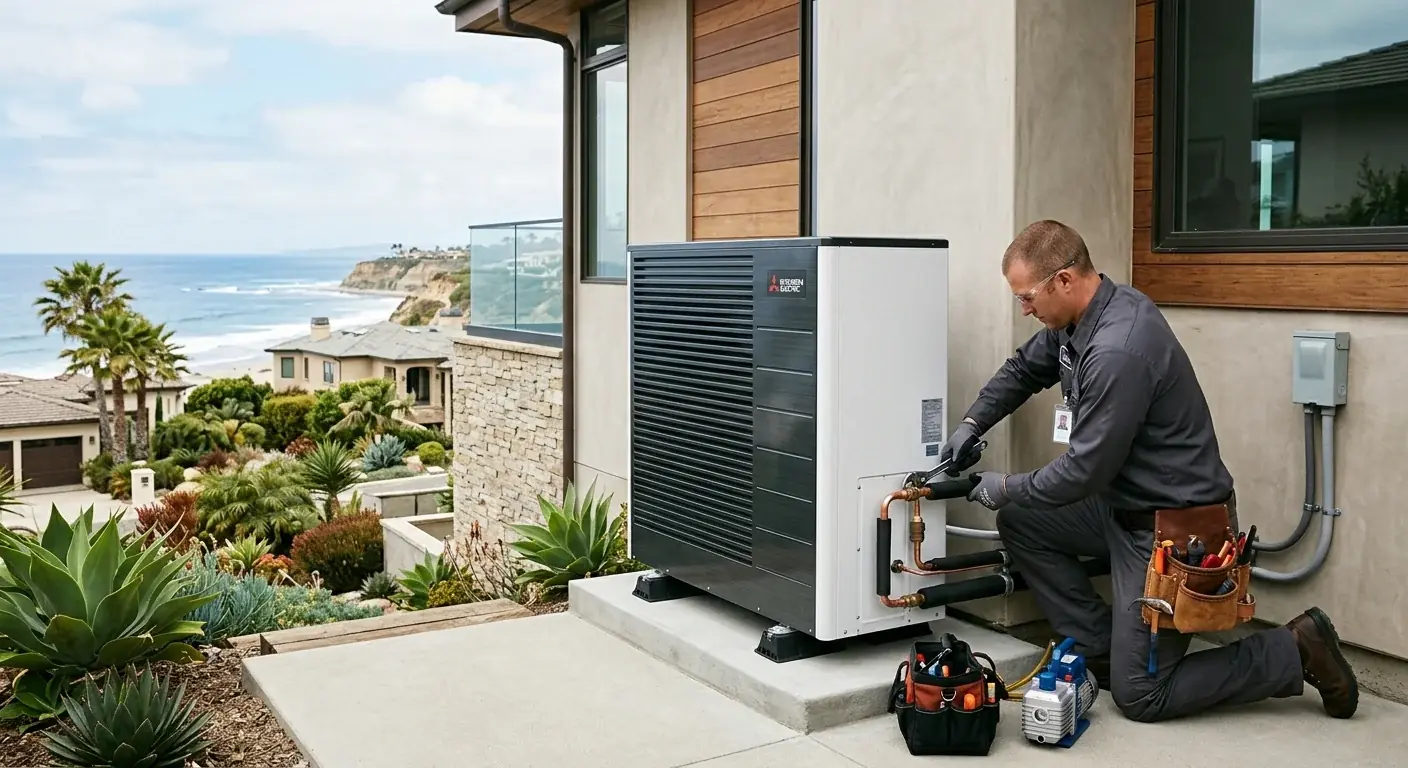
What are the four causes?
| Cause | Homeowner fix? |
|---|---|
| Defrost cycle failure (board or sensor) | No |
| Low refrigerant from a slow leak | No |
| Blocked airflow over the outdoor coil | Often yes |
| Outdoor temperature sensor failure | No |
If you can see ice on the fins or icicles hanging from the cabinet, shut the system off at the thermostat and let it thaw before you run it hard. Running a frozen unit can damage the compressor and fan. Natural thaw takes hours. Do not chip the coil.
How does defrost work?
A heat pump in heating pulls heat from outdoor air at the outdoor coil. When that coil drops below freezing, moisture freezes on it. The system reverses for a short cycle, sending warm refrigerant to the outdoor coil to melt ice. Steam off the unit during that cycle can be normal.
Defrost is triggered by time plus a coil sensor, or on older units a pressure switch. When those signals fail, ice wins.
NWS San Diego describes ocean moderation near the coast and warmer summer days in nearby valleys. Coastal yards (Carlsbad, Encinitas, La Jolla, Coronado) ice a healthy unit less often than inland yards in Escondido, San Marcos, Vista, El Cajon, Santee, and Ramona. Mountain communities are a different heating mix; do not assume every Julian or Alpine house even has a heat pump.
Coastal units can sit in cooling for months. A defrost part that never ran in summer can fail on the first heat call. Inland units wear those parts by using them.
1. Did the defrost cycle fail?
The board or coil sensor failed, so the system never triggers defrost. The unit keeps heating while the coil ices.
Tell. Fine until the first cold morning, then ice that does not recover. Indoor air is cool.
Diagnostic. A tech forces defrost with a service jumper. If the board never triggers, the board is the suspect. If the board triggers but the sensor does not read a cold coil, the sensor is the suspect.
2. Is refrigerant low from a slow leak?
Low charge can make the outdoor coil run colder than design. Frost then outruns defrost.
This shows up more on coastal coils where salt air attacks fins and copper.
Tell. Ice builds over days, not one night. Heat has felt weaker for weeks. Possible hiss at the lines.
Diagnostic. Pressures and superheat or subcool. Then leak detection.
If the leak is in the coil, ask for coil repair versus full outdoor replacement on the same visit. R-22 production and import have been banned since January 1, 2020; existing systems may still be serviced with recycled or previously produced refrigerant (EPA).
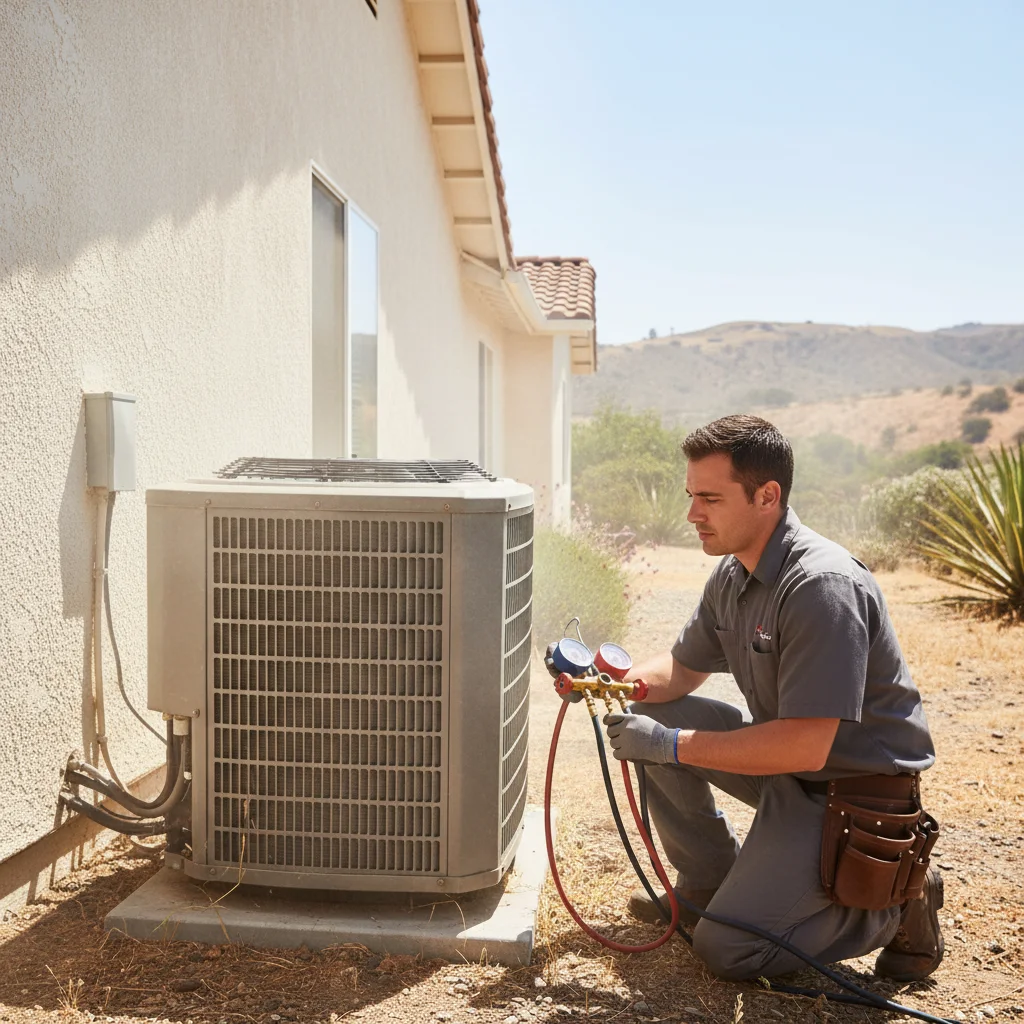
3. Is airflow blocked over the outdoor coil?
The fan has to pull air through the fins. Blocked airflow makes the coil run too cold.
Common here: packed leaves and blossoms, a fence or hedge too close, a clogged indoor filter, a pet bed against the cabinet.
Tell. Visible debris. Fan running with weak airflow out the top.
Fix. Power off. Clear debris by hand. Hose fins gently from outside in, never inside out. Replace a dirty indoor filter. Keep clearance on all sides. Ask the matched tech what clearance they want for your model.
4. Did the outdoor temperature sensor fail?
The board uses outdoor temperature as part of the defrost decision. A sensor that reads too warm can skip defrost.
Tell. Ice after a long idle season. Thermostat outdoor reading looks wrong compared with a shaded outdoor thermometer.
Diagnostic. A tech meters the sensor at a known temperature.
How should you thaw the unit?
Do this before any repair conversation. Do not chip ice. Aluminum fins bend easily.
- Set the thermostat to Off (not Heat, not Emergency Heat).
- Wait for a natural thaw. Sun on the cabinet helps.
- Optional: lukewarm water from a distance, moving across the coil. Hot water can shock cold metal.
- Once clear, set Heat. Watch for re-icing.
If it re-ices within a few hours, you have a defrost or refrigerant problem.
If you have aux strips and need indoor heat during the thaw, Emergency Heat bypasses the outdoor unit. It is expensive resistance heat. Use it as a bridge, not a winter plan.
Should you call now, this week, or monitor?
Call.
- Solid ice that will not thaw
- Re-ices soon after clearing
- Hissing at the lines
Schedule.
- Iced once in a cold snap, thawed clean, now seems normal
- Heat weaker than last winter
Monitor.
- Thin frost that clears on its own during defrost
- Steam during a short defrost
If you are weighing repair versus replacement, recheck IRS 25C (not for 2026 placed-in-service dates), TECH (single-family HVAC reservations stopped November 14, 2025), and HEEHRA. Broader no-heat path: heat pump not heating.
What will it cost?
This site does not publish diagnostic or repair prices. Ask the matched company for a written number after they see the unit. You hear the price before any work starts.
FAQs
Why is my heat pump’s outdoor unit frozen in San Diego?
Almost always defrost failure, low refrigerant, blocked airflow, or a bad outdoor sensor. Climate-only freezing is less common on the immediate coast than inland cold mornings.
Can I pour hot water on a frozen heat pump?
No. Lukewarm water at most, from a distance, moving across the coil. Better: Off, and wait.
How long does a frozen heat pump take to thaw?
Hours with the system off. Direct sun helps. Do not rush it with boiling water.
Is frost on the outdoor unit normal?
A thin frost that clears during defrost can be normal. Solid ice that does not clear is not.
Will running a frozen heat pump damage it?
It can. The compressor works harder, the fan can bind, and a low-charge condition can hurt the compressor on long runs. Off as soon as you see significant ice.
Related services: heat pump service, AC repair, and HVAC maintenance. Local note: San Marcos and other inland cities see more defrost use than the beach cities.
When to call us
If the unit will not thaw, re-ices quickly, or you hear refrigerant hissing, call. The pro sets the diagnostic fee and confirms it with you before the visit. Call (442) 777-6440.