If you host a short-term rental in San Diego, HVAC is how a listing loses reviews in a hurry. Coastal cottages in Mission Beach, Pacific Beach, Ocean Beach, La Jolla, and Coronado get punished when a Santa Ana event pushes indoor temps into the 80s. Inland and downtown listings in East Village, North Park, and Hillcrest take hits on the first cold snap. This is a San Diego playbook, not a Florida one.
Climate Pros SD matches hosts with licensed local HVAC pros. We do not hold STRO licenses and we do not operate the listing. Verify the contractor at cslb.ca.gov.
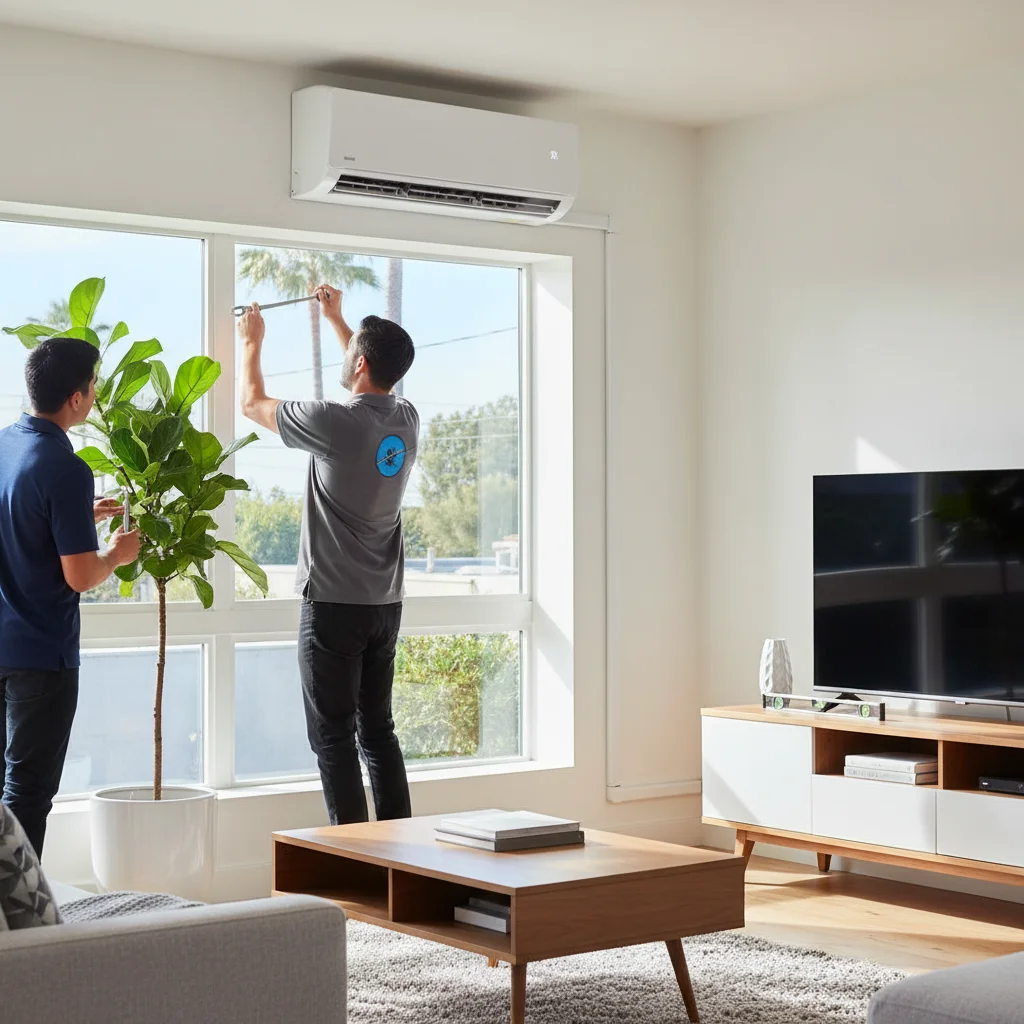
Why do San Diego STRs need a different HVAC plan?
National host advice assumes humidity, big ducted systems, and a long summer. San Diego is split.
Housing stock. Many permitted coastal STRs sit in pre-1970 cottages and duplexes with no central AC. Ducted central air often means opening walls. Ductless mini-splits are the realistic add.
Climate split. A Mission Beach unit may live in the 68 to 76°F band most of the year and still fail three nights when inland heat arrives. An East Village glass box overheats in shoulder season. La Mesa and Escondido listings behave like inland California: hot summers, real heat from November through March.
Regulation. San Diego’s short-term rental ordinance (STRO), in effect since 2023, caps whole-home licenses in coastal zones, especially Mission Beach. License equity is not a comfort trivia question. HVAC that actually holds temperature protects the listing you already spent political capital to keep.
What comfort floor should a listing hold?
Pick a floor before you shop equipment.
Coastal: hold roughly 72 to 76°F in the main living space and primary bedroom when outdoor temps hit the mid-90s.
Inland: the same cooling band, plus a heating floor around 68°F when overnight lows drop into the 30s, which is a normal December night in El Cajon or Escondido.
Primary bedroom and living area are non-negotiable. Secondary rooms can lag if doors close and ceiling fans exist. That decision is single-head versus multi-zone.
If the existing system cannot hold that range at the worst outdoor temperature you actually see, you have an HVAC project. A thermostat lock is not a substitute for missing capacity.
| Listing type | What usually needs to change |
|---|---|
| Coastal cottage, no AC | Mini-split on living space, fans in bedrooms |
| Coastal condo, old window units | Quiet ductless heads, HOA rules on condensers |
| Inland house, aging central system | Repair versus heat pump replacement after a load calc |
| Downtown high-rise PTAC | Room-by-room packaged terminals, building rules |
| Inland house, no AC | Ducted or ductless heat pump, heating and cooling |
Coastal condensers within a half-mile of the water need corrosion protection. See ductless mini-split cost in San Diego for how quotes are built. Climate Pros SD does not publish installed prices here.
How do smart thermostat lockouts interact with SDG&E?
Unlocked thermostats are how hosts lose margin. SDG&E time-of-use peak windows in summer make a 65°F setpoint expensive. The fix is a smart thermostat with guest-mode limits, disclosed in the house manual.
Common host-capable options:
- Ecobee with min/max lock, works with many heat pumps
- Nest with temperature lock (some features need a subscription). Disable auto-schedule learning on variable occupancy
- Mysa or similar mini-split controllers where a 24V thermostat will not talk to the head
Set a cooling floor guests cannot smash through, and a heating ceiling they cannot hold at 78°F all night in January. Disclose the range. Complaints usually come from surprise locks, not from a 68 to 76°F band.
For C-wire and mini-split quirks, see smart thermostat installation.
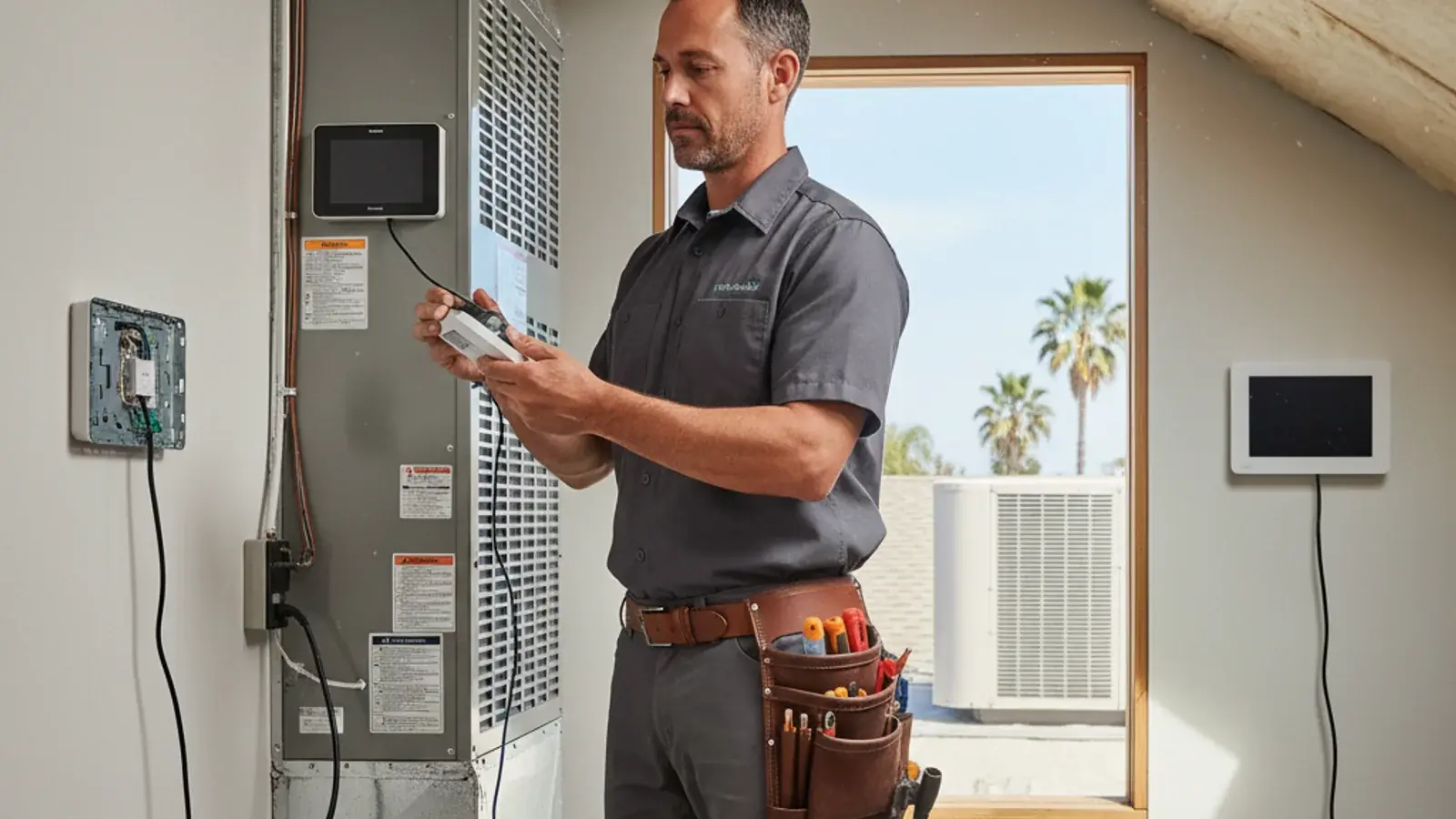
What maintenance cadence matches high turnover?
Owner-occupied systems often get one annual tune-up. A summer STR can pile on runtime two or three times faster.
- Filters every 30 to 45 days from May through October, slower in winter. Stock them on site. Cleaners can swap at turnover.
- Mini-split heads cleaned on a half-year cadence on the coast. Salt on coils is why a four-year-old head starts blowing warm.
- A full HVAC maintenance visit in April, before the booking-heavy stretch
- Drain lines flushed on interior heads. A clogged drain in a guest bedroom is a refund
- Annual look at outdoor-unit corrosion within a half-mile of the ocean
Build a relationship with a local pro before a Friday failure. Emergency HVAC is for true no-cool or unsafe heating. The matched pro owns arrival time. We do not promise same-day service.
What noise and permit rules hit coastal listings?
STRO does not list SEER ratings. Two adjacent rules still matter.
Noise. San Diego’s residential noise ordinance limits nighttime sound at the property line. A loud condenser six feet from a neighbor’s bedroom is a complaint. Inverter condensers are quieter. Ask for sound ratings at the distance you actually have, not at three feet in a brochure.
Permits. New HVAC needs a mechanical permit. Like-for-like replacement in the same location can be a shorter path. Mini-split additions, fuel changes, and panel work need full review. The contractor pulls. You verify it was pulled. Unpermitted work shows up at sale and on insurance claims.
Mission Beach and parts of Pacific Beach sit in the Coastal Overlay. Exterior equipment visible from a public right-of-way can add review. Tier 4 licenses travel with the unit. Review scores and license equity are linked whether the ordinance mentions compressors or not.
FAQ
Does a San Diego STR legally need air conditioning?
No. STRO does not mandate AC. California habitability for rentals requires heating, not cooling. Guests still review heat events. Most Mission Beach and PB hosts treat cooling as required in practice.
What is the simplest way to add AC to an old beach cottage?
A single-head ductless mini-split on the main living area, with ceiling fans in bedrooms, is the common first step. Window units are cheaper on day one and generate noise and security complaints. Get a written quote. Do not use a blog number.
Can I deduct HVAC against STR income?
Capital versus expense, Section 179, and bonus depreciation depend on IRS short-term rental tests. That is CPA work. This is not tax advice.
Will guests break a locked thermostat?
Rarely if the band is actually comfortable and disclosed. A 72°F-only lock on a coastal cottage in August invites people to pull the thermostat off the wall.
Mini-split or central AC for a converted rental?
No ducts: mini-splits usually win. Post-2000 house with decent ducts: central often wins. Leaky attic ducts sit in the middle. See mini-split vs central AC.
How fast does an HVAC failure show up in reviews?
Inside the same booking. Platforms can issue partial refunds when a listing is not as described in a heat event.
If you need a second opinion on a quote, call (442) 777-6440. We match you with a local pro who has actually worked Mission Beach cottages and inland houses. Related: AC repair and AC installation.