A 3 ton AC unit might fit your San Diego home, but square footage alone can’t confirm it. Treat that capacity as one candidate, then have an independent licensed HVAC pro calculate the home’s cooling load.
3 tons is a candidate, not a square-footage answer
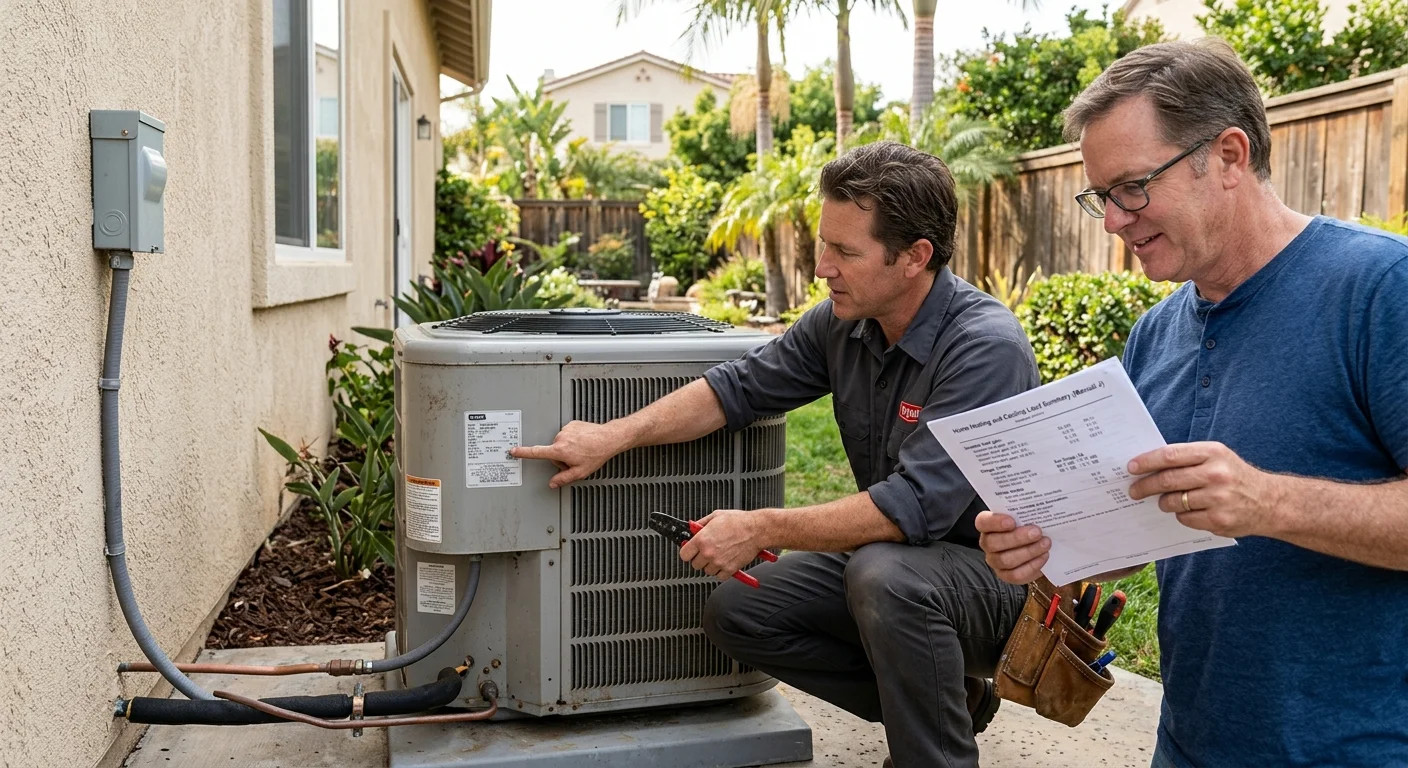
A licensed contractor should run Manual J on this house. Coastal 1,800 square feet and inland 1,800 square feet are not the same load. Climate Pros SD does not size equipment. The matched C-20 contractor does.
Checklist
- List west glass and upstairs bedrooms.
- Do not copy a neighbor’s 3-ton unit.
- See AC sizing.
- See same-size replacement.
- Use AC installation.
Related: Heat pump vs AC if you are replacing heating at the same time.
What does a 3-ton AC rating mean?
A 3-ton rating describes an air conditioner’s nominal cooling capacity. It doesn’t describe the unit’s physical weight. It also doesn’t tell you whether that capacity matches your particular house.
Think of the rating as an equipment category. It helps a contractor compare possible systems after calculating the home’s cooling needs. It shouldn’t replace that calculation.
Tonnage also doesn’t answer every buying question. Capacity, efficiency, equipment condition, and indoor comfort are separate subjects. A shopper can find a 3-ton model with appealing features and still lack proof that three tons suits the home.
When comparing proposals, ask each contractor to identify the proposed capacity. Then ask how that recommendation was chosen. The answer should connect the equipment to measurements and conditions inside your house. Repeating the old data plate or citing floor area alone doesn’t provide that connection.
This distinction keeps the decision focused. You’re not asking whether a 3 ton AC unit is generally good or bad. You’re asking whether it matches one San Diego property, its rooms, and how those rooms gain heat.
Climate Pros SD is a referral service. We match homeowners with licensed, independent local HVAC pros. The contractor evaluates the home, recommends equipment, and performs the work. You contract with and pay that professional directly.
Why can’t square footage confirm the right size?
Square footage describes floor area. It doesn’t describe every condition affecting a home’s cooling needs. Two homes with similar floor plans can require different recommendations after their details are measured.
Windows are one example. Their size, orientation, shading, and condition can change how rooms behave during sunny periods. Ceiling height, insulation, air leakage, and room location also belong in the review. The contractor should examine these details instead of treating every square foot alike.
Ducts matter too. Ask where they run and whether their condition was inspected. A recommendation based only on living area can miss problems elsewhere in the system. Comfort complaints may involve capacity, airflow, duct condition, controls, or a combination of factors.
Past renovations can make old assumptions less useful. An addition, enclosed patio, new windows, changed insulation, or converted room may alter the home’s needs. The recorded floor area may not tell the whole story.
This is why square-foot-per-ton charts can’t confirm 3-ton AC sizing. They reduce a house to one input and skip the inspection. They also create false confidence when an estimate lands on a neat equipment size.
Use square footage to begin the conversation, not end it. Give the contractor accurate information about additions and comfort problems. Then ask for a calculation tied to the current house. If someone recommends three tons from a listing description alone, request the supporting measurements before deciding.
How do coastal and inland loads differ?
San Diego County’s outdoor conditions change noticeably between the coast and inland communities. NOAA’s 1991-2020 climate normals show an August normal high of 77.3°F at San Diego International Airport. The August normal high at El Cajon is 88.6°F.
Those figures don’t select an AC size. They show why one generic San Diego sizing shortcut isn’t enough. A contractor still needs the property’s exact location and building details.
A coastal home can have mild outdoor conditions while still developing uncomfortable rooms. Window exposure, upper floors, limited shade, and duct conditions remain relevant. An inland home may face a different outdoor cooling load, but location still doesn’t prove that three tons is correct.
Even within the City of San Diego, a house near the coast shouldn’t be treated as interchangeable with a similar house farther inland. Orientation and construction can also separate two homes on the same street.
Ask what local weather information was used in the load calculation. Then check whether the contractor entered the home’s real window, insulation, ceiling, and duct details. A citywide assumption isn’t a substitute for those inputs.
The useful comparison isn’t simply “coastal means smaller” or “inland means bigger.” Either statement skips too much. The better question is how the home’s location combines with its construction and exposure. That approach keeps the 3-ton decision tied to evidence instead of a ZIP code stereotype.
What should a Manual J calculation include?
A Manual J calculation should turn the home’s measured conditions into a cooling-load estimate. Our San Diego Manual J sizing guide explains the process in more detail. You don’t need to perform the calculation yourself, but you should know what information supports it.
Ask the contractor whether the review includes:
- The home’s location and orientation
- Conditioned floor area and ceiling heights
- Window and exterior door details
- Insulation and air-leakage information
- Shade and sun exposure
- Room use and expected occupancy
- Heat produced by appliances and other indoor sources
- Duct location, condition, and airflow concerns
- Additions or other changes since the current system was selected
The contractor may need more information after inspecting the property. That’s normal. What matters is that the recommendation comes from the house being evaluated, not a generic chart.
Request a written result showing the calculated load and proposed equipment capacity. If three tons is recommended, ask how closely it matches that result. If the calculation points elsewhere, ask the contractor to explain the alternative.
Equipment selection can also involve indoor and outdoor components. Ask the contractor to identify what the proposal includes and confirm that the chosen components belong together. The licensed pro should answer technical questions before you approve the project.
When you’re ready to discuss AC installation, Climate Pros SD can connect you with an independent local pro. Every HVAC pro in the network is licensed and insured. You can also check a contractor’s status through the California Contractors State License Board.
When should you compare another system size?
Compare another size when the evidence doesn’t clearly support three tons. Different contractor recommendations are one reason to pause. Ask each pro to show the inputs behind the result instead of comparing capacity labels alone.
You should also revisit the size when the home has changed. Added rooms, window changes, insulation work, remodeled spaces, and altered ducts deserve attention. The current equipment label only tells you what was installed. It doesn’t prove that the same choice remains appropriate.
Comfort history can provide useful clues. Tell the contractor about rooms that stay uncomfortable, large temperature differences, or problems that appear during hotter weather. Don’t assume those symptoms prove the unit is too small. Ask the pro to separate possible capacity concerns from duct, airflow, control, and equipment problems.
Our guide to replacing an AC with the same size explains why the existing label shouldn’t make the decision automatically. An older recommendation may lack documentation, or the house may have changed since installation.
Comparing another size doesn’t mean selecting a larger unit. It means checking whether another capacity better matches the completed load calculation. Ask how each option relates to the written result and whether other system changes are included.
Keep efficiency and extra features out of the first sizing decision. Start by confirming the required capacity. Then compare suitable equipment, installation scope, and contractor proposals. That order makes a 3-ton AC for a San Diego home an evidence-based choice rather than a guess.
When to call us
Call when you’re considering a 3-ton AC unit and need a licensed HVAC pro to measure the home, calculate its load, and explain the recommendation. Call us at (442) 777-6440 and we will match you with a licensed local pro.