A blank screen or poor system response can make replacement feel obvious. Thermostat replacement makes sense after testing isolates the control or finds it unsuitable. A limited, confirmed fault may support repair instead.
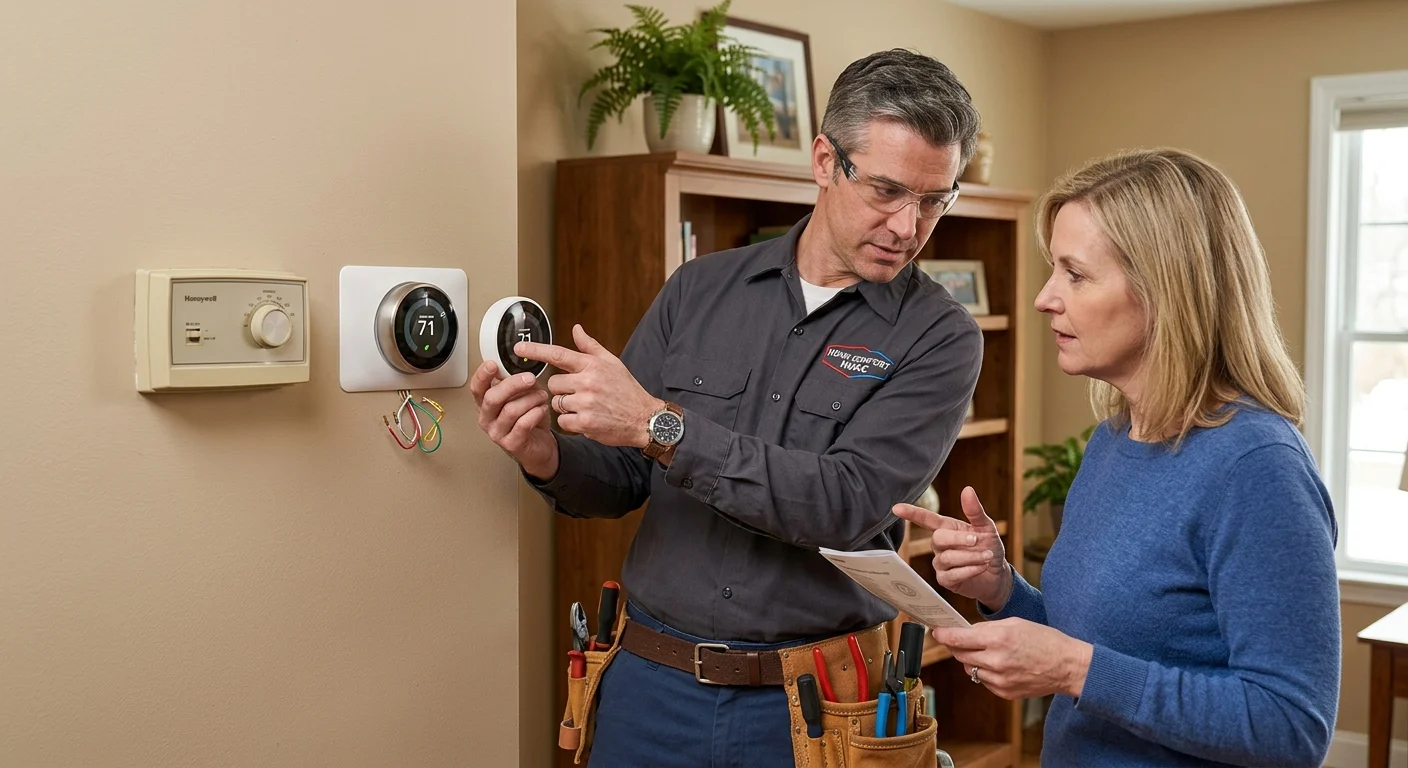
Replace a thermostat after testing isolates it. Repair only a confirmed local fault
A blank screen after new batteries and a live breaker still might be the HVAC control board, not the wall unit. Replacement makes sense when the control is unsuitable or failed on its own. Wi-Fi upgrades fail in San Diego when there is no C-wire. That is an installation issue, not a broken Honeywell.
Checklist
- Test with a known-good power source only if you are qualified.
- See thermostat not working.
- See Oceanside thermostat install.
- Use thermostat installation.
- Climate Pros SD does not warranty thermostat brands.
Related: AC repair and White-Rodgers not cooling.
When can a thermostat be repaired?
Thermostat repair can make sense when testing finds a correctable issue. The existing control must also remain suitable for the HVAC equipment.
Ask the contractor to identify the exact fault before approving work. “The thermostat is bad” doesn’t explain what failed or how testing proved it. A useful diagnosis names the affected part, connection, setting, or control function. It also explains why the proposed correction addresses the symptom.
Before the appointment, record what you can observe without removing anything:
- What appears on the display
- Which mode and temperature you selected
- Whether the HVAC equipment responds
- Whether the problem is constant or intermittent
- Any displayed message or code
- What happened before the problem began
Also note any recent power interruption, HVAC service, or equipment change. These details give the pro a clearer starting point. Don’t disconnect thermostat wires or open HVAC equipment panels.
Our thermostat troubleshooting guide covers simple, non-invasive observations. Stop there if the next step would expose wiring or equipment controls.
A repair recommendation should leave you with two clear answers. You should know what’s being corrected and whether the thermostat still matches the system. If either answer remains uncertain, ask the pro to test against the equipment manuals before proceeding.
Which symptoms point beyond the thermostat?
Thermostat symptoms can overlap with wiring, power, control, and equipment problems. The display alone usually doesn’t identify which part needs attention.
Widen the diagnosis when you notice patterns such as these:
- The display accepts a setting, but the equipment doesn’t respond
- Heating works while cooling doesn’t, or the reverse
- The problem began after HVAC service or an equipment change
- The thermostat repeatedly loses its display
- The equipment behaves differently from the selected mode
- Several rooms remain uncomfortable while the display appears normal
None of those observations proves a specific failure. They simply give the contractor more evidence to test. Ask the pro to separate the thermostat findings from the wiring and equipment findings. That distinction keeps a replacement from becoming a guess.
If the cooling equipment becomes the main suspect, request an AC repair diagnosis instead of approving a thermostat swap. The contractor should explain where the control request stops and which test supports that conclusion.
San Diego County also covers very different operating conditions. Coastal areas experience milder temperatures than inland valleys. Those differences can change how often a household adjusts its settings. They don’t identify the failed component.
Avoid buying a thermostat just to see whether it works. First confirm whether the problem starts at the wall control, along its connections, or inside the HVAC equipment.
When does replacement make more sense?
Replacement becomes the stronger option when testing isolates the thermostat itself. It can also fit when the existing control no longer meets documented equipment requirements.
A contractor may recommend replacement after documenting a failed control function. Replacement may also make sense during an HVAC equipment change. In that case, ask to see the manufacturer’s control requirements for the exact equipment model.
Convenience can support the decision, but it shouldn’t replace compatibility testing. You may want clearer controls, scheduling, remote access, or easier operation. Decide which functions your household will actually use. Then ask which compatible models provide them.
There’s no approved age cutoff for replacing a home thermostat. Age alone doesn’t prove failure. Be cautious when the only explanation is that the device looks old. Ask what testing found and whether a specific repair remains available.
When comparing thermostat repair with replacement, request both scopes in writing. The repair option should identify what stays and what changes. The replacement option should name the proposed model and included setup work.
Climate Pros SD can connect you with a pro for thermostat installation. The independent contractor sets the price and performs the work. For broader planning, review our San Diego thermostat cost guide, then confirm the current amount directly with the contractor.
What compatibility details should a pro confirm?
Compatibility depends on the exact thermostat and HVAC equipment. Treat broad “universal” wording as a starting point, not the final answer. The equipment manuals and thermostat documentation should guide the decision.
Ask the pro to confirm these details:
- The model numbers for the thermostat and connected HVAC equipment
- The type of heating and cooling equipment
- The control functions and operating stages involved
- Whether the system uses conventional or manufacturer-specific controls
- The available control wiring and power arrangement
- Any zoning or indoor-air accessories connected to the control
- The manufacturer’s approved setup process
- Any account, app, or network requirements
Don’t rely on wire color or a thermostat photo alone. A photo can help identify the existing device, but the contractor should compare the complete system with current manufacturer documents. Keep equipment panels closed and leave electrical testing to the pro.
The California Contractors State License Board says the C-20 classification includes thermostatic controls connected with warm-air and air-conditioning systems. This describes the contractor’s licensed scope, not work performed by Climate Pros SD. You can verify a contractor through the CSLB license check.
San Diego geography doesn’t determine thermostat compatibility. Equipment and control design do. Whether the home sits near Oceanside, Chula Vista, El Cajon, or central San Diego, ask for a model-specific answer supported by the manuals.
How should you compare replacement options?
Start with the functions you need, not the appearance of the display. A straightforward control may suit one household. Another may want scheduling, remote adjustments, or system notifications.
Compare each proposed model across the same points:
- Exact manufacturer and model
- Confirmed HVAC compatibility
- Controls your household will use
- Installation and setup scope
- App or account requirements
- Data and privacy settings
- Manufacturer support documents
- Current manufacturer coverage terms
Verify connected features through the manufacturer’s current documentation. Ask whether any feature needs an account, internet connection, paid service, or separate accessory. Don’t assume those details from the product name.
Local energy plans may also shape how you view scheduling features. SDG&E uses time-of-use pricing, with electricity costs varying by time of day. Some San Diego County residents receive generation service from San Diego Community Power or Clean Energy Alliance. Check your bill and provider’s current information before linking a thermostat choice to a rate plan.
Ask each contractor for the complete proposed scope. It should identify the thermostat, labor, setup, and any additional wiring or equipment work. Ask for the price before work starts. Each independent company sets its own prices and policies.
Finally, compare the diagnosis behind each option. A lower-priced thermostat isn’t useful if compatibility remains uncertain. A more connected model isn’t automatically better for a household that won’t use its added controls. Choose the documented fit, not the longest feature list.
When to call us
Call when the decision depends on wiring tests, HVAC controls, or equipment compatibility. Climate Pros SD serves San Diego County as a referral service and doesn’t perform the work. Call us at (442) 777-6440 and we will match you with a licensed local pro.