A thicker HVAC filter can restrict airflow if the system can’t support it. However, depth alone doesn’t determine whether a filter will cause trouble. Its fit, construction, condition, and compatibility with the equipment all matter.
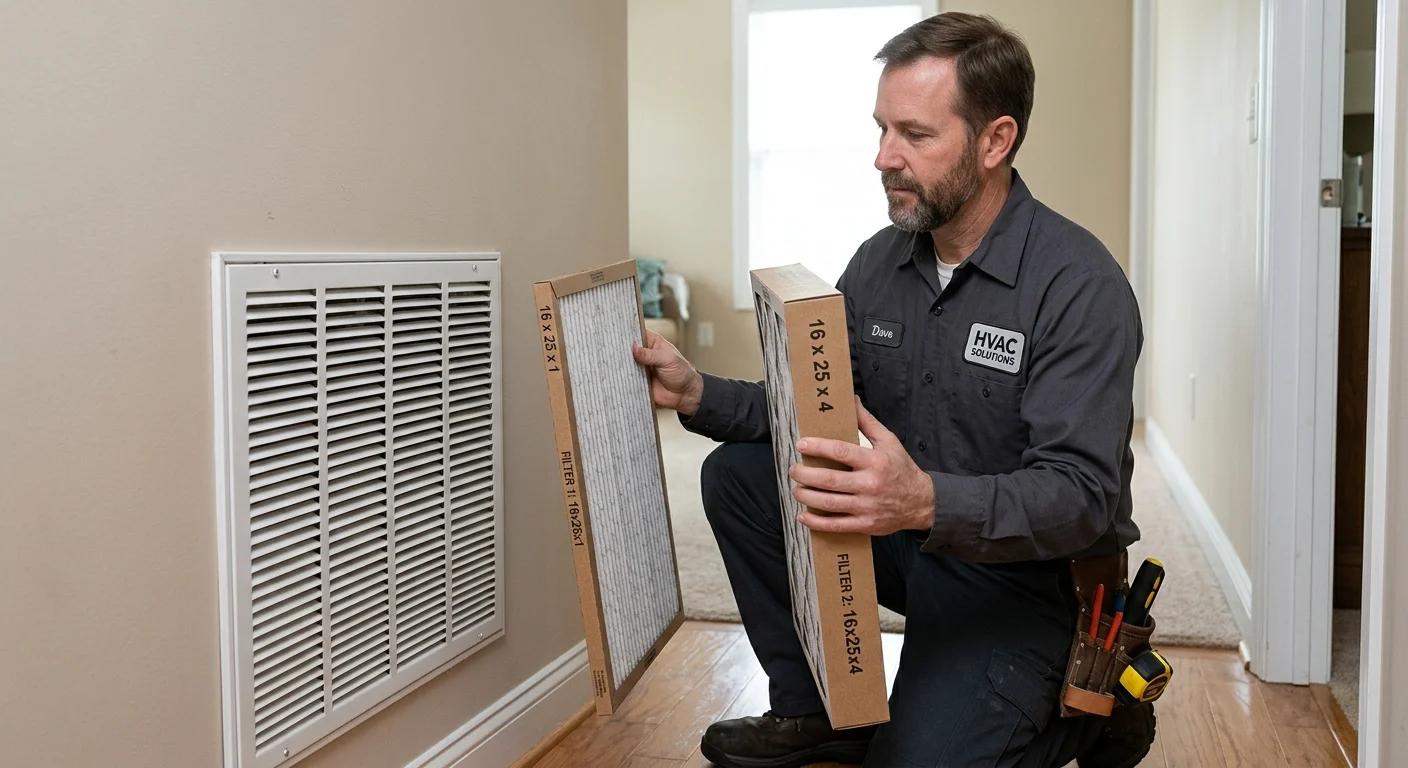
Filter depth is not the restriction. Static pressure is
A 4-inch media cabinet can run MERV 13 with less pressure drop than a packed 1-inch MERV 13. The wrong thick filter in a 1-inch slot can freeze a coil. Scripps Ranch and other inland dusty sites tempt people into dense filters. Ask the contractor to measure static if you are going above the furnace manufacturer’s limit.
Checklist
- Read the air-handler’s listed filter size.
- See whole-home purification Scripps Ranch.
- See IAQ wildfire.
- Use HVAC filter MERV guide.
- Use HVAC maintenance.
Related: Indoor air quality and AC freezing up.
What changes when a filter is thicker?
Filter thickness describes its physical depth from front to back. It doesn’t, by itself, reveal how easily air can pass through the filter. Two filters with the same outside dimensions may use different materials, pleat designs, and frames.
A deeper filter may contain more folded filter material. That design can provide additional surface area, but only if the filter and cabinet were made to work together. A filter that extends beyond the rack, bends inside the slot, or prevents the access panel from closing isn’t a suitable upgrade.
The system’s blower must move air through the return, filter, equipment, ducts, and supply registers. Changing one part of that path can affect the whole system. That’s why a thicker filter shouldn’t be treated as automatically better or worse.
Start with the filter size shown on the existing filter and equipment label. Then check the equipment manual for approved filter dimensions and types. If the manual isn’t available, record the model number and ask a licensed HVAC pro to identify the intended setup.
Don’t force a deeper filter into a shallow rack. Don’t stack thin filters to fill a wider opening. Those changes can create fit problems without confirming how the system handles airflow.
For a broader look at filter efficiency labels, read our HVAC filter and MERV guide. The MERV label is useful, but it isn’t a substitute for checking equipment compatibility.
Why do dimensions and fit matter before MERV?
The correct filter must fit the rack or cabinet securely. Air should pass through the filter, rather than around a loose edge. A filter that’s too large may buckle. One that’s too small may leave open gaps.
Check every printed dimension before buying replacement HVAC air filters. Measure the available slot if the label is missing or unclear. Also compare the frame direction and airflow arrow with the existing setup and equipment instructions.
Depth is only one measurement. Length and width matter just as much. The filter also needs enough clearance for removal and installation without damaging the frame.
MERV describes a filter’s particle-capture performance under defined testing conditions. It doesn’t confirm that a particular furnace, air handler, return grille, or filter cabinet accepts that product. A higher label shouldn’t overrule the equipment manual.
Some homes have a filter at a central cabinet. Others place filters behind return grilles. A home may also have more than one return. Confirm the full layout before assuming you’ve found every filter or the correct replacement size.
If the old filter has no readable label, take clear photos before removing it. Photograph the rack, access panel, equipment model label, and airflow arrow. A licensed pro can use those details during an inspection, but measurements at the system provide the stronger answer.
Our indoor air quality service explains how Climate Pros SD connects homeowners with independent local professionals. The matched contractor can assess filtration within the home’s full HVAC setup.
Which symptoms can point to airflow trouble?
A noticeable change after installing a new filter deserves attention. Air from the supply registers may feel weaker than it did before. The return grille may sound different, or the filter frame may bow toward the blower.
You might also notice rooms becoming less comfortable while the system runs. The equipment may start and stop differently than it did with the previous filter. These observations don’t prove the new filter is responsible, but their timing gives the contractor useful context.
Airflow trouble can have more than one possible source. A blocked return, closed register, duct problem, dirty indoor component, blower setting, or poorly fitted filter may produce overlapping symptoms. Replacing the filter repeatedly won’t identify which condition is present.
Compare conditions without dismantling the equipment. Note the filter’s exact label, installation date, and airflow-arrow direction. Write down which rooms feel different and whether the change began immediately after the replacement.
Avoid cutting, crushing, or altering a filter to make it fit. That makes the installation harder to evaluate. If the access panel won’t close normally, stop and verify the required filter dimensions.
Routine HVAC maintenance can include checking the filter area and looking for broader airflow concerns. Climate Pros SD doesn’t perform that work. We match homeowners with licensed and insured independent HVAC pros who inspect their own work and set their own recommendations.
How should San Diego smoke and allergies shape the discussion?
San Diego County doesn’t have one indoor-air pattern. Coastal North County, inland valleys, central San Diego, East County, and the South Bay face different outdoor conditions. A filter choice should reflect the home, equipment, occupants, and current air concerns.
During a regional smoke event, homeowners often pay closer attention to indoor air. Start by checking current public air information and following local guidance. Then confirm whether the HVAC system can support the filter you’re considering.
Our guide to San Diego indoor air quality during wildfire smoke covers that decision in more detail. It doesn’t turn one filter into a universal answer. Building openings, ventilation, equipment condition, and filter fit remain part of the discussion.
Allergy concerns also call for a measured approach. A filter label doesn’t promise a health result. HVAC filtration isn’t medical treatment, and individual needs differ. Ask a medical professional about personal health questions.
Tell the HVAC contractor what you’re trying to address. That might be visible dust, smoke events, pet-related debris, or another indoor-air concern. The pro can then compare those goals with the system’s actual configuration.
Don’t choose a filter from a universal MERV recommendation. The approved range could not be confirmed for every system. Check the equipment manual and have a licensed pro measure airflow before changing filter type.
What should a licensed pro measure before changing filter type?
A licensed HVAC pro should evaluate the filter as part of the complete air path. That starts with the rack or cabinet dimensions, filter orientation, seal, and access-panel fit. The contractor should also confirm the equipment model and manufacturer instructions.
Ask the pro to measure system airflow and pressure under actual operating conditions. The readings before and after the filter can show how that filter affects the installed system. There isn’t one pressure limit in the approved claims ledger that applies to every home, so the contractor must compare measurements with the equipment requirements.
The inspection may also cover the return and supply sides of the system. The pro can look for restrictions, damaged filter frames, gaps around the rack, and settings that affect blower operation. Those findings help separate a filter problem from another airflow issue.
Bring the proposed replacement filter to the visit if possible. Keep its packaging and product label. The contractor can compare its exact size and design with the installed cabinet and current filter.
Ask for the measured findings in plain language. Useful questions include what the equipment manual permits, whether the cabinet accepts the proposed depth, and whether the system readings changed with that filter installed. The contractor should explain any recommended adjustment before you approve work.
You can also verify a contractor through the California Contractors State License Board. Climate Pros SD is a referral service, so you contract with and pay the matched professional directly.
When to call us
Call when a filter doesn’t fit, airflow changes, or the equipment manual leaves compatibility unclear. Call us at (442) 777-6440 and we will match you with a licensed local pro.