Townhouse HVAC in San Diego is not a detached-house job with a smaller invoice. Shared fire-rated walls block the easy duct and line-set paths. Rooftop packaged units are common. Older Mira Mesa, Clairemont, and North Park complexes were often built with the cheapest plant of their decade, now worn out.
Climate Pros SD matches owners with licensed, independent HVAC professionals. Those contractors pull permits, talk to the HOA, and price the work. We do not.
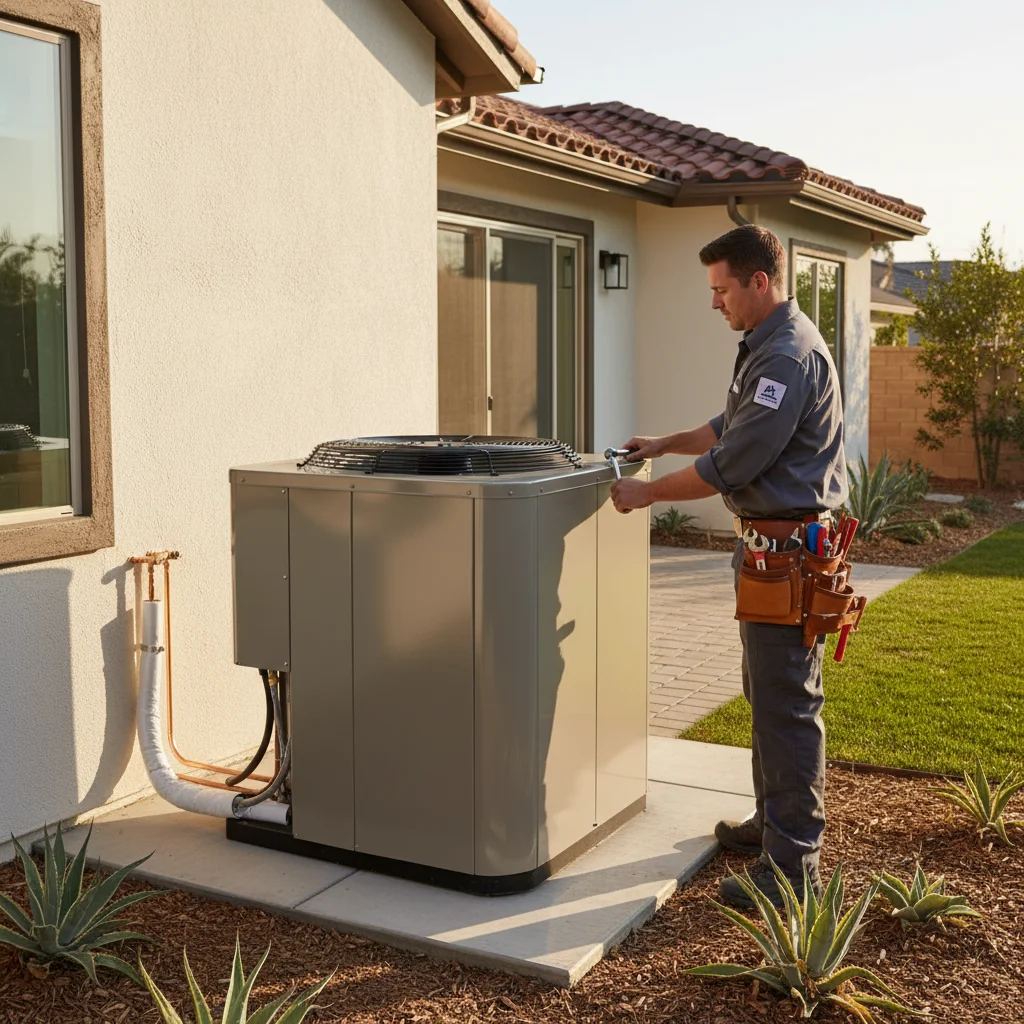
How do shared walls change the design?
One or both side walls are typically a fire-rated assembly. You do not cut ducts, refrigerant lines, or condensate through that wall. Supplies and returns go vertical through your unit, interior partitions, attic, or roof.
That can force a hallway return that would look odd in a tract house. It also carries sound. Compressor vibration and duct boom travel through party walls. Ask the installer about isolation pads and chase lining, not a neighborly apology after the fact.
What rooftop and attic problems show up?
Crushed or disconnected flex. Insulation and foot traffic over decades pull boots loose. High static pressure looks like a “weak AC” and shortens the blower and compressor. ENERGY STAR: a typical leaky forced-air house can lose about 20% to 30% of the air in the ducts. Townhouse attics are not exempt.
Undersized returns. A single small return that was cheap in 1985 may starve a modern blower. Return upgrades belong in the replacement conversation.
Roof curbs and dry rot. When a pack comes off, the deck around the curb can be the real repair. HOA documents usually split roof membrane versus the HVAC penetrating it. Read the CC&Rs before you assume who pays.
EPA: no automatic duct-cleaning calendar. Clean if you have contamination. Seal if you have leakage.
What is different in Mira Mesa, Clairemont, and North Park?
Mira Mesa (92126). Waves of construction. Early units may still be wall furnace plus window AC. Adding ducts in a finished townhouse with party walls is a major remodel. Multi-zone mini-splits are often the less destructive path.
Clairemont (92117). Older stock. Original mastics and wraps on pre-1981 mechanical work can mean asbestos testing before disturbance. Follow City of San Diego and contractor hazardous-material rules. Do not guess.
North Park (92104). Mix of conversions and infill. Some have no ducts. Mini-splits usually beat chasing plaster for new trunks.
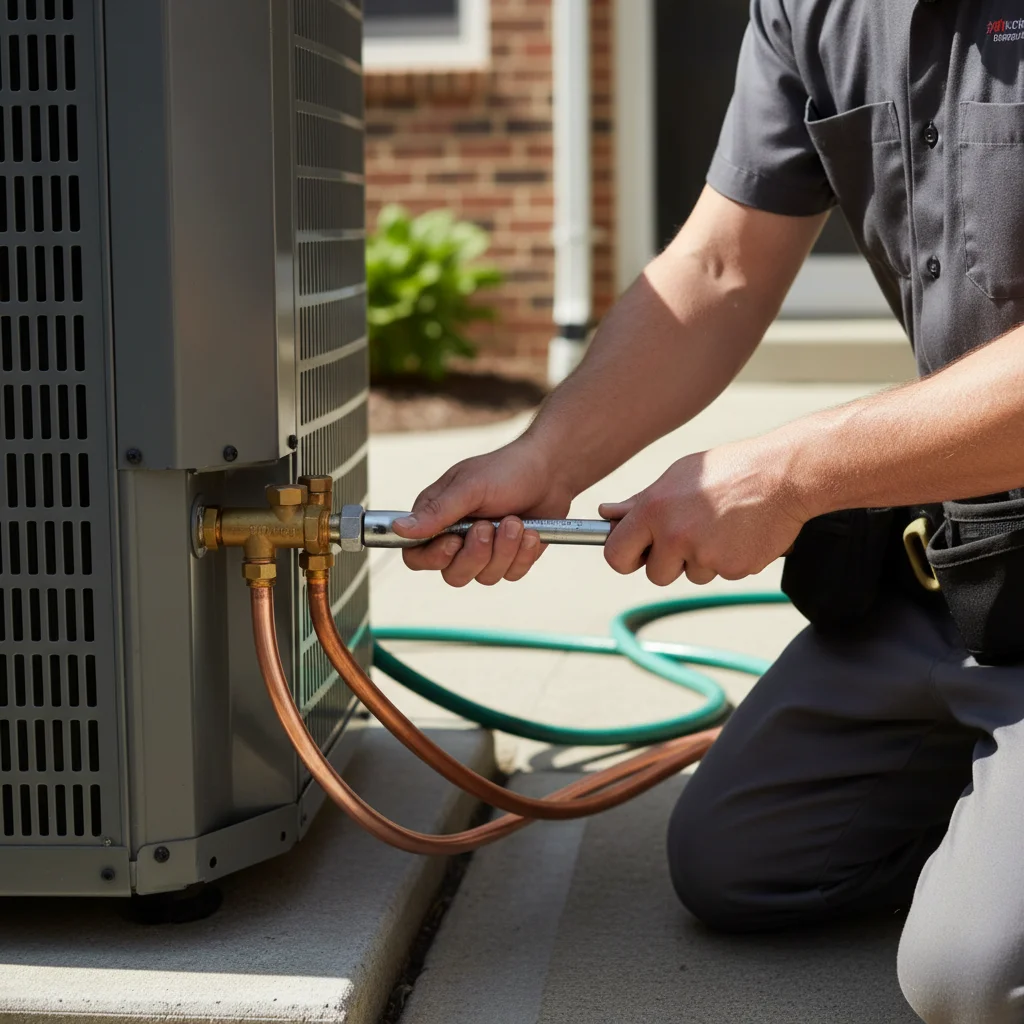
What should you budget mentally, without a fake menu?
Like-for-like rooftop replacement, new ducts, attic splits, mini-splits, and wall-furnace retrofits are different jobs. Adders include returns, curb and roof work, HOA architectural review, acoustic kits, and hazardous-material handling. The matched pro writes those lines after a site visit. Climate Pros SD publishes none of them.
City of San Diego: no HVAC or refrigeration install, alter, replace, or repair without a mechanical permit in that city. Electrical and sometimes structural permits stack. The licensed contractor pulls them. Unpermitted work follows you at sale.
Title 24 field verification applies when systems are altered or replaced. A CEC-certified rater works under current ECC rules.
New equipment manufactured or imported after January 1, 2025 must meet EPA GWP 700 for residential and light-commercial AC and heat pumps. Existing R-410A remains serviceable.
When does zoning beat a bigger rooftop?
Two-story townhouses often run much warmer upstairs. A larger compressor is a blunt tool. Motorized dampers and two thermostats can split floors if the trunks allow it and the equipment is still healthy. Zoning does not fix crushed ducts or a dead compressor.
Decision framework
- Comfort only, plant still young: zoning conversation.
- Plant old, ducts intact: replace equipment, fix returns, seal what ENERGY STAR is talking about.
- Plant old, ducts destroyed: new ducts with the new plant. Do not set a new condenser on a crushed flex web.
- Wall heat, no ducts: mini-splits.
What about heat-pump incentives?
Section 25C: qualifying 2025 placed-in-service jobs may still be in the credit window. Property placed in service after December 31, 2025 does not qualify. IRS annual limit for qualified heat pumps and heat pump water heaters was $2,000. Nonrefundable. QMID reporting for 2025. Tax professional for your return.
TECH single-family heat pump HVAC incentives stopped new reservations November 14, 2025. HEEHRA single-family rebates fully reserved February 24, 2026. No new single-family income-verification applications. Existing approved reservations may continue. Program caps (up to $8,000 below 80% AMI, up to $4,000 from 80% to 150% AMI for qualifying replacement of a primary heating source with a heat pump) are design limits, not open money. Not retroactive. Reservations before install. Cannot stack TECH and HEEHRA as of July 15, 2025. Multifamily HEEHRA is a different lane with Stage 1 paused.
SDG&E Golden State retail rebates have ended. Recheck sdge.com. TOU on-peak 4 p.m. to 9 p.m. on listed residential plans.
NWS climate: coast milder, inland warmer. Salt-air complexes (Bay Park, Pacific Beach, Coronado) need coil and cabinet conversations the inland mesa does not.
FAQ
Can I hang a mini-split condenser on the townhouse wall?
HOA and who owns the exterior wall decide. Many complexes want screening and an application.
Do I need permits?
Yes in the City of San Diego for mechanical HVAC work as quoted above. Other cities too. Contractor-handled.
Will the HOA pay?
Rarely for the equipment. Maybe for roof failure they maintain. Read the CC&Rs.
Rooftop or attic?
Attic is shaded. Rooftop is easier to service. Switching types on a townhouse is often not worth the chase rebuild.
How long will new equipment last?
Depends on salt, runtime, and maintenance. No guaranteed year count from this brand.
For an assessment, call (442) 777-6440. We will match a licensed pro to look at ducts, returns, HOA rules, and sound. Related: mini-split vs central, central AC cost process, AC installation, AC repair, maintenance.