Your upstairs can run warmer than downstairs because warm air rises, the roof and attic dump heat into second-floor ceilings, west sun loads those rooms late in the day, return air may be weak when bedroom doors close, and one downstairs thermostat only reads the first floor. This site does not publish a county-wide upstairs-to-downstairs degree gap or an installed-price ladder.
Climate Pros SD is a referral service. Ask the matched licensed company for options and fees in dollars.
Why is upstairs hotter in many San Diego two-story homes?
Heat rises
Warm air is less dense than cooler air, so it moves up stairwells and open foyers. Cooking, electronics, and sun on downstairs glass all add heat that can collect on the second floor. That is physics. It is not, by itself, proof that the ducts failed.
The attic and roof sit on those bedrooms
Second-floor ceilings sit under the roof. When the attic is hot, that heat can move into upstairs rooms. The National Weather Service describes ocean moderation near San Diego and warmer summer days in nearby valleys. Inland homes often need more cooling hours. That is a qualitative regional difference, not a published attic-temperature chart for your address.
West glass and walls pick up afternoon sun
Rooms that face west or southwest take sun late in the day. Curtains, shades, and exterior shade change the load. They do not replace a system that cannot move air.
Return air may be missing upstairs
Cooling is a loop. Supply air into a closed bedroom needs a path back to the air handler. Many tract homes have a large downstairs return and little upstairs return. Closed doors can starve the loop. ENERGY STAR says a typical forced-air house can lose about 20 to 30 percent of the air moving through ducts because of leaks, holes, and poor connections. That is a national typical-house statement, not a test of your ducts. ENERGY STAR duct sealing.
One thermostat cannot feel both floors
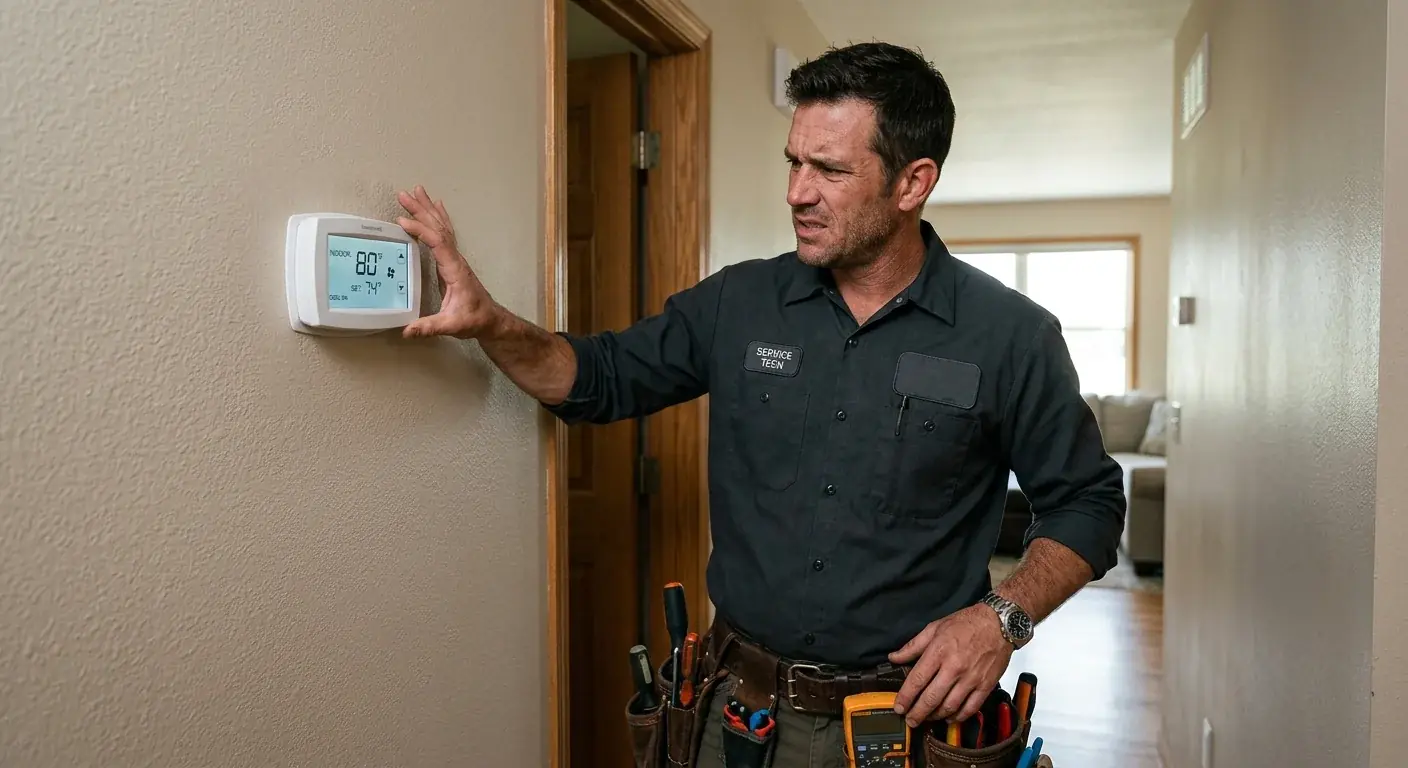
A single first-floor thermostat stops the system when the downstairs hits the setpoint. It does not know the west bedroom is still hot. Zoning, extra returns, or a separate upstairs unit are contractor options, not a required purchase order from this brand.
What should you try before a large equipment change?
Start with things you can see, then ask for measurements.
- Record upstairs and downstairs temperatures at the same time of day, with notes on doors, blinds, and whether the system is running.
- Open or add a return path if bedroom doors stay closed: a transfer grille or a dedicated upstairs return is a common contractor discussion.
- Shade west glass during peak sun.
- Confirm filters are clean and supply registers are open. Do not close a stack of downstairs vents to “force” air upstairs. That can raise duct pressure and leakage.
- Ask whether ducts were inspected for disconnected runs in the attic.
EPA does not recommend cleaning ducts on a fixed schedule. Cleaning is as needed, with conditions such as visible mold, vermin, or debris. Sealing addresses leakage. Cleaning is not a guaranteed bill cut. EPA duct cleaning.
Which contractor options come up after those checks?
Ask the licensed company to explain, in writing, which cause they measured:
- Added upstairs return or jumper ducts
- Duct sealing where leaks are found
- Attic insulation or roof-side heat control, which may involve a roofer as well as an HVAC contractor
- A zoning retrofit if existing ducts can support it
- A dedicated upstairs system or ductless heads if the original layout cannot balance
On an SDG&E time-of-use plan, listed residential plans use a 4 p.m. to 9 p.m. on-peak period. SDG&E suggests precooling earlier, then 78°F or higher from 4 to 9 p.m., health permitting. That is conservation guidance, not a medical requirement, and it does not promise upstairs comfort. Pricing plans. CCA customers pay delivery plus CCA generation. Do not invent a kWh rate on this page.
If older adults live upstairs, the CDC advises spending hot weather in air-conditioned space and not using a fan as the main cooling source when it is very hot. A clinician covers individual precautions.
For zoning questions, see HVAC zoning in San Diego. For equipment questions, see ductless mini-splits.
FAQs
Why is my upstairs hotter than my downstairs in San Diego?
Stacked heat, roof load, west sun, weak upstairs return, and a downstairs-only thermostat often combine. Measure both floors before naming one cause.
What is the first thing to try in an upstairs bedroom?
Shade, airflow path with the door closed, and a clean filter. Then ask a contractor whether a return or jumper duct is even possible in that hallway.
Will adding insulation fix a hot upstairs?
It can reduce roof-driven load. It does not repair missing returns or a thermostat that never sees the second floor. Ask for the current attic condition before paying for a full system change.
Should I close downstairs vents to push more air upstairs?
No. Closing vents can raise duct pressure and leakage. Fix the return path or zoning instead.
Is HVAC zoning the right answer for every two-story home?
Only if ducts can deliver the air. Ask for that assessment. Pair any schedule change with your actual SDG&E plan, not a promised savings percent.
When is a second system worth discussing?
When measurements show the original layout cannot serve both floors. Ask for the fee in dollars. This brand does not publish installed bands.
Call (442) 777-6440 to be matched with a licensed independent HVAC professional. Related services: AC installation, AC repair, and HVAC maintenance.