How much does AC installation cost in Oceanside?
It depends on system size, efficiency tier, and proximity to the water, which is why every install starts with an in-home estimate rather than a phone quote. Homes near the water may add a modest amount for a coastal-rated condenser. You get a line-itemed quote so you see every cost before deciding.
Do I need a coastal-rated AC system in Oceanside?
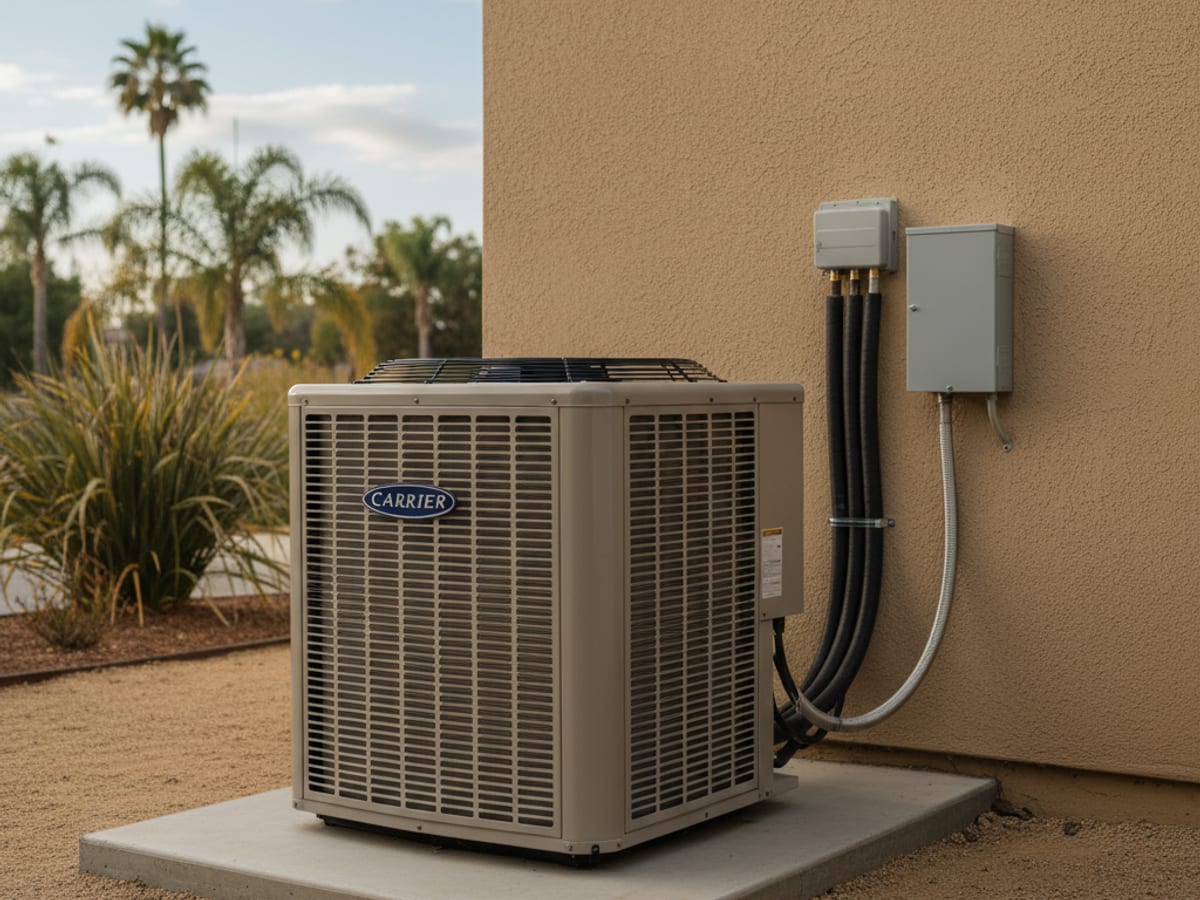
If your home is close to the water, yes, it is worth it. Salt air corrodes standard condenser coils and hardware and shortens equipment life. Coastal-rated units with corrosion-resistant coatings get specced for homes near the beach. Further inland in Rancho Del Oro or Ocean Hills, a standard unit is usually fine. The recommendation is based on your address.
Why do you recommend two-stage or variable-speed systems in Oceanside?
Oceanside's coastal climate is mild, with a long, gentle cooling season. A two-stage or variable-speed system runs at low capacity most of the time, which keeps the temperature steady and pulls humidity out of the marine air. A single-stage unit cycles full-on then off, which leaves the house clammy. The match to the climate makes the upgrade worth considering.
How fast can you install a new AC in Oceanside?
Once you approve the estimate, the matched company quotes timing. Ask whether they prioritize a no-cool house. Ask the matched company how long a standard changeout takes. Jobs that need new ductwork, an electrical panel upgrade, or a zoned design take two to three days. The matched company confirms the schedule before they book, with a call ahead of arrival.
Do I need a permit to replace my AC in Oceanside?
Yes. The City of Oceanside normally requires a mechanical permit for an AC system changeout. Ask whether the matched company pulls that permit as part of the job, and the work is inspected and recorded. A permitted install protects you at resale and keeps your manufacturer warranty valid.
What size AC do I need for my Oceanside home?
Usually smaller than a rule-of-thumb guess. Every install starts with a Manual J load calculation that accounts for square footage, insulation, window type and orientation, and ceiling height. An Oceanside home in the mild coastal climate rarely needs much tonnage. An oversized system short-cycles and leaves the house humid, which is a real problem near the coast.
Should I install a heat pump instead of an AC in Oceanside?
Often, yes. Oceanside's mild winters and moderate cooling loads are a strong fit for heat pumps. One outdoor unit handles both heating and cooling, the running costs are lower, and heat pump systems tend to qualify for the largest offer when one is open. The numbers get run during the estimate so you can compare.
Are there rebates for a new AC or heat pump in Oceanside?
Yes. Where an SDG&E offer is open, it is typically largest for qualifying heat pump systems. The federal 25C tax credit ended for systems installed after December 31, 2025, so it does not apply to a 2026 install. The matched company may file live SDG&E paperwork if an offer exists. Check sdge.com/rebates for any offer that is currently open. 25C does not apply to a 2026 install.
Do you charge extra to install in Fire Mountain or South Oceanside?
Climate Pros SD does not set a citywide price. The matched company quotes that address.
How long does a new AC system last in Oceanside?
Inland in Oceanside, a well-maintained central system goes considerably longer than a surf-adjacent one. Close to the water, salt air shortens service life unless you install a coastal-rated unit and keep up annual maintenance, including a spring rinse of the condenser coil. A coastal-rated install with regular service pushes the life back toward spec.
Can you reuse my existing ductwork?
Often, yes, but it gets inspected first. Older South Oceanside cottages sometimes have compact or leaky ducts squeezed into tight attic runs. The duct runs get checked during the estimate. If the ducts are sound, they get reused. If they are losing real airflow, sealing or partial replacement gets quoted so the new system can perform.
What AC brands do you install?
All major brands, including Carrier, Trane, Lennox, Rheem, Goodman, Daikin, and Mitsubishi. The recommendation is brand-neutral, based on your home, how close it is to the coast, and your budget, not a vendor bonus.
My Crown Heights house is from 1968 and the panel is original. Will that be a problem?
Possibly, and it is the most common surprise on older Oceanside installs. A 100-amp panel from the 1960s may not have the headroom for a modern condenser plus an air handler, especially if you also have an electric range, electric water heater, or EV charger. The panel gets checked during the on-site estimate. If you need an upgrade, the line item is sometimes eligible for separate rebates. What is required by code gets separated clearly from what is recommended as overdue.
Is the coastal-rated upgrade worth it for a home in Buena Vista or South Oceanside?
If you are within roughly a mile of the water, yes, almost every time. The upgrade includes a corrosion-resistant coil, cabinet, fasteners, and stand, adding only a modest amount to the install for an expected 4 to 6 extra years of useful life. The math is clearly favorable for any coastal Oceanside install, and a standard condenser will not get quoted for an oceanfront address without saying so explicitly.
I own a Camp Pendleton-area rental. What system do you recommend?
For most North Oceanside rental properties, a properly sized 14.3 SEER2 single-stage system from a mainstream brand like Goodman, Rheem, or Carrier is the right call. It is durable, parts are cheap and widely stocked, and any HVAC tech in the region can service it. A coastal-rated coil gets added if the rental sits within a mile of the water. The permit gets pulled, the install documented for your records, and invoicing stays clean for property management bookkeeping.
Mira Costa and Henie Hills get hotter. Do I need a bigger system inland?
Probably a little. Inland Oceanside, especially Mira Costa, Henie Hills, and the eastern edge near El Camino Real, runs 8 to 12 degrees warmer on a clear summer afternoon than South Oceanside or Buena Vista. The Manual J load calc accounts for that. You will not need a dramatically larger system, but you will likely size half a ton up from what a coastal home of the same square footage needs, and the SEER2 efficiency tier matters more inland because the system runs longer hours.
My home is in the marine layer most mornings. Does that affect the install?
It changes the equipment recommendation more than the install itself. The marine layer means lower peak loads but higher humidity, which is exactly where two-stage and variable-speed systems shine. They run at low capacity most of the time and pull moisture out of the air better than a single-stage unit that cycles. If your house feels clammy with the current AC running, the upgrade to a variable-speed system is usually worth the extra cost in coastal Oceanside, more than it would be inland.
How long does an installed system last in coastal versus inland Oceanside?
On the coast, salt corrosion catches up with a standard system well before it does inland. A coastal-rated install with annual maintenance pushes that to 15 to 18 years. Inland in Rancho Del Oro, Henie Hills, or Ocean Hills, a well-maintained system runs longest, with the limiting factor usually being compressor wear from heavier summer duty cycles rather than corrosion.