A two-stage AC sits between single-stage and variable-speed. Whether it is worth the extra equipment cost depends on how often you actually cool, your SDG&E time-of-use plan, and how much humidity control matters. NWS describes ocean moderation near San Diego and warmer summer days in nearby valleys, so inland homes (Escondido, El Cajon, Poway, San Marcos) usually run more hours than Encinitas, Carlsbad, La Jolla, or Coronado. Two-stage is not the same as variable-speed.
Climate Pros SD is a referral service. Matched licensed contractors quote the premium. This page does not.
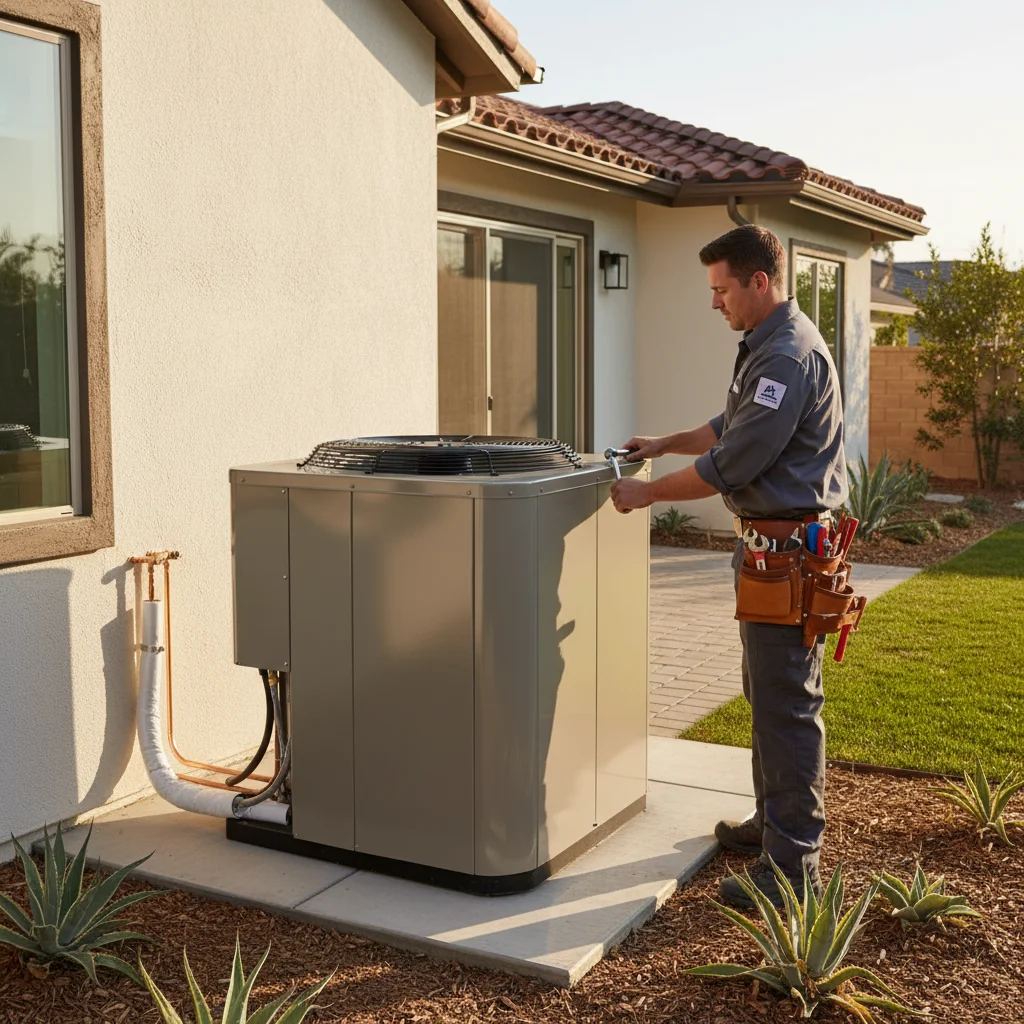
Two-stage vs variable-speed (these get confused constantly)
Two-stage and variable-speed are different things. Marketing pages blur the line.
A two-stage compressor has exactly two output levels. Low stage runs at a reduced capacity for mild loads. High stage runs at 100% when the indoor temperature gap demands it. There is no continuous modulation between low and high.
A variable-speed (also called modulating or inverter) compressor has continuous output from a low fraction up to 100%. It almost never shuts off in moderate weather. It just idles low for hours.
Two-stage is usually simpler to install and repair, and it works with most standard 24V thermostats that have a second-stage cooling wire. Variable-speed is more efficient at part-load, quieter, and better at humidity control, but it often needs a communicating thermostat and a matched indoor blower. See variable-speed vs single-stage AC in San Diego for that comparison.
The honest question: is two-stage the right middle option for your home, or should you stretch to variable-speed, or stay at single-stage?
What two-stage actually costs in San Diego
Ask the matched installer for three written quotes at the same tonnage and brand family: single-stage, two-stage, and variable-speed. That side-by-side is the only honest premium. This site does not publish installed prices.
The two-stage premium is mostly the compressor. Most modern two-stage condensers work with a standard 24V thermostat (one extra wire for the second-stage signal). If your existing furnace or air handler has a PSC blower, an ECM blower upgrade may be optional for two-stage and required for variable-speed. The installer confirms that on site.
For equipment context, see central AC installation and new AC cost. Treat any dollar ranges on those pages as quotes to verify, not as this brand’s price list.
Why two-stage exists (and what it actually solves)
Single-stage compressors have one job: full output until the thermostat hits setpoint, then shut off. That works when the cooling load matches the system’s full capacity. Most San Diego cooling hours are milder than design day. A single-stage unit then looks oversized for the moment: short cycles, startup current, and not enough coil time to pull humidity.
A two-stage system spends a large share of those milder hours on low stage. Cycles run longer. The compressor works more gently, dehumidifies better, and cycles less. On a hot inland afternoon, high stage behaves like a normal single-stage AC.
Comfort differences you can feel, without pretending they are a lab dataset:
- Smaller indoor temperature swings on low stage
- Better humidity removal in marine-layer weather
- Quieter outdoor sound on low stage
- Fewer on/off cycles on a typical cooling day
Does two-stage pay back on the electric bill?
DOE describes SEER2 as seasonal cooling efficiency in Btu per watt-hour. Actual savings vary with usage, test method, and operating hours. This page will not invent annual cooling-cost savings or a payback year.
What you can do instead:
- Pull June through September kWh from your SDG&E history.
- Note whether you are inland (more runtime) or coastal (less runtime).
- Confirm your rate plan. Current listed SDG&E residential time-of-use plans have a 4 p.m. to 9 p.m. on-peak period. Confirm exact plan and current rates. No cents-per-kWh figure belongs here.
- Ask the installer to walk the SEER2 difference between the three quotes against that usage. DOE states actual savings vary.
Inland homes (Escondido, El Cajon, Poway, San Marcos, Santee, Lakeside, Ramona)
More cooling hours. Heat waves run well above coastal weather. Two-stage is often the middle that captures most of the comfort benefit without variable-speed complexity. Energy payback is more plausible because the unit actually runs. Still get the three-quote comparison.
Coastal homes (Encinitas, Carlsbad, La Jolla, Coronado, Del Mar, Imperial Beach)
Fewer cooling hours. Marine layer holds many afternoons milder. Energy savings from two-stage may not be why you buy it. Comfort and humidity control can still be. Coastal corrosion still retires outdoor equipment. Two-stage units cycle less, which can reduce compressor stress, but salt air still hits the coil. See coastal AC corrosion in Encinitas. If the upgrade does not fit the budget, a correctly sized single-stage with a corrosion-resistant coil is a legitimate choice.
When two-stage is the sweet spot
Two-stage often wins over both single-stage and variable-speed when:
- Inland home with a real cooling season. You want longer cycles without a communicating thermostat.
- You want humidity and noise benefits without variable-speed complexity.
- You plan to stay long enough to live with the comfort, not to recover a website payback table.
- Your ductwork is decent but not perfect. Variable-speed compressors are more sensitive to high static pressure. Two-stage is more forgiving, but leaky ducts still waste cooled air. ENERGY STAR’s typical-house 20% to 30% duct air loss is national context.
- You don’t want a proprietary communicating thermostat.
- You’re upgrading a single-zone home.
When single-stage still wins
- Coastal home that barely uses AC. Comfort upgrade may not be worth the equipment step.
- You’re selling soon. Buyers rarely pay an efficiency premium back in resale.
- Your panel is tight. The electrician, not the HVAC quote, decides service upgrades.
- You’re working a tight budget. Installation quality and correct sizing beat compressor marketing.
- The AC is backup for a few weeks a year. Vacation homes, lightly used ADUs.
When to stretch to variable-speed instead
- Inland home that runs hard all summer.
- You want multi-zone control. Variable-speed handles zoning more cleanly.
- Someone in the home has asthma or allergies. Continuous low-speed runtime filters more air. That is comfort, not a medical claim.
- You are looking at a heat pump, not just an AC. Confirm rebate status separately. Section 25C does not apply to property placed in service after December 31, 2025. TECH single-family heat pump HVAC incentives stopped new reservations on November 14, 2025. HEEHRA single-family rebates were fully reserved statewide as of February 24, 2026. A project cannot receive both a TECH incentive and a HEEHRA rebate. See heat pump rebate stack.
Decision framework
Use this when getting quotes:
- Pull your annual cooling kWh from SDG&E. Sum June through September. Light use: single-stage or two-stage. Heavy use: take variable-speed seriously.
- Check your ZIP against coast versus inland. Coast: lean single-stage or two-stage. Inland: lean two-stage or variable-speed.
- Ask the installer for two-stage and variable-speed quotes side by side. Same brand and tonnage.
- Confirm your ductwork with a static-pressure test.
- Match the thermostat. A standard 24V thermostat with Y1 and Y2 usually handles two-stage. The installer wires Y2.
FAQ
Does two-stage AC dehumidify better than single-stage?
Usually, yes. Longer cycles at lower capacity give the evaporator coil more time to condense water. In coastal San Diego where marine layer raises indoor humidity, that difference is often why people prefer two-stage even when the bill savings are modest. See coastal humidity.
Do I need a special thermostat for two-stage?
Not usually. Standard 24V thermostats with Y1 and Y2 outputs (many Nest, ecobee, Honeywell, and Sensi models) handle two-stage. If your old thermostat only has Y1, you’ll need an upgrade. Ask the installer. Don’t budget from a published thermostat price here.
Will a two-stage AC qualify for SDG&E rebates?
SDG&E’s Golden State Rebates Program retail rebate offerings have ended. Do not treat that as every SDG&E program. Confirm current equipment programs on sdge.com/rebates before you sign. Section 25C is not part of a 2026 install. See SDG&E heat pump rebate eligibility.
Is two-stage worth it if I’m replacing a 20-year-old single-stage?
Often yes for inland homes on comfort (longer cycles). For coastal homes with light runtime, the comfort upgrade is real but the energy case is weaker.
What’s the lifespan difference between two-stage and single-stage?
Two-stage compressors spend more hours at lower stress. Coastal corrosion still applies to both. The matched company estimates remaining life for your site. This page will not publish a years table.
Do two-stage ACs have more parts that can break?
Slightly. There is an extra stage solenoid and a more capable outdoor board. In practice, lower stress can offset that. Ask about parts availability and labor coverage on the warranty certificate.
Get an honest two-stage vs variable-speed quote
If you’re shopping AC installation in San Diego, ask the installer for quotes at single-stage, two-stage, and variable-speed with the same brand and tonnage. Climate Pros SD matches you with licensed local HVAC contractors. Call (442) 777-6440.
Related services: AC repair and HVAC maintenance.