Variable-speed air conditioners cost more than a comparable single-stage unit. Marketing that they always pay back through energy savings is climate-dependent. NWS describes ocean moderation near San Diego and warmer summer days in nearby valleys. Coastal homes (Encinitas, Carlsbad, La Jolla, Coronado) often run fewer cooling hours. Inland zones (Escondido, El Cajon, Poway, San Marcos) run more. The honest answer depends on how many hours your AC actually runs, not on a published payback table.
Climate Pros SD is a referral service. Matched licensed contractors quote the premium. We do not.
How the three compressor types actually differ
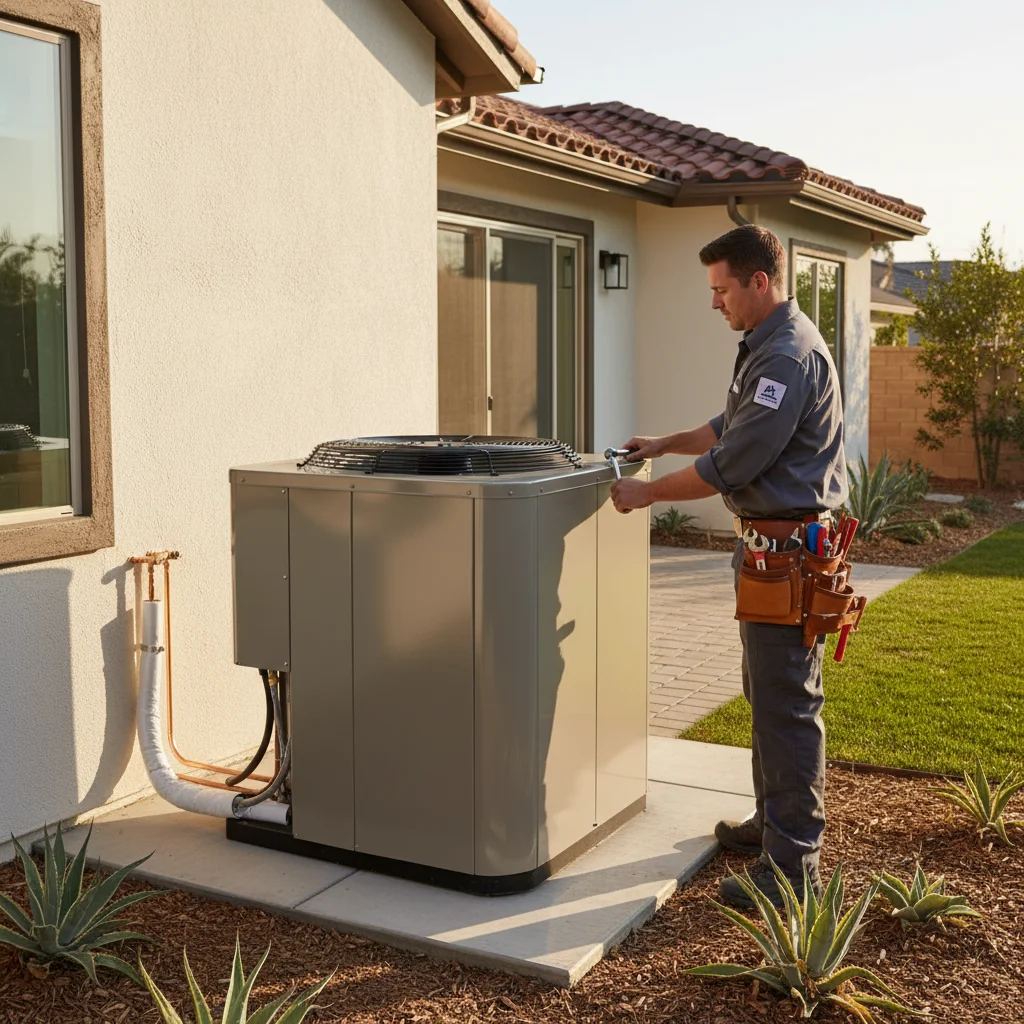
A single-stage compressor has one setting: full output. When the thermostat calls for cooling, it runs at 100% until the target temperature is hit, then shuts off. Cycles are short, temperature swings are noticeable, and humidity removal is limited if the unit isn’t running long enough to wring moisture out of the air.
A two-stage compressor adds a low setting for milder loads and ramps to 100% on hot days. It runs longer at the lower stage, which improves humidity control and reduces the on/off cycling that wears parts out.
A variable-speed (also called modulating or inverter) compressor adjusts output continuously, from a low fraction up to 100%. It rarely shuts off in moderate weather. Instead, it idles at low capacity for hours, holds temperature more tightly, and dehumidifies the whole time.
For San Diego homes, the practical difference shows up in two places: how often the compressor cycles on hot afternoons, and how long it runs total per cooling season. Both of those drive whether the upgrade is even in the conversation.
What each one actually costs to install in San Diego
Ask for three installed quotes on the same existing duct setup, same tonnage, mid-tier brands you would actually buy. New ductwork, electrical upgrades, and zoning add on top. This site does not publish a price ladder.
The premium varies because variable-speed units often require a matching variable-speed indoor blower (ECM motor) and a compatible communicating thermostat. If your existing furnace or air handler can’t communicate with the new outdoor unit, the upgrade cascades. Ask any installer to quote with and without the blower replacement so you can see the real number.
For a full breakdown of how installs are scoped, see central AC installation. For SEER2, see what SEER2 means.
The payback math, honestly
Variable-speed systems use less electricity than single-stage units of similar tonnage when they spend long stretches at part-load instead of cycling hard. DOE says SEER2 is Btu per watt-hour and that actual savings vary with usage. This page will not invent a 25 to 40% savings claim or a coastal 12-year payback.
SDG&E residential plans can price electricity by time of use. Current listed residential TOU plans have a 4 p.m. to 9 p.m. on-peak period. Confirm exact plan and current rates. No cents-per-kWh figure belongs here. High on-peak prices make runtime more expensive. They do not create a website ROI.
Coastal homes (Encinitas, Carlsbad, La Jolla, Coronado, Del Mar, Imperial Beach)
Marine layer holds many summer afternoons milder. Cooling hours are fewer. A variable-speed premium is harder to recover on energy alone. Humidity control and quiet operation can still be independent reasons. Salt air still retires outdoor equipment. See coastal AC corrosion.
Inland homes (Escondido, El Cajon, Poway, San Marcos, Santee, Lakeside, Ramona)
More cooling hours. Summer afternoons run hotter than the coast. Heat waves run well above normals. Cycle reduction and part-load runtime matter more. The same upgrade that is questionable near the beach can be a reasonable conversation inland. Still compare three quotes.
When single-stage is the right call
National brand pages will steer everyone toward variable-speed because the margins are higher. Here’s when single-stage is actually the smarter buy in San Diego:
- You live near the coast and rarely need AC. Salt air may retire the unit before comfort or energy arguments matter. Spend attention on a corrosion-resistant coil instead.
- You’re selling within a few years. Buyers don’t pay the premium back in resale.
- Your ductwork is undersized or leaky. A variable-speed compressor matched to bad ducts will not deliver the comfort brochure. Fix the ducts first or pick a simpler compressor. ENERGY STAR’s typical-house 20% to 30% duct air loss is national context.
- You only use the AC for a few weeks a year.
- Your panel can’t support the outdoor unit without a service upgrade. Some older Encinitas, La Jolla, and Mission Hills homes have 100A panels. That is an electrician’s quote, not a published add-on.
When variable-speed is the obvious upgrade
- Inland location with a real cooling season.
- Someone in the home has allergies or asthma. Continuous low-speed runtime filters more air. Not a medical claim.
- Your home has a two-story layout or rooms that never feel comfortable. Long, low-speed runs even out hot spots that short single-stage cycles miss.
- You’re staying many years and want a quieter system.
- You’re looking at a heat pump variant. Confirm current programs. Section 25C does not apply to property placed in service after December 31, 2025. TECH single-family heat pump HVAC incentives stopped new reservations on November 14, 2025. HEEHRA single-family rebates were fully reserved statewide as of February 24, 2026. You cannot stack TECH and HEEHRA on the same project. See heat pump vs AC.
Two-stage as the middle path
For coastal San Diego specifically, two-stage often beats both single-stage and variable-speed on value. You get longer cycles, better humidity control, and quieter low-stage operation without a communicating thermostat. If a salesperson is pushing you straight from single-stage to variable-speed, ask for a two-stage quote in between. It’s the option the manufacturer pages tend to skip. See two-stage AC.
Decision framework
Use this short version when you’re getting quotes:
- Pull your SDG&E cooling kWh (sum June through September). Light use: stay single-stage or two-stage. Heavy use: take variable-speed seriously.
- Check your ZIP against the coastal/inland line. Coast = lean single-stage or two-stage. Inland = lean variable-speed.
- Confirm your duct system passes a static-pressure test before committing to variable-speed.
- Ask for three quotes with the same tonnage and brand tier so you’re comparing compressor types, not sales pitches.
FAQ
Does a variable-speed AC really last longer than single-stage?
Often modestly, because it avoids hard startup current. Coastal corrosion still applies to both. The matched company estimates remaining life for your pad. This page will not publish a years table.
What SEER2 rating do I need in San Diego?
DOE regional minimums apply. Confirm the legal floor on the AHRI certificate and energy.gov. Anything you can actually buy new should meet the current floor. The real question is whether a higher SEER2 earns the quote delta. See SEER2.
Are there SDG&E rebates for variable-speed air conditioners?
SDG&E Golden State Rebates Program retail rebate offerings have ended. Do not treat that as every SDG&E program. Confirm current terms at sdge.com/rebates. Section 25C does not apply to a 2026 placed-in-service date.
Will a variable-speed AC work with my existing thermostat?
Usually not. Variable-speed condensers typically need a communicating thermostat to talk to the outdoor unit and indoor blower. A standard Nest or ecobee may not deliver the required signals. Budget that on the quote.
Is a variable-speed heat pump a better play than a variable-speed AC?
For many San Diego homes, a heat pump replaces both AC and furnace function. Incentive status is its own checklist. See heat pump vs gas furnace.
Can I install variable-speed in a 100-year-old San Diego home?
You can, but expect ductwork modifications. Older homes in North Park, Mission Hills, South Park, and downtown often have ducts sized for single-stage airflow. Variable-speed needs lower static pressure and may require larger return paths. A reputable installer will measure static pressure before quoting.
Get a quote that includes the real comparison
If you’re shopping AC installation in San Diego, ask the installer for quotes at all three compressor levels with the same brand and tonnage. Climate Pros SD matches you with licensed local HVAC contractors. Call (442) 777-6440.
Related services: AC repair and HVAC maintenance.