For commercial HVAC in Carlsbad, the scope matters as much as the contractor. Two proposals can look similar while covering different equipment, controls, records, and access needs. A useful comparison starts with what each contractor will inspect and document.
What should the service scope identify?
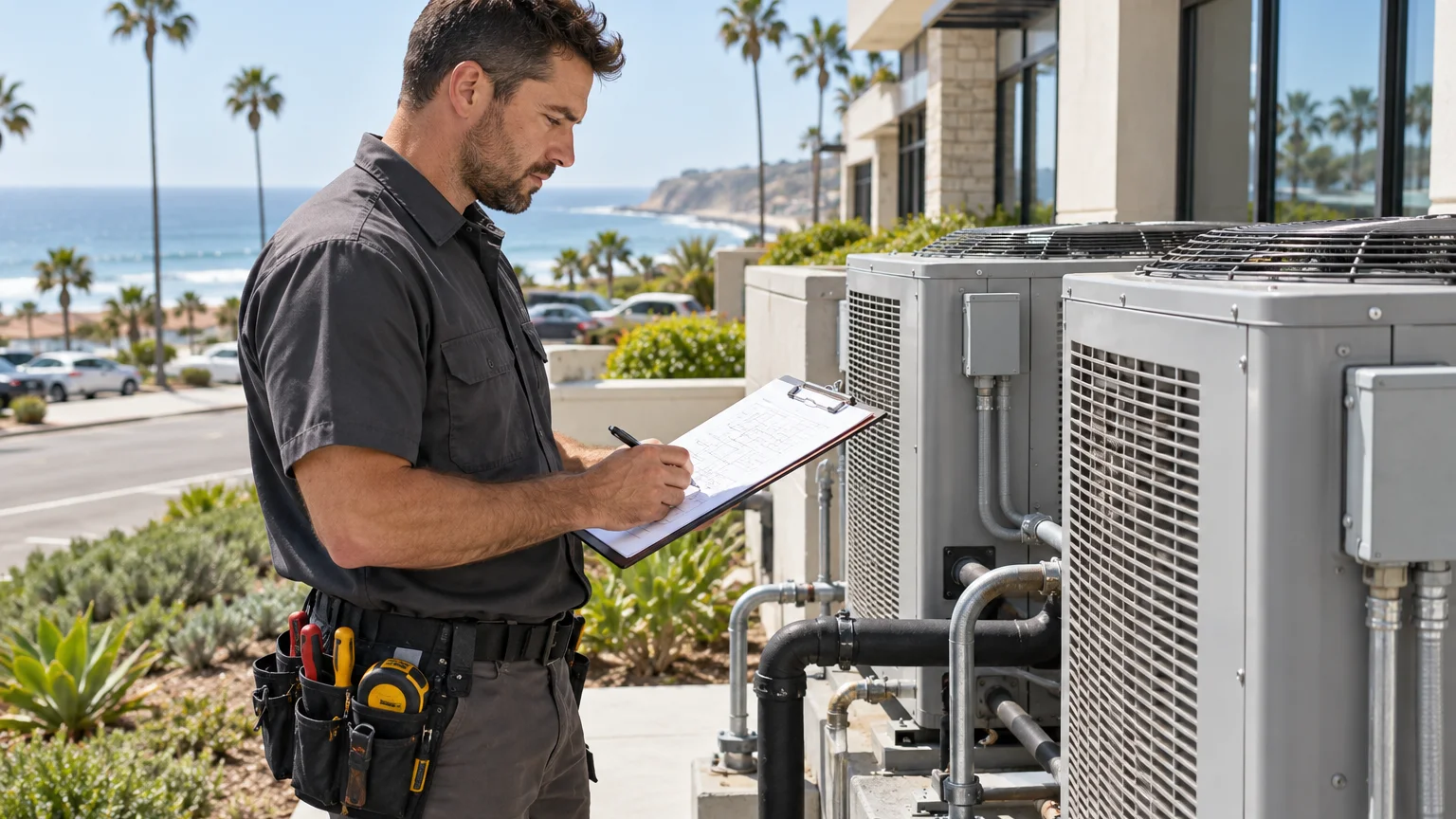
Start with a complete equipment list. The scope should identify every unit included, its location, and the area it serves. Ask the contractor to distinguish tenant equipment from common-area equipment. If exclusions exist, they should be easy to find.
Equipment labels, model details, and available service records help define the work. A property may have rooftop units, split systems, exhaust equipment, thermostats, or building controls. Don’t assume every proposal includes all connected components. Have each contractor state what they’ll examine.
A comparable scope should answer these questions:
- Which heating, cooling, ventilation, and control components are included?
- Will the contractor inspect filters, coils, drains, electrical connections, and controls?
- Are ductwork and accessible air distribution components included?
- Will the pro test operation in each served zone?
- What measurements or observations will appear in the final report?
- Which items require separate approval or another trade?
Ask how findings will be classified. A report might separate immediate operating concerns from maintenance items and longer-term planning notes. The contractor should explain its own categories before the visit.
For replacement planning, request a separate scope. An inspection doesn’t automatically include equipment selection, design work, permits, or installation. Current permit requirements for commercial HVAC work in Carlsbad could not be confirmed from the approved research. The matched contractor should check the current requirements with the City of Carlsbad before regulated work begins.
Climate Pros SD can connect you with independent contractors for commercial HVAC service. Every HVAC pro in the network is licensed and insured. You can also check a contractor’s current license through the California Contractors State License Board.
Which occupant and tenant reports should be collected?
Occupant reports give the contractor a starting point. Collect them before requesting commercial HVAC service in Carlsbad. A short written log is more useful than several separate verbal complaints.
Record the affected suite, room, or zone. Note what occupants observed and when it happened. Useful details include unusual noise, odors, weak airflow, uneven temperatures, or equipment that stops and starts unexpectedly. Don’t diagnose the cause in the log. Describe the condition instead.
Ask tenants whether the issue follows a pattern. It may appear near opening time, during a crowded period, or after a thermostat adjustment. Note whether doors, windows, or interior partitions changed recently. Include any equipment that adds heat within the affected area.
The log should also identify who controls each thermostat. Shared controls can create conflicting reports. One tenant may request a different setting while another reports discomfort. The contractor needs the operating context before assessing the system.
If a problem affects an office property, compare your notes with this guide to office building HVAC in San Diego. Smaller properties can also use the preparation steps in our small-business commercial HVAC guide.
Protect tenant privacy when sharing reports. The HVAC pro usually needs the location, timing, and observed condition. Personal or medical details shouldn’t be included unless the tenant chooses to provide them through the proper channel.
Finally, name one site contact who can answer follow-up questions. This keeps conflicting instructions from reaching the contractor during the assessment.
How can coastal exposure affect the inspection?
Carlsbad belongs to coastal North County, but exposure varies by property. A building near the coast and one farther inland shouldn’t receive identical assumptions. The National Weather Service describes ocean moderation near San Diego and warmer summer days in nearby valleys. Hot easterly winds can also bring heat toward coastal areas.
That regional pattern doesn’t prove what any specific unit has experienced. The inspection should document actual site conditions. Ask the contractor to record equipment placement, surrounding obstructions, visible surface condition, and the condition of accessible components.
For outdoor equipment, the scope can include a visual review of cabinets, coils, fasteners, connections, and nearby drainage. The contractor should distinguish observed deterioration from suspected causes. A photograph can help property managers compare later findings without relying on memory.
Location deserves attention. Record whether equipment sits on a roof, at ground level, inside a mechanical area, or beside vehicle and pedestrian routes. Note nearby landscaping, construction activity, roof work, or recurring water exposure. These are site observations, not automatic diagnoses.
Don’t accept a generic “coastal package” without details. Ask what added inspection steps it includes. Request the same explanation for any proposed cleaning, coating, component replacement, or maintenance change. The contractor should connect each recommendation to an observed condition.
The scope should also avoid promised savings or equipment life. Neither can be confirmed from a visual inspection alone. Ask for present findings, recommended next steps, and the assumptions behind them. This produces a cleaner comparison between commercial heating and cooling proposals in Carlsbad.
What access and operating details should you share?
Commercial HVAC work can stall when the site information is incomplete. Give each contractor the same access notes before comparing scopes. This helps reveal whether a proposal accounts for your property’s actual conditions.
Start with equipment locations and access points. Mention locked rooms, roof hatches, gates, elevators, and tenant-controlled spaces. If building management requires advance access approval, describe that process. Don’t promise access until the responsible party confirms it.
Share the property’s normal operating schedule, but don’t publish it publicly. Explain when the building is occupied and when individual zones are expected to run. Note spaces that can’t tolerate an unplanned interruption. The contractor can then explain what testing requires equipment operation or temporary shutdown.
Provide available documents, including:
- Equipment lists and identifying labels
- Previous service reports
- Filter and maintenance records
- Control schedules and thermostat notes
- Records of recurring occupant complaints
- Known alterations to suites or interior walls
- Roof access or property-management procedures
Tell the contractor about other work happening nearby. Roofing, electrical work, tenant improvements, or construction can affect access and observations. The HVAC scope should state whether coordination with another contractor is excluded or included.
Ask who will restore access panels, locks, alarms, and control settings after the assessment. That question doesn’t assume the HVAC contractor controls every system. It clarifies responsibility before work begins.
If you’re comparing ongoing HVAC maintenance, request the proposed task list in writing. Ask how completed work, skipped items, and new findings will be recorded. Each company sets its own service terms and fees, so review those details directly with the contractor.
When should a commercial HVAC pro assess the system?
Call a commercial HVAC pro when several occupants report the same condition, an operating problem repeats, or equipment behavior changes. A licensed contractor should also assess the system before you rely on a repair, maintenance, or replacement scope.
Some situations require prompt safety action before an HVAC appointment. If you suspect a gas leak, leave the area immediately. From a safe location, call 9-1-1 or the utility. Don’t smoke, light a flame, or switch electrical appliances or lights on or off.
For other concerns, give the contractor the reports and records you collected. Don’t open equipment, remove panels, or attempt refrigerant work. Keep occupants away from damaged or unsecured equipment until a qualified pro assesses it.
A professional assessment is also useful before:
- Comparing proposals that describe different equipment
- Renewing or changing a maintenance arrangement
- Planning tenant improvements
- Replacing controls or changing operating schedules
- Reviewing repeated repair recommendations
- Preparing a longer-term equipment plan
Ask each contractor to separate confirmed findings from items requiring more testing. A visual concern isn’t the same as a completed diagnosis. Likewise, an equipment age or model number doesn’t determine the correct action by itself.
For Carlsbad commercial HVAC maintenance, use the same property information for every bidder. Compare included equipment, inspection tasks, documentation, exclusions, and approval steps. Don’t choose from a service label alone. “Maintenance,” “inspection,” and “tune-up” may describe different scopes across companies.
When to call us
Call Climate Pros SD when your Carlsbad property needs a licensed HVAC pro to assess equipment, compare service scopes, or review recurring occupant reports. Call us at (442) 777-6440 and we will match you with a licensed local pro.