Thermostat installation in La Mesa starts with identifying the HVAC system, not choosing a screen. The installer should confirm compatibility before removing the current control or approving a replacement.
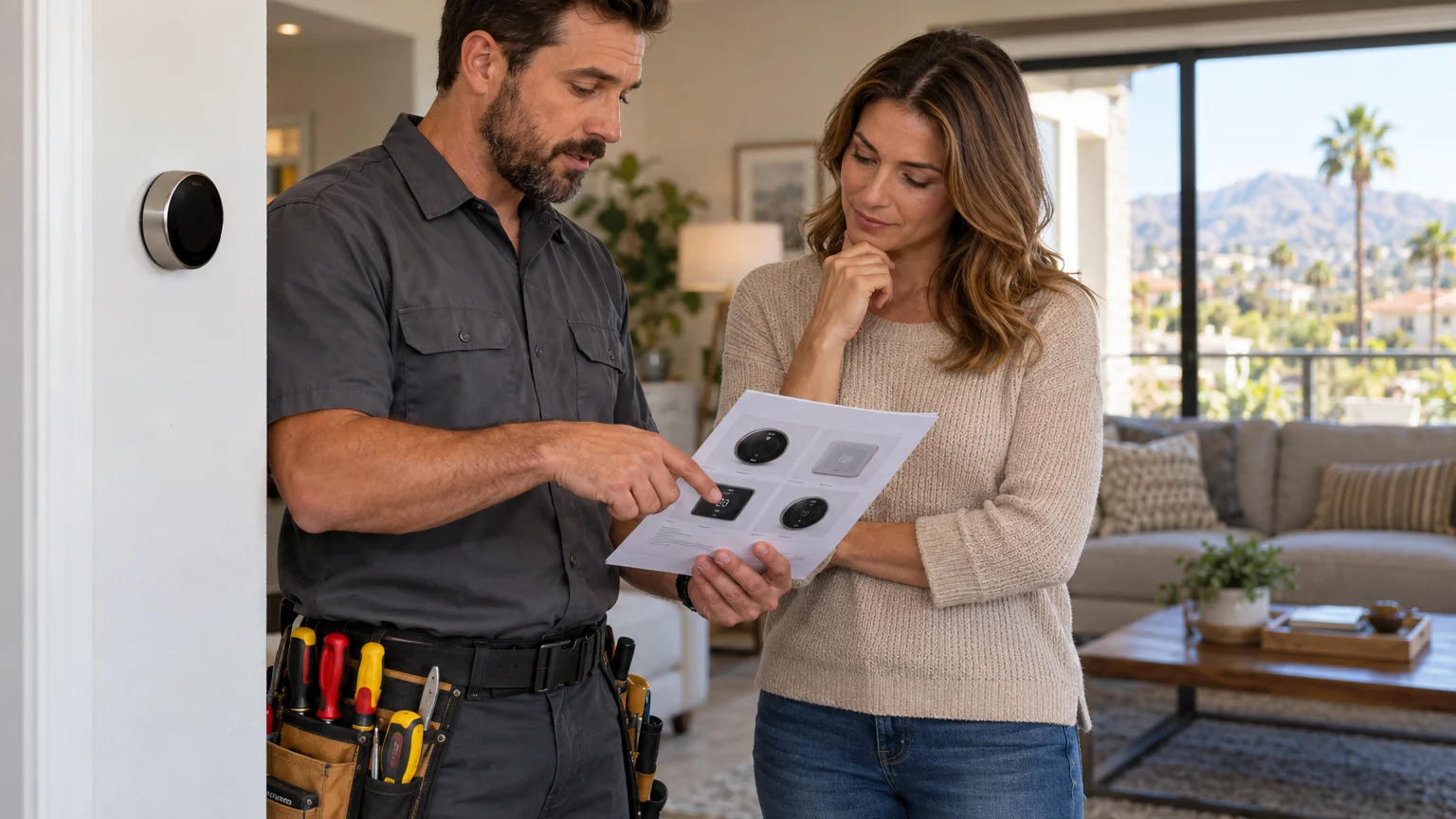
Which system details should you identify first?
Start with the equipment already serving the home. Record the manufacturer and model number shown on each accessible equipment label. A licensed HVAC pro can inspect anything that isn’t visible.
List every part of the system you know about. That may include indoor and outdoor equipment, separate heating equipment, or more than one thermostat. Also note whether one thermostat controls the whole home or different areas have separate controls.
Photograph the existing thermostat while it’s still mounted. Include its display, model information, and any error message. These photos help the contractor understand what’s installed without relying on memory. The installer can identify the wiring and perform any needed electrical testing.
Your comfort complaint matters too. Write down whether the issue affects cooling, heating, the fan, or only the thermostat display. Note whether it began after an outage, equipment repair, thermostat change, or internet update. That sequence gives the pro a clearer starting point.
La Mesa sits in inland East County rather than the moderated coastal strip. NOAA’s 1991–2020 normal high for the El Cajon station, which the site’s local climate ledger applies to La Mesa, is 86.1°F in July and 88.6°F in August. Heat waves can run above those normals. A clear control plan matters when cooling use increases.
For an overview of the referral service, visit our thermostat installation page. Climate Pros SD matches homeowners with licensed, independent local HVAC professionals.
How do heat pumps and staged systems change the check?
The thermostat label alone can’t confirm the full control setup. The contractor should compare the proposed thermostat with the exact heating and cooling equipment. That review matters when a home has a heat pump, staged equipment, zoning, or manufacturer-specific controls.
Tell the installer if your current thermostat shows settings such as emergency heat, auxiliary heat, multiple zones, or separate operating stages. Don’t assume a new model supports those functions because its packaging uses broad terms like “compatible” or “universal.” Ask for confirmation tied to your equipment model numbers.
A heat pump deserves a specific compatibility review. The pro should identify how the installed system controls heating, cooling, and any supplemental heat. The homeowner doesn’t need to interpret terminals or move wires. The goal is a written record showing that the proposed control matches the equipment.
Staged equipment needs the same care. Ask the installer to document which system functions the thermostat will control after installation. If the current equipment uses a proprietary controller, ask whether replacing it changes any available functions. The answer should come from the equipment and thermostat documentation.
Zoned homes add another layer. Record the number of thermostats and which rooms each one serves. Mention any wall control, zoning panel, or room sensor you can see without opening equipment. A thermostat replacement in one area shouldn’t be treated as an isolated product choice until the complete control arrangement is checked.
Our C-wire guide for San Diego homes explains what information to gather before a compatibility visit. It doesn’t replace an on-site electrical and equipment review.
What should the installation scope document?
A useful installation scope names the thermostat, the equipment being controlled, and the work included. It should identify the proposed product by its exact model, not just its brand or product family. The scope should also state whether the existing thermostat is being replaced or a new control location is proposed.
Ask the contractor to document these points:
- The HVAC equipment included in the compatibility review
- The exact thermostat model proposed
- Any sensors, control modules, or related parts included
- Whether wall finishing or paint work is excluded
- Who will configure connected features and user accounts
- Which operating modes will be checked after installation
- What homeowner instructions or product documents will be provided
The scope should separate thermostat work from unrelated HVAC repairs. If the contractor finds an equipment problem, ask for that finding and the proposed work in writing. This makes it easier to compare the thermostat installation with any separate repair recommendation.
Ask what the contractor charges before approving work. Climate Pros SD doesn’t set contractor prices or fee policies. The homeowner contracts with and pays the matched professional directly. You should hear the price before any work starts.
For broader equipment care, review what an HVAC maintenance visit may cover. Maintenance and thermostat installation can overlap during an inspection, but they aren’t automatically the same service.
If the thermostat issue appeared alongside poor cooling, describe both symptoms. Our guide to AC repair in La Mesa and East County can help you organize those observations before speaking with a contractor.
Which product claims need manufacturer confirmation?
Treat every major product claim as something to verify in current manufacturer documentation. Retail descriptions and model names may sound precise without answering whether a thermostat fits your exact system.
Start with compatibility. Ask for confirmation based on the complete thermostat model and all connected HVAC equipment. Broad claims such as “works with most systems” aren’t a system-specific answer. If the manufacturer provides a compatibility tool, make sure the entered equipment details match your home.
Connected features need the same review. Confirm which features require Wi-Fi, a phone app, a manufacturer account, or another device. Ask what remains available if the internet connection is interrupted or the account isn’t set up. The answer may vary by product, so use the current manual rather than an assumption.
Confirm sensor claims in writing. Find out which sensors come with the thermostat, which are separate purchases, and what each one controls. A room sensor, occupancy feature, or remote reading shouldn’t be treated as included unless the exact product documentation says so.
Energy and savings language also deserves restraint. Don’t accept a fixed savings promise without evidence tied to your equipment, settings, use, home, and electric plan. SDG&E residential time-of-use plans can place peak pricing from 4 p.m. to 9 p.m., but rates and plan terms can change. Confirm your exact plan and current rates with SDG&E.
Warranty terms must come from the written manufacturer documents for that model. Ask who handles a product claim and whether labor is separate. Climate Pros SD doesn’t provide equipment warranties or guarantee manufacturer coverage.
Keep copies of the model number, written scope, receipt, manual, and any manufacturer terms supplied with the product.
When should a licensed pro verify compatibility?
Bring in a licensed HVAC professional when the system details remain unclear or the proposed thermostat affects more than a basic wall control. That includes heat pumps, staged equipment, zoning, supplemental heat, multiple thermostats, proprietary controls, and equipment with missing or unreadable labels.
A pro should also inspect the system when the thermostat problem overlaps with heating or cooling trouble. A blank display, missed call for cooling, short cycling, or inconsistent operation doesn’t establish the cause by itself. Describe the symptom, then let the contractor test the equipment and controls.
Gather exterior photos and written records. The contractor can compare those details with manufacturer instructions and inspect the installed configuration.
California’s C-20 contractor classification includes thermostatic controls connected with covered HVAC systems. You can confirm a contractor’s current license information through the California Contractors State License Board. Climate Pros SD matches customers with licensed and insured independent HVAC pros, but the selected contractor performs the work and sets the terms.
Ask for compatibility confirmation before purchasing a thermostat that may be difficult to return. If you already bought one, provide its complete model number before the visit. Don’t rely only on a store category, online headline, or the appearance of the current thermostat.
A careful La Mesa thermostat installer should be able to explain the proposed match in plain language. If any point remains uncertain, ask where the answer appears in the manufacturer’s documentation.
When to call us
Call when your system type is unclear, compatibility hasn’t been confirmed, or the thermostat issue overlaps with HVAC performance. Call us at (442) 777-6440 and we will match you with a licensed local pro.