A C-wire is the 24-volt common conductor that gives a smart thermostat constant power. Older San Diego systems were wired for a battery thermostat that only needed R and W, or R, Y, and G. Nest, Ecobee, and similar units want a real C, or they steal power from other terminals and the system starts short-cycling, dropping Wi-Fi, or throwing heat-pump faults. This page is the wiring question. Brand comparison lives on Nest vs Ecobee. Full install steps live on the smart thermostat installation guide.
Climate Pros SD matches you with licensed HVAC companies. We do not pull thermostat wire or publish prices.
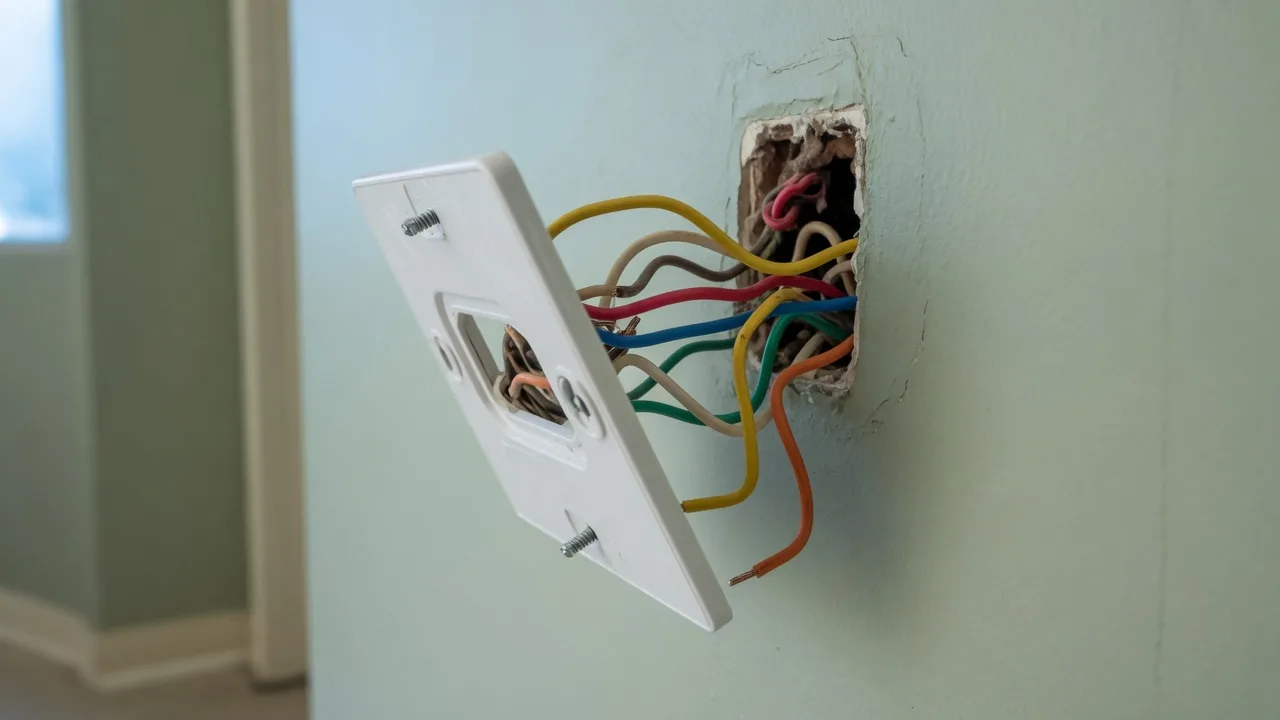
How do you tell if you already have a C-wire?
Kill power at the furnace or air-handler switch first. Pull the thermostat straight off the sub-base. Count the conductors in the wall cable, not the empty screws on the old base.
- A used terminal labeled C with a conductor on it is a C-wire.
- A spare unused conductor in the cable can often become C at both ends.
- Four wires and every one already doing a job (R, W, Y, G) means there is no spare. A heat pump also uses O or B for the reversing valve. That fifth function is why heat-pump swaps run out of wires first.
Wire color is a convention, not a law. Blue is often C. It is also often something else. Read the board labels at the furnace, not a blog color chart.
What is a C-wire adapter, and when is it a bad idea?
An adapter (Ecobee’s Power Extender Kit is the one people name) uses existing wires plus extra modules so the thermostat can run without a new conductor. It is a workaround for a finished wall where fishing a new cable is ugly.
It is a worse idea when:
- The system is a heat pump and O/B is already using the fifth wire
- The furnace board is old and the adapter instructions exclude that control
- Someone already “jumped” R and C at the board to stop a reboot, which can cook a transformer
A real C from a new run of 18/8 cable between the air handler and the thermostat is the clean fix. That is low-voltage work. The matched company still confirms compatibility with the board. A smart thermostat with new wiring can need an electrical permit in some jurisdictions. The permit guide flags that as “sometimes.”
Why do San Diego heat pumps argue with a missing C?
Heat pumps need the thermostat to keep the reversing valve and the outdoor unit in the right state. Power-stealing thermostats pulse the Y or W circuit to charge. That pulse can look like a call for cooling, a call for strips, or a defrost. Then the homeowner thinks they need Emergency Heat. They need a common wire.
Coastal condos with a wall pad and a slim cable, and 1960s tract homes with 18/4 in plaster, are the two local patterns. Inland two-stories with true zoning already have more conductors. Do not assume the hallway thermostat cable matches the upstairs zone.
What should be on the quote?
Photos of the sub-base, photos of the furnace control board terminals, thermostat model, system type (gas furnace, heat pump, dual fuel), and whether they will fish a new cable or use an adapter. Like-for-like battery thermostat swaps often skip a permit. New conductors through finished walls are a different scope.
Call (442) 777-6440. We match you with a licensed company that will look at both ends of the cable before they promise a Nest or Ecobee will stay online.