An HVAC backlog gets hard to manage when tickets, tenant emails, and old proposals stop matching. Deferred maintenance means identified or planned HVAC work that remains open. Put every item into one record, then let a licensed pro decide what gets fixed first.
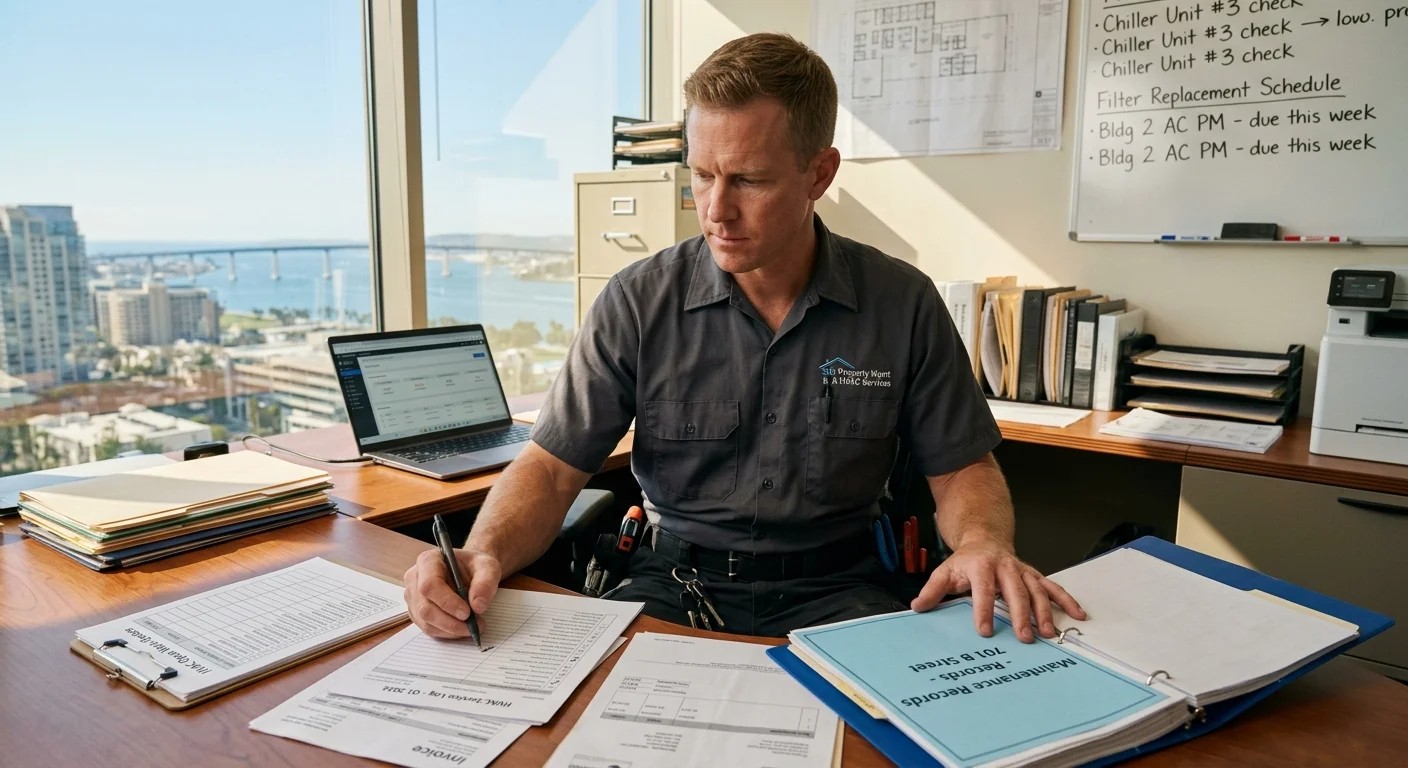
Fix safety and no-cool items before cosmetic HVAC backlog
Put every open HVAC ticket in one list. A licensed pro should rank gas odors, no heat, no cooling in occupied rooms, then filters, coils, and deferred upgrades. Tenant emails and old proposals are not a work order. If the record disagrees, the equipment on site wins.
Checklist
- Export every open ticket with date and equipment ID.
- Flag gas smell and carbon monoxide alarms as stop-work-and-evacuate items.
- Separate owner-approved work from contractor suggestions.
- See rental HVAC maintenance.
- Use HVAC maintenance log as the shared file.
Related: HVAC maintenance and emergency HVAC.
What counts as deferred HVAC maintenance?
Deferred HVAC maintenance isn’t limited to a skipped maintenance visit. It can include an incomplete service recommendation, an unresolved comfort complaint, or a repair that was proposed but never approved. It also includes items whose status can’t be confirmed from the available records.
Start by gathering every HVAC-related record for the property. Include invoices, service tickets, proposals, maintenance logs, equipment lists, occupant messages, photos, and control-system notes. Keep rejected proposals and closed tickets too. They may explain when a symptom first appeared or what a previous contractor inspected.
Don’t treat every document as proof that work was completed. A proposal describes proposed work. An invoice should identify what was actually billed. An email may record a concern without confirming its cause. Mark each item as completed, open, declined, recommended, or unknown. Keep uncertain items in the backlog until a licensed pro reviews them.
Separate the records by property, building, and equipment. A portfolio might include an office in Kearny Mesa, retail space in Chula Vista, and a facility in Escondido. Combining those records into one unlabeled spreadsheet makes patterns harder to follow. Assign each item to the location and unit named in its source document.
Owners facing a broad commercial backlog can also review the available commercial HVAC referral service. Climate Pros SD connects San Diego County property owners with licensed, independent HVAC professionals. The matched contractor assesses the equipment and recommends the actual order of work.
Which occupant reports belong in the backlog?
Include occupant reports involving heating, cooling, airflow, controls, noise, odor, or unexpected system operation. The person reporting the issue doesn’t need to diagnose it. Their role is to describe what happened, where it happened, and whether it happened again.
Record the original wording when possible. Add the property, suite, room, date, and equipment identifier if known. Note whether the issue was continuous or intermittent. Attach any related ticket, photo, control alert, or service response. Don’t add a technical cause unless a contractor documented one.
Avoid collapsing different reports into a broad label such as “comfort problem.” A warm conference room, an inactive thermostat, and unusual rooftop-unit noise are separate observations. They may involve different equipment or causes. A licensed pro must determine whether those reports are connected.
Keep site context attached to each report. A complaint from a coastal San Diego building and one from an inland Escondido property might use similar words. That doesn’t establish a shared cause. Separate records let the contractor evaluate each building and its equipment on their own terms.
Repeated reports deserve a clear flag for professional review, but repetition alone doesn’t establish technical urgency. Likewise, a single report shouldn’t be dismissed because nobody submitted a second ticket. The backlog should preserve what occupants observed without turning those observations into a diagnosis.
Owners managing one storefront or professional suite can pair this process with our guide to commercial HVAC for San Diego small businesses. It explains the broader questions surrounding service planning without replacing an equipment assessment.
How can service records reveal repeated faults?
Service records can reveal repetition, but they don’t confirm a fault by themselves. A contractor must inspect the system and interpret the history. Your job is to make that history readable.
Create one timeline for each identifiable unit or system. Use the asset number already shown on service documents. If no asset number exists, use a plain location description. Don’t guess a model, serial number, capacity, refrigerant, or equipment age.
Each timeline should capture:
- The date of the visit or report
- The symptom recorded at that time
- Any finding documented by the contractor
- The work proposed
- The work shown as completed
- The current status of the item
- The source document supporting the entry
Use separate columns for symptoms and confirmed findings. An occupant report that a room felt warm isn’t the same as a contractor documenting a component condition. Keeping those fields separate prevents an assumption from becoming a false maintenance record.
Look for repeated language, repeated equipment identifiers, and items that appear across several documents without a clear closure. Also compare proposals against later invoices. If a recommendation appears in one document but no later record confirms completion, mark it unknown. Don’t assume silence means the work happened.
Keep routine service records beside repair records. That gives the reviewing contractor one history instead of separate fragments. Our HVAC maintenance service page can help owners request a maintenance connection after the backlog is organized.
Larger properties may need records separated by floor, tenant area, or mechanical zone. The San Diego office-building HVAC guide provides added context for coordinating equipment decisions around occupied workspaces.
What should a San Diego owner ask a licensed pro?
Ask for an independent assessment of the equipment and the documented backlog. Give the contractor the records before or during the site review. Explain which entries remain uncertain, which symptoms have repeated, and which proposals were never approved.
Request written answers to practical questions:
- Which backlog items match a confirmed equipment condition?
- Which items require further testing before a recommendation?
- Which entries describe the same issue under different wording?
- What order does the contractor recommend, and why?
- Does one proposed task depend on another?
- Which items are maintenance, repair, or replacement evaluations?
- Which permit or inspection questions apply to this property?
- Which items fall outside the contractor’s proposed scope?
Don’t assign technical urgency before the assessment. Labels such as urgent, minor, or safe can imply conclusions that the records don’t support. Let the licensed pro set the technical order. The owner or facility manager can then explain access limits, tenant commitments, operating concerns, and budget constraints.
Every HVAC pro in the Climate Pros SD network is licensed and insured. Property owners can also use the CSLB license check to confirm a contractor’s current status and classification before signing a contract.
For properties within City of San Diego jurisdiction, the city states that HVAC or refrigeration systems can’t be installed, altered, replaced, or repaired without a mechanical permit. The city distinguishes between no-plan and plan-required permits. Ask the matched contractor which path applies to the proposed work.
The approved research didn’t confirm the current requirements for unincorporated San Diego County. It also shouldn’t be extended to Chula Vista, Escondido, or another incorporated city. Ask the contractor which permitting authority controls the property, then confirm the current rule with that authority.
How do you turn the backlog into a quoted scope?
Start with the contractor’s findings, not the oldest spreadsheet entry. The licensed pro determines the technical repair order after reviewing the equipment. Your final scope should connect each proposed action to a property, system, documented condition, and recommendation.
Give every scope line a clear identifier. Include the building, equipment label, observed issue, source record, contractor finding, proposed action, and any stated dependency. Add a permit question where relevant. Keep investigation items separate from confirmed repairs so the quote doesn’t imply that an unverified cause has already been established.
Ask the contractor to identify what the proposal includes and excludes. If access, controls, electrical work, tenant coordination, or another trade affects the scope, request clear written treatment. Don’t fill those gaps yourself. The contractor should explain what falls within the offered work.
Send the same organized record packet when seeking another assessment. Contractors may reach different conclusions after inspecting the property. Compare whether each proposal addresses the same equipment and backlog items. Don’t compare only the final total when the underlying scopes differ.
The independent contractor sets prices, diagnostic fees, payment terms, and warranty terms. Climate Pros SD doesn’t set those policies. Ask the pro what their diagnostic fee is and whether it applies toward the repair. Each company sets its own policy.
After selecting work, update the backlog. Mark each item as approved, completed, held, declined, or still under review. Attach the accepted proposal and later completion documents to the same equipment record. Any item excluded from the approved scope stays visible instead of disappearing between files.
This produces a working commercial HVAC maintenance backlog without pretending the spreadsheet can diagnose equipment. It also gives the licensed pro enough structure to explain the recommended sequence.
When to call us
Call when deferred maintenance records no longer show what’s open, symptoms keep returning, or equipment decisions require a licensed assessment. Call us at (442) 777-6440 and we will match you with a licensed local pro.