For emergency HVAC repair in Chula Vista, first record the symptoms, thermostat display, and equipment location. Climate Pros SD can then match you with an independent licensed local HVAC professional. You’ll contract with and pay that professional directly.
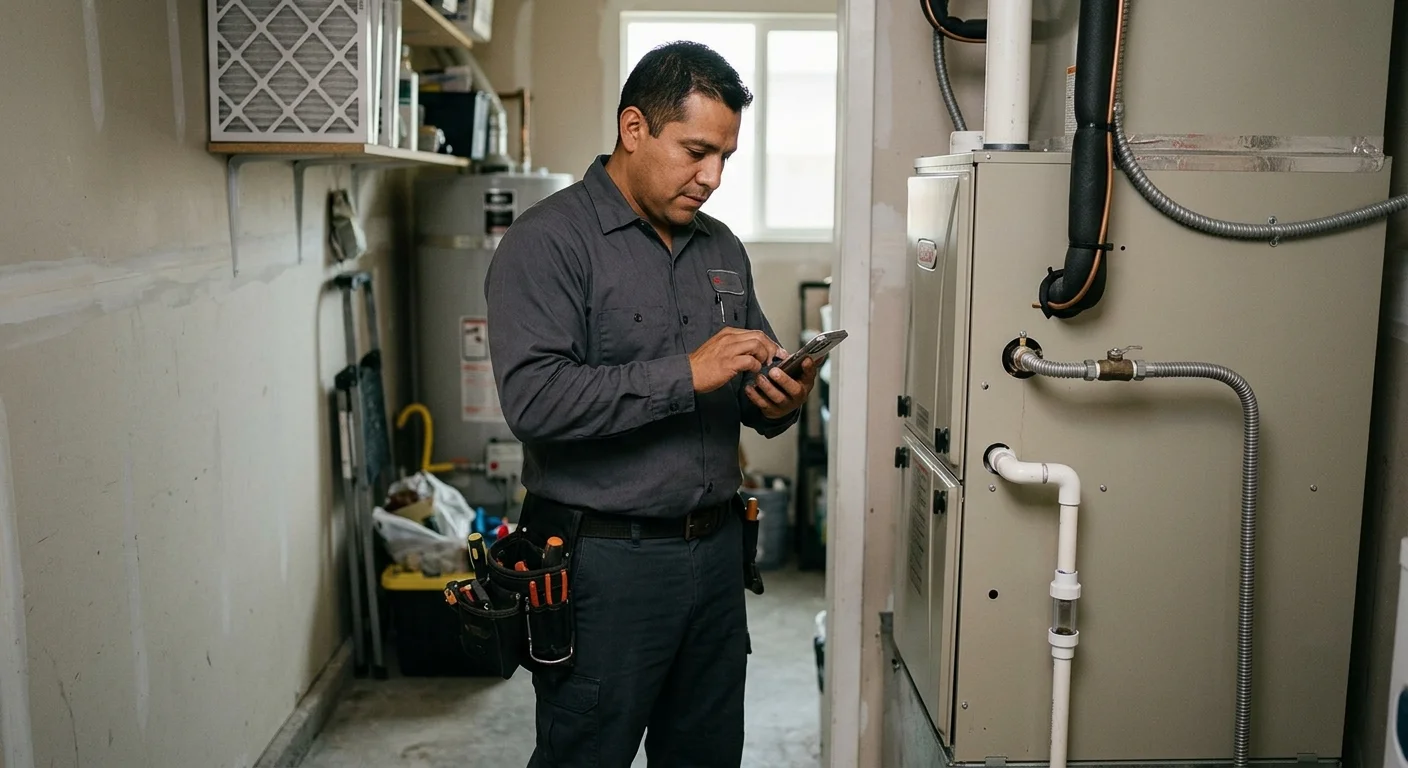
Chula Vista emergency HVAC: record, then match a C-20
Write the symptom, thermostat display, and equipment location. If you smell gas, leave and call 911 or SDG&E. Climate Pros SD refers. It does not dispatch its own technicians. South Bay heat waves load SDG&E circuits. A tripped breaker after a outage is a first check, not proof the compressor failed.
Checklist
- Photograph the thermostat screen.
- Note whether the outdoor fan spins.
- Check the breaker once. Do not loop resets.
- Write gate codes and parking for the contractor.
- See emergency HVAC.
Related: Chula Vista HVAC and AC not cooling checklist.
What should you record before requesting a match?
Start with a short timeline. Note when you noticed the failure and whether the system stopped suddenly or weakened over time. Clear observations help the matched pro begin with the right questions.
Record these details before calling:
- The thermostat mode, set temperature, displayed temperature, and any message
- Whether air is moving from any supply vents
- Whether the problem affects every room or one part of the home
- Any sounds, odors, moisture, or repeated starts and stops
- Whether the indoor or outdoor equipment appears to be running
- Any recent power interruption, filter change, or thermostat adjustment
Use plain descriptions instead of naming a suspected part. “Buzzing near the outdoor cabinet” is more useful than guessing that a motor failed. The contractor will determine the cause after inspecting the system.
Take a photo of the thermostat display. A short recording may also capture an intermittent sound. Keep equipment covers closed while documenting what you can see and hear. If a model label is visible from outside the cabinet, photograph it. If it isn’t visible, don’t remove anything to find it.
Include the property address and your preferred contact method. Say whether you know the system type. “Unknown” is a useful answer when you aren’t sure. Climate Pros SD needs an accurate description, not a homeowner diagnosis, to understand the contractor match you’re requesting.
How do cooling and heating failures differ?
Cooling and heating requests need different symptom notes. The first step isn’t finding the cause. It’s describing what the system does when you select the requested mode.
For a cooling failure, note whether the thermostat is set to cool. Record whether air moves and whether that air feels cool, warm, or unchanged. Note any moisture you can see around the equipment. Also describe what happens at the outdoor cabinet without opening it.
Our AC repair service page explains how to request help for cooling problems. The Chula Vista AC repair guide offers more local context for homeowners comparing repair options.
For a heating failure, record whether the thermostat is set to heat. Note whether airflow begins, stays off, or changes during the cycle. If you know the system is a furnace or heat pump, include that detail. If you don’t, avoid guessing. You can review our furnace repair service page and Chula Vista furnace repair cost guide before speaking with a contractor.
Chula Vista’s climate also changes across the city. NOAA’s 1991-2020 normals list an August normal high of 76.9°F at the Chula Vista station. Brown Field, used for east Chula Vista and Otay, has an August normal high of 80.6°F. Heat waves can run well above those normals. These figures don’t decide whether your situation is an emergency. Your symptoms, household needs, and the contractor’s assessment shape that decision.
What access details should Chula Vista residents share?
A contractor needs to know how the property and equipment can be reached. Start by saying whether you’re in west Chula Vista or the east Chula Vista and Otay area. Then identify the property as a detached home, townhouse, condo, apartment, or another building type.
Describe the indoor equipment location using ordinary terms. It may be in a closet, garage, attic, utility area, or another space. Say where the outdoor cabinet is located if you know. Mention whether access involves a side gate, balcony, roof, shared room, stairs, or an elevator.
Share only the instructions needed to reach the property. Useful details may include:
- The unit number and correct entrance
- Gate, callbox, or property-manager instructions
- Parking limits the contractor should know
- Locked areas that require another person’s help
- Pets or occupants who may affect access
- The name of the person who can open the equipment area
A map pin can help when an entrance doesn’t face the listed street. Written landmarks can also clarify which gate or building applies. Don’t include an access code in public notes or an unsecured message.
Tell the matched contractor when someone can open the property. The contractor confirms their own availability and timing. Climate Pros SD doesn’t provide an arrival window or send technicians. Its role is matching customers with independent licensed HVAC professionals serving San Diego County.
What should renters and HOA residents confirm?
Renters and HOA residents should check who can approve access and proposed work. The approved claims ledger doesn’t establish one Chula Vista rule covering every lease or HOA. Check your lease, association documents, and property-management instructions before authorizing work.
If you rent, ask the owner or property manager who should speak with the contractor. Confirm which person can open locked equipment areas. Also ask who reviews the diagnosis, approves a proposal, and pays the professional. Give the contractor that contact’s information only when you’re authorized to share it.
For an HOA property, check whether the equipment sits in a private area or shared space. Ask the association or manager about roof keys, equipment-room access, exterior cabinets, and any required approval steps. Don’t assume the contractor can enter a common area because the home’s interior is accessible.
Chula Vista-specific HVAC permit requirements couldn’t be confirmed from the approved claims ledger. The verified City of San Diego permit information doesn’t establish the rules for Chula Vista. Ask the matched licensed contractor to check the current official City of Chula Vista requirements for your address and proposed work. If a permit is needed, the matched contractor handles that process, not Climate Pros SD.
These checks give the professional a clearer picture before the inspection. They also separate the person reporting the problem from the person authorized to approve work.
When should an independent licensed pro inspect it?
Request an inspection when the failure continues and basic observations don’t explain it. Common reportable symptoms include no response from the thermostat, no airflow, unexpected air temperature, repeated cycling, visible moisture, or a new sound or odor. Report exactly what happened and leave the equipment cabinet closed.
A licensed professional should also inspect a problem that requires electrical, refrigerant, fuel, or internal component testing. Climate Pros SD doesn’t diagnose the equipment or perform repairs. The independent contractor examines the system, explains the findings, and presents the available options.
If a visible equipment label says HCFC-22 or R-22, photograph it for the contractor. U.S. production and import of R-22 ended January 1, 2020. Existing systems may still be serviced with recycled or previously produced refrigerant. The contractor can determine what applies to your equipment.
Use our emergency HVAC service page when you’re ready to request a match. Every HVAC pro in the network is licensed and insured. You can also verify a contractor’s license status through the California Contractors State License Board.
Climate Pros SD doesn’t set repair prices or diagnostic policies. Ask the pro what their diagnostic fee is and whether it applies toward the repair. Each company sets its own policy. You hear the price before any work starts, then decide whether to authorize it.
When to call us
A persistent heating or cooling failure needs an independent licensed HVAC pro when diagnosis requires opening or testing the equipment. Climate Pros SD can connect you with a local professional while you keep the symptom and access details organized. Call us at (442) 777-6440 and we will match you with a licensed local pro.