A cold house and a silent furnace can make details easy to miss. Before requesting furnace repair in Tierrasanta, record what happened, what you observed, and where the equipment sits. Those notes help a licensed HVAC pro begin with a clearer picture.
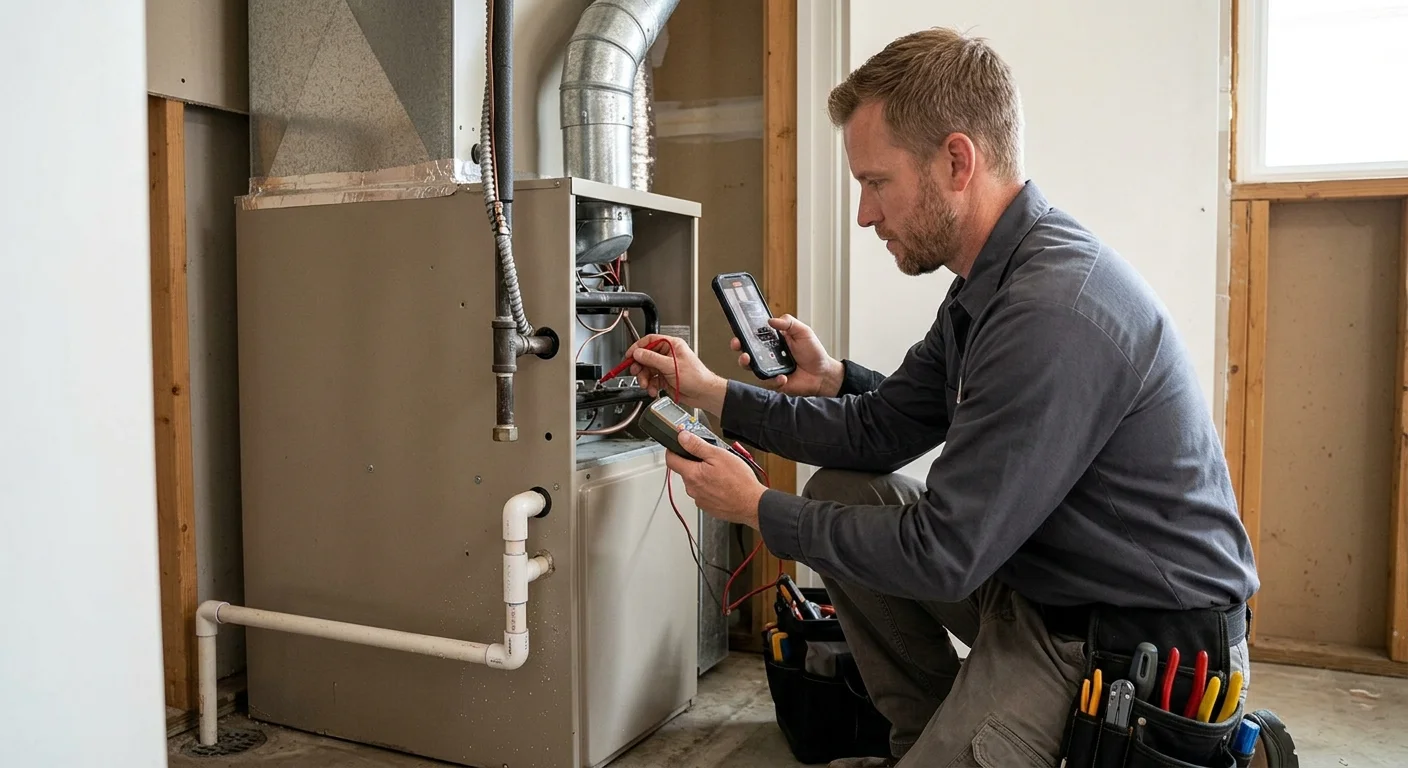
Tierrasanta no-heat: a written symptom beats a guessed part
Record time of failure, thermostat display, and whether you hear the inducer. City of San Diego mechanical permits apply if the job becomes a replacement. Tierrasanta sits in city limits, not unincorporated county. Permit path differs from Fallbrook.
Checklist
- Photograph the thermostat.
- Note equipment closet versus attic.
- Do not open live panels.
- See City permit contrast in heating repair Carlsbad.
- Use Tierrasanta HVAC.
Related: Furnace repair and CSLB lookup.
Climate Pros SD matches homeowners with licensed, independent local HVAC contractors. The matched contractor inspects the system, explains the findings, and sets the price. You contract with and pay that professional directly.
What should you record when the heat stops?
Start with the moment you noticed the problem. Write down whether the house felt cold, the thermostat display looked different, or the furnace stopped during a heating cycle. Use plain descriptions instead of trying to diagnose the cause.
Record what you can see, hear, and smell from outside the closed cabinet. Note whether air reaches the vents and whether it feels warm, cool, or unchanged. Describe any unusual sound in your own words. A rattle, click, buzz, or silence is more useful than a guessed component name.
The sequence matters too. A furnace that never starts presents differently from one that begins running and then stops. Record what happens after the thermostat requests heat. Include whether the indoor fan runs and whether the pattern repeats.
Note any recent event that may provide context. Examples include a power interruption, thermostat battery change, filter change, remodeling work, or a previous service visit. Don’t assume that event caused the failure. Simply include it in the timeline.
Also record which rooms feel affected. If every vent seems unchanged, say so. If only one part of the home feels different, identify that area. A short written timeline is easier to share than a rushed explanation from memory.
If ignition appears to be the central problem, read this guide about why a furnace won’t ignite. Use it to organize your observations, not to assign an error meaning or attempt an internal repair.
Which observations don’t require opening the furnace?
You can collect useful information while leaving the furnace cabinet closed. Begin at the thermostat. Photograph its display and record the selected mode, displayed temperature, and requested temperature. If the display shows a message or code, copy it exactly without interpreting it.
Walk through the occupied rooms and check the accessible supply vents. Note where you feel airflow and where you don’t. Keep furniture, flooring, room names, and open or closed interior doors in your notes. These details describe the conditions the contractor will encounter.
Listen from a normal standing position near the equipment. Write down when a sound begins, how long it continues, and whether it repeats. A short video may preserve a sound that disappears before the visit. Don’t remove a panel to obtain a closer recording.
Look for information visible around the equipment. You may notice an indicator through an existing viewing area or find a label on the exterior. Photograph only what’s already visible. Don’t loosen covers, reach into the cabinet, or move wiring.
You can also photograph the thermostat, accessible vents, equipment location, and surrounding clearance. These images can help explain the layout before an inspection. They don’t replace hands-on testing by a licensed contractor.
Carbon monoxide concerns are separate from ordinary symptom logging. Our guide to carbon monoxide in San Diego homes provides background on that subject. It isn’t a substitute for instructions from the proper emergency authority.
How can Tierrasanta home access affect the visit?
For furnace repair in 92120, access notes can prevent confusion about the property. Start with the exact address and the best entrance for reaching the equipment. Mention any gate, call box, parking restriction, locked utility area, or community access instruction that applies to your home.
Don’t assume the furnace sits in an obvious place. Tell the contractor whether it’s reached through a garage, closet, attic opening, crawl area, side yard, or another space. Describe stairs, narrow passages, stored belongings, pets, and doors that require a key. Keep the description factual and specific.
Tierrasanta uses the San Diego Montgomery Field station in the site’s verified local climate dataset. NOAA’s 1991-2020 normals list a January normal low of 46.0°F there. The same station lists normal highs of 79.8°F in July and 82.0°F in August. These figures describe the reporting station, not the temperature at every Tierrasanta home.
That local pattern helps explain why heating can receive less attention during warmer months. It doesn’t identify the cause of a furnace failure. A contractor still needs to inspect the actual equipment and home conditions.
Property jurisdiction also matters if the conversation moves from repair to replacement. The City of San Diego states that heating, ventilation, air-conditioning, and refrigeration work generally requires a mechanical permit. Furnace replacements may qualify for a no-plan permit on non-historic properties. The matched licensed contractor handles applicable permit work, not Climate Pros SD.
Share the property type and any known historic designation before work is proposed. If you don’t know the status, say it hasn’t been confirmed. The contractor can identify which records or city department must be checked.
What equipment details should you share?
The exterior equipment label is the best starting point. Photograph the full label in good light if it’s accessible without opening anything. Make sure the manufacturer name, model number, and serial number remain readable. Don’t guess at faded characters.
Tell the contractor what type of heating system you believe you have, but mark uncertain information as uncertain. A previous invoice, home inspection, owner’s manual, or thermostat app may contain useful identifiers. Share the document itself when possible.
Describe the thermostat separately. Include the manufacturer and model if visible. Mention whether it controls heating only, heating and cooling, or multiple areas of the house. Don’t infer compatibility from appearance alone.
Previous service records can add context. Send invoices, written diagnoses, replaced-part records, and equipment proposals that belong to your property. Avoid summarizing technical language if you can provide the original document. Exact wording reduces misunderstandings.
If you’ve received a price from another company, identify what that price includes. Climate Pros SD doesn’t set contractor prices. Ask the matched pro what their diagnostic fee is and whether it applies toward the repair. Each company sets its own policy. You hear the price before any work starts.
For broader planning, review the San Diego furnace repair cost guide. Confirm all current charges directly with the contractor because the scope, equipment, and company policy can differ.
When should an independent licensed pro inspect it?
A licensed HVAC pro should inspect a furnace when it isn’t heating, behaves inconsistently, or shows a recurring unexplained symptom. The inspection becomes more important when the problem can’t be described through visible, external observations.
California’s C-20 classification covers warm-air heating systems, connected appliances, blowers, ducts, registers, flues, thermostatic controls, and related filters. That scope belongs to the licensed contractor, not Climate Pros SD. You can verify a contractor through the California Contractors State License Board.
Ask the contractor to separate observations from conclusions. A clear explanation should identify what was inspected, what was found, and what work is being proposed. If replacement enters the discussion, ask why repair isn’t being recommended and which equipment information supports that position.
Permit responsibilities should also be clear. For properties under City of San Diego jurisdiction, the city’s mechanical permit guidance covers furnace replacement and other HVAC work. The matched contractor should explain whether the proposed scope requires a permit and handle any permit assigned to that contractor.
Climate Pros SD can connect you with an independent professional for furnace repair. Every HVAC pro in the network is licensed and insured. Availability, inspection terms, proposed work, and pricing come from the contractor you’re matched with.
Prepare your symptom timeline, equipment photos, access notes, and prior records before speaking with the pro. That packet won’t diagnose the furnace. It gives the contractor a precise starting point for the inspection.
When to call us
Call when your Tierrasanta furnace isn’t heating or its behavior needs a licensed HVAC inspection. Call us at (442) 777-6440 and we will match you with a licensed local pro.