Goodman furnace repair starts by recording exactly what the system does. Don’t open the cabinet or guess which part failed. Clear observations and the correct model information give a licensed pro a better starting point.
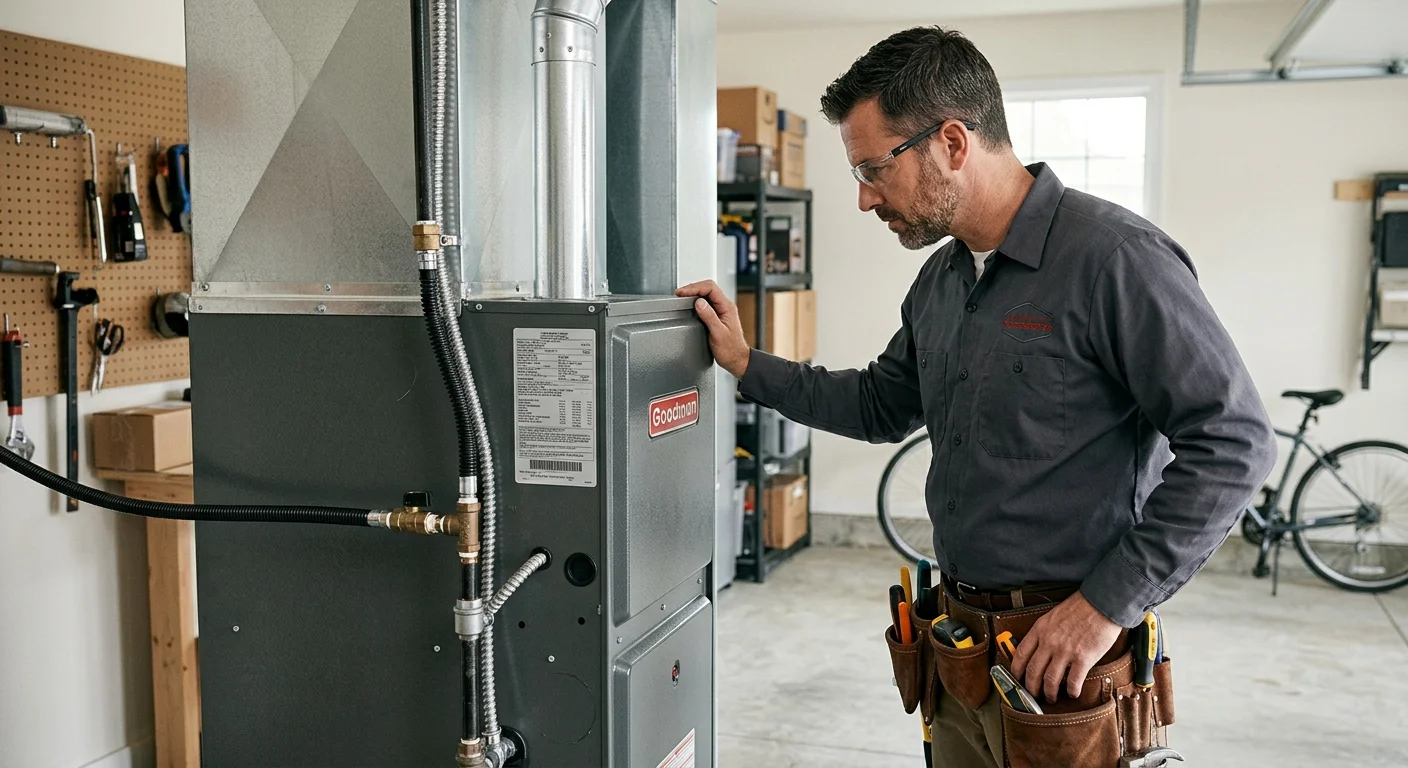
Goodman no-heat: model first, cabinet closed
Copy the model from the rating plate if visible. Describe what the furnace does on a heat call. Climate Pros SD is not Goodman factory service. Many San Diego Goodman units share control boards across vintages. The serial and model keep the matched contractor from guessing firmware.
Checklist
- Write the exact sequence you hear.
- Photograph any LED flash pattern through a window.
- See Lennox no-heat for a parallel first-check method.
- Use furnace not igniting.
- Call for a C-20 match, not a parts order over the phone.
Related: Furnace repair and HVAC brand repair guide.
What does a no-heat symptom tell you first?
“No heat” describes the result, but it doesn’t identify the cause. Your first task is to describe the sequence without diagnosing it.
Note what happens after the thermostat requests heat. The furnace might remain quiet. It might make a sound without producing airflow. Air might move through the vents without feeling warm. The system might also begin a heating cycle and then stop.
Write down only what you can observe. Include the thermostat display, visible settings, airflow, sounds, and the clock time. If the behavior changes between attempts, record that too. A short phone video may help capture a sound that disappears before the contractor arrives.
Don’t name a failed igniter, control board, sensor, or motor based on one symptom. Several components can be involved in a heating sequence. Choosing a part before testing can send the repair in the wrong direction.
San Diego County’s winter conditions also vary by location. NOAA’s 1991-2020 normals, pulled in August 2026, list a January normal low of 50.3°F at San Diego International Airport. Ramona Airport’s January normal low is 36.5°F. Inland and mountain homeowners may notice a no-heat problem more quickly than households near the coast.
If ignition appears to be the issue, read our guide to a furnace that isn’t igniting. Use it to organize observations, not to identify or replace a component.
Which checks don’t require opening furnace panels?
Keep your checks outside the furnace cabinet. Start by photographing the thermostat screen. Capture the displayed temperature, selected mode, and any visible message or symbol.
Look at the furnace from a normal standing position. Note whether the cabinet appears complete and whether any exterior label is readable. Don’t remove a door, reach through an opening, or touch internal parts.
You can also stand near a supply vent and note whether air moves. Record whether that air feels warm, cool, or unchanged. Listen from outside the cabinet during one normal heating request. Describe the sound in plain words instead of assigning it to a component.
If an electrical panel is safely visible, you can note the labeled breaker’s position without touching it. Don’t repeatedly reset controls, cycle breakers, or change several thermostat settings while trying to force a start. Those actions can erase the sequence a contractor needs to observe.
This page doesn’t provide a universal reset, relighting, or internal inspection procedure. Climate Pros SD couldn’t confirm one model-specific Goodman procedure from the approved material supplied for this page. Furnace designs and instructions can differ.
Find the manual that matches the exact model number. Follow only the homeowner observations printed for that unit. Don’t borrow steps from a video or manual showing a similar-looking furnace.
These limits still leave useful information for a service call. A clear thermostat photo, a short symptom timeline, and an exterior cabinet photo are more reliable than a guessed diagnosis.
What information should you collect from the data plate?
The data plate connects the visible furnace to its exact product identity. Photograph the full plate if it’s visible without opening a panel.
Make sure the photo is sharp enough to enlarge. Glare, shadows, and faded printing can hide one character. Take a straight-on image, then capture a closer view of the model and serial fields.
Transcribe the model number and serial number exactly as printed. Keep every letter, number, space, and dash. Don’t correct a character because it looks unusual. One mistaken character can point toward information for a different unit.
Copy other labeled fields if they’re readable. Labels vary, so don’t assume every furnace will show the same information. A full photo lets the contractor decide which fields matter.
Confirm that you photographed the indoor furnace cabinet. A thermostat, outdoor condenser, air handler, and furnace may each carry separate labels. Sending the wrong label can delay model identification.
If the plate isn’t visible from outside the closed cabinet, don’t remove a panel to find it. Tell the contractor that the model information wasn’t accessible. The licensed pro can inspect the equipment and identify the proper documentation.
Also collect your thermostat brand, the exact display message, and the symptom timeline. Note whether airflow was present and whether the behavior changed between attempts.
Our San Diego HVAC brand repair guide explains how brand, model, and contractor qualifications fit together. A brand name alone isn’t enough to confirm a repair procedure or replacement part.
When should a licensed pro test the furnace?
Call a licensed HVAC professional when the next step requires opening the furnace, using test equipment, or evaluating an internal component. That includes any situation where exterior observations haven’t explained the no-heat condition.
The California Contractors State License Board describes the C-20 classification as covering the maintenance, service, and repair of warm-air heating systems and related controls. You can verify a contractor’s current record through the official CSLB license check.
Climate Pros SD is a referral service. It doesn’t perform furnace testing, employ technicians, or hold a trade license. It matches San Diego County homeowners with independent HVAC professionals who are licensed and insured.
Climate Pros SD also isn’t Goodman and doesn’t claim manufacturer authorization. Ask the contractor whether they have experience with your exact Goodman model. If manufacturer authorization matters to you, confirm that status directly with Goodman before approving work.
Give the contractor your photos and written symptom sequence. Ask what they tested, what result they found, and how that result supports the proposed repair. You can also ask for the exact part number before a component is ordered.
If your furnace has shown other changes, compare your notes with these signs a furnace may be going out. Climate Pros SD can also connect you with a local professional through its furnace repair service.
How should you confirm model-specific parts with Goodman?
Confirm parts with the complete model and serial information, not the Goodman name alone. Don’t rely on cabinet appearance, a partial number, or a seller’s compatibility list.
Start with the part identified through the licensed contractor’s testing. Ask the contractor to write down the proposed part number and the furnace model used for the lookup. If the part is described as a substitute, ask which official documentation supports that substitution.
Then contact Goodman through the current official website or support channel. Provide the model number, serial number, and proposed part number exactly as printed. Ask whether that component matches your unit and whether any serial-range distinction applies.
We couldn’t confirm a universal Goodman parts-lookup procedure or model-specific parts list from the approved material for this page. We also couldn’t confirm warranty terms for your furnace. Those details should come directly from Goodman and the documents tied to your exact unit.
Don’t treat a marketplace listing, forum answer, or photo match as manufacturer confirmation. Similar cabinets can contain different equipment. A listing that says a part “fits Goodman” still may not establish compatibility with your furnace.
Keep copies of the furnace label, contractor’s diagnosis, proposed part number, and Goodman’s response. That record helps everyone discuss the same unit and component. It also separates three different questions: what failed, which part fits, and who will perform the repair.
The independent contractor sets their own diagnostic fees, parts charges, and work terms. Ask what their diagnostic fee is and whether it applies toward the repair. Each company sets its own policy.
When to call us
Call when your Goodman furnace won’t start, won’t produce warm air, or needs internal testing by a licensed HVAC professional. Climate Pros SD will connect you with an independent local contractor, but it doesn’t claim Goodman authorization or perform the repair. Call us at (442) 777-6440 and we will match you with a licensed local pro.