A Lennox furnace that won’t start leaves you with two immediate tasks. Describe exactly what it’s doing, then gather information without opening its panels. Those details help a Lennox furnace repair pro begin with the right system and symptom.
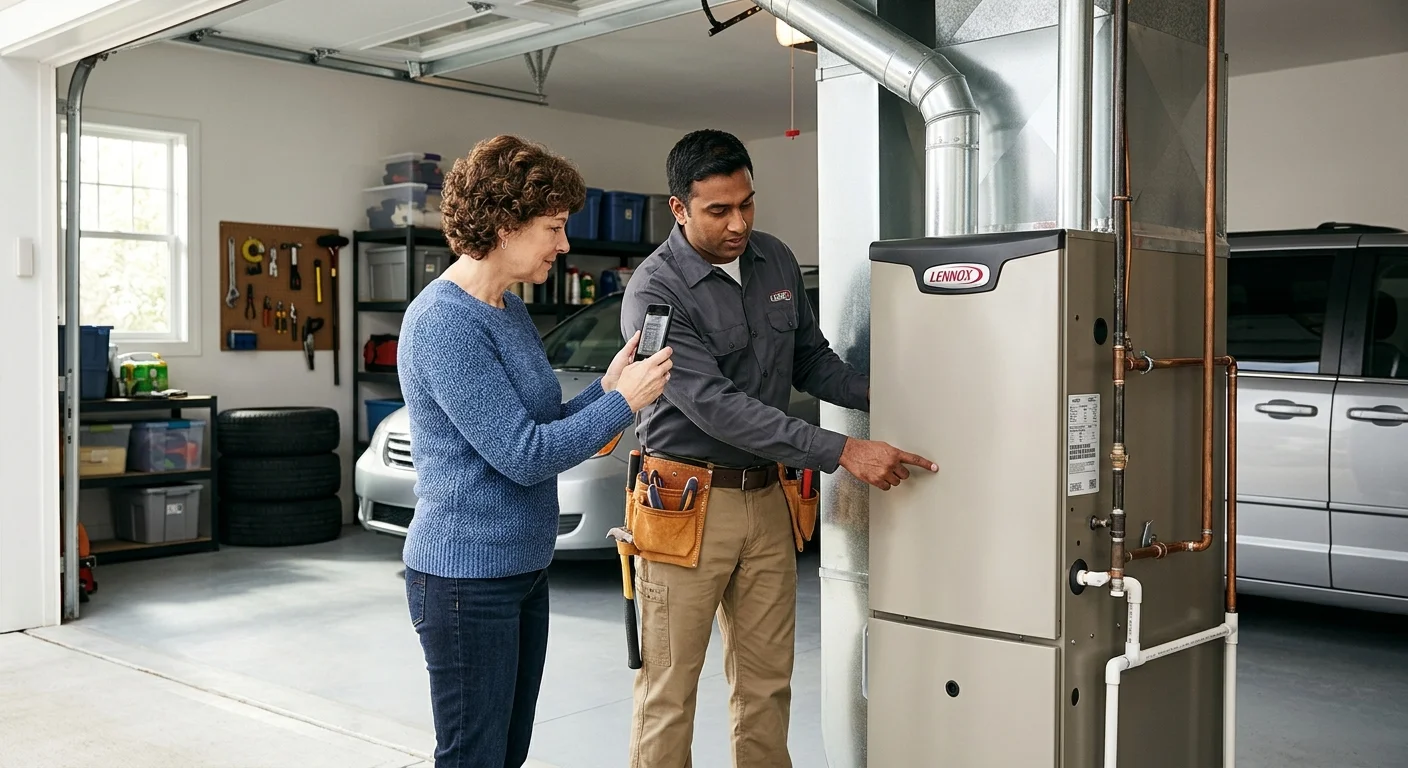
Lennox no-heat: describe the sequence, keep the cabinet closed
Climate Pros SD is not Lennox. Copy the model if visible. Report inducer, spark or hot-surface ignition, and whether the blower runs. Lennox boards store error history that a licensed tech can read. Homeowners should not pull the board to photograph it.
Checklist
- Note any iComfort or thermostat alerts.
- See Goodman no-heat.
- See furnace not igniting.
- If you smell gas, leave.
- Use furnace repair.
Related: HVAC brand repair guide and heating repair Vista.
What does the no-heat symptom tell you?
“No heat” describes the result, but it doesn’t identify one failed part. The useful clues are what happens before the warm air disappears.
Start with the thermostat. Note whether its screen is on and what it displays. Record the selected mode, room temperature, and requested temperature. If you already changed the setting, write down how the system responded.
Then listen without touching the furnace. Does the system remain silent? Does a fan run without warm air? Does operation begin and then stop? Note any lights visible through an existing exterior window. Don’t interpret their pattern from a generic online chart.
Also check whether the problem affects every room. A single uncomfortable room presents a different symptom than no airflow throughout the house. Record what you feel at several open supply registers. Describe the air as warm, cool, or absent instead of estimating its temperature.
These observations matter across San Diego County. NOAA climate normals list a January normal low of 50.3°F at San Diego International Airport, 42.5°F in El Cajon, and 36.5°F at Ramona Airport. A failed heater can therefore feel very different near the coast and farther inland.
If the furnace appears to begin its sequence but never produces heat, our guide to a furnace that isn’t igniting explains how to organize those observations. It doesn’t replace the instructions for your exact Lennox model.
Which checks don’t require opening furnace panels?
Keep the first check focused on controls and visible conditions. You can gather valuable information while leaving the furnace cabinet closed.
At the thermostat, confirm that the displayed mode says Heat. Compare the requested temperature with the displayed room temperature. If the thermostat serves multiple zones, record which zone has the problem. Photograph any message exactly as shown.
Walk through the occupied rooms and look at the supply registers. Note which ones are open, blocked, or producing airflow. Don’t remove the registers. Also note whether furniture or stored items cover the return grille.
Look at the furnace exterior from a normal standing position. Record whether you see an identification label, an existing viewing window, or a clearly displayed message. Don’t remove a door to search for more information. If an air filter is visible from an ordinary return grille or exterior slot, photograph its condition without opening the furnace cabinet.
Write down recent events that may help the contractor. Examples include a thermostat change, a power interruption, remodeling dust, or the first heating attempt of the season. Present them as observations, not assumed causes.
Avoid using a video or forum post as a substitute for the model’s documentation. Furnace cabinet layouts and controls aren’t interchangeable. A step shown for another Lennox furnace may not match yours.
This short record gives the contractor a clearer starting point. It also reduces the chance that a vague “heater broken” description hides the symptom that matters most.
What should you photograph on the data plate?
Look for a manufacturer label visible on the furnace exterior. It may contain several lines of letters, numbers, electrical information, and other equipment details. You don’t need to decode them.
Take one photo showing the full cabinet and its surroundings. Then take a straight, close photo of the entire label. Make sure the model and serial fields are readable. If glare covers the text, change your angle instead of removing a panel.
Photograph the thermostat display as well. Include any words, symbols, or codes exactly as they appear. Don’t translate a code into a diagnosis. Its meaning may depend on the precise model and official documentation.
A wider photo can show how the furnace is installed. Include the visible cabinet, nearby duct connection, and accessible filter location. Keep stored items and personal records out of the frame when possible.
Before sending images, review them for personal information. A serial number can help a contractor identify equipment, but it doesn’t need to appear in a public social media post. Share it directly with the contractor or manufacturer representative handling your question.
Write the model and serial characters separately if the label is faded. Mark uncertain characters with a question mark instead of guessing. Confusing a zero with the letter O can lead someone to the wrong document.
These photos don’t diagnose the furnace. They establish which equipment and displayed information the licensed pro should evaluate. That distinction is especially important with brand-specific searches, where similar cabinet designs can conceal different model details.
Where can you confirm model-specific Lennox details?
Start with documentation that came with the furnace. Match the model shown on the document with the model field in your photo. A manual for a similar-looking cabinet isn’t enough.
If the original paperwork is missing, use the official Lennox website. Search with the complete model number and confirm that the document identifies that model. If the label is unclear, ask Lennox or an independent licensed contractor to identify it before following model-specific instructions.
Treat error-code lists carefully. Record the displayed code, but don’t assign it a meaning from an unrelated manual. The same general symptom doesn’t prove that two furnaces use the same controls or diagnostic language.
Climate Pros SD is an independent referral service. It isn’t Lennox and doesn’t claim manufacturer authorization. We match San Diego County homeowners with licensed, independent local HVAC professionals. The homeowner contracts with and pays the matched professional directly.
Our HVAC brand repair guide explains how to separate manufacturer information from a contractor’s diagnosis. It can help when you’re deciding which documents and questions to bring to the appointment.
Ask the contractor to identify the manual or service information used for your model. If manufacturer authorization matters to you, confirm that status directly with Lennox. Don’t infer it from a company name, logo, or search advertisement.
For general heating and cooling information, the U.S. Department of Energy maintains homeowner guidance. Use general resources for context, then return to Lennox documentation for model-specific details.
When should an independent licensed pro inspect it?
Call a licensed HVAC pro when the thermostat requests heat but the furnace still doesn’t produce it. Professional inspection also makes sense when operation repeatedly begins and stops, airflow is absent throughout the home, or the displayed information requires model-specific interpretation.
Keep the cabinet closed while arranging the visit. Give the pro your symptom notes, thermostat photo, equipment photo, and readable model information. Mention what changed before the problem began without presenting your theory as the diagnosis.
A furnace contains components that aren’t visible during an exterior check. The contractor can inspect the equipment and explain what the findings mean for that particular system. Ask for the proposed scope and price before authorizing work. Each independent company sets its own policies.
California’s C-20 classification covers warm-air heating system service and repair. You can verify a contractor’s status using the CSLB license check. Climate Pros SD matches homeowners with licensed and insured independent professionals, but it doesn’t perform the repair or provide a manufacturer warranty.
If you’re unsure whether this is an isolated no-heat event or part of a developing pattern, review the signs a furnace may be going out. For help finding a professional, visit our furnace repair referral page.
When to call us
Call when exterior observations haven’t explained why your Lennox furnace won’t produce heat. Climate Pros SD can connect you with an independent licensed HVAC pro who can inspect the specific equipment. Call us at (442) 777-6440 and we will match you with a licensed local pro.