A furnace replacement quote can look complete while leaving major decisions unresolved. Before choosing a furnace installation in Escondido, compare exactly what each contractor inspected, included, excluded, and agreed to document.
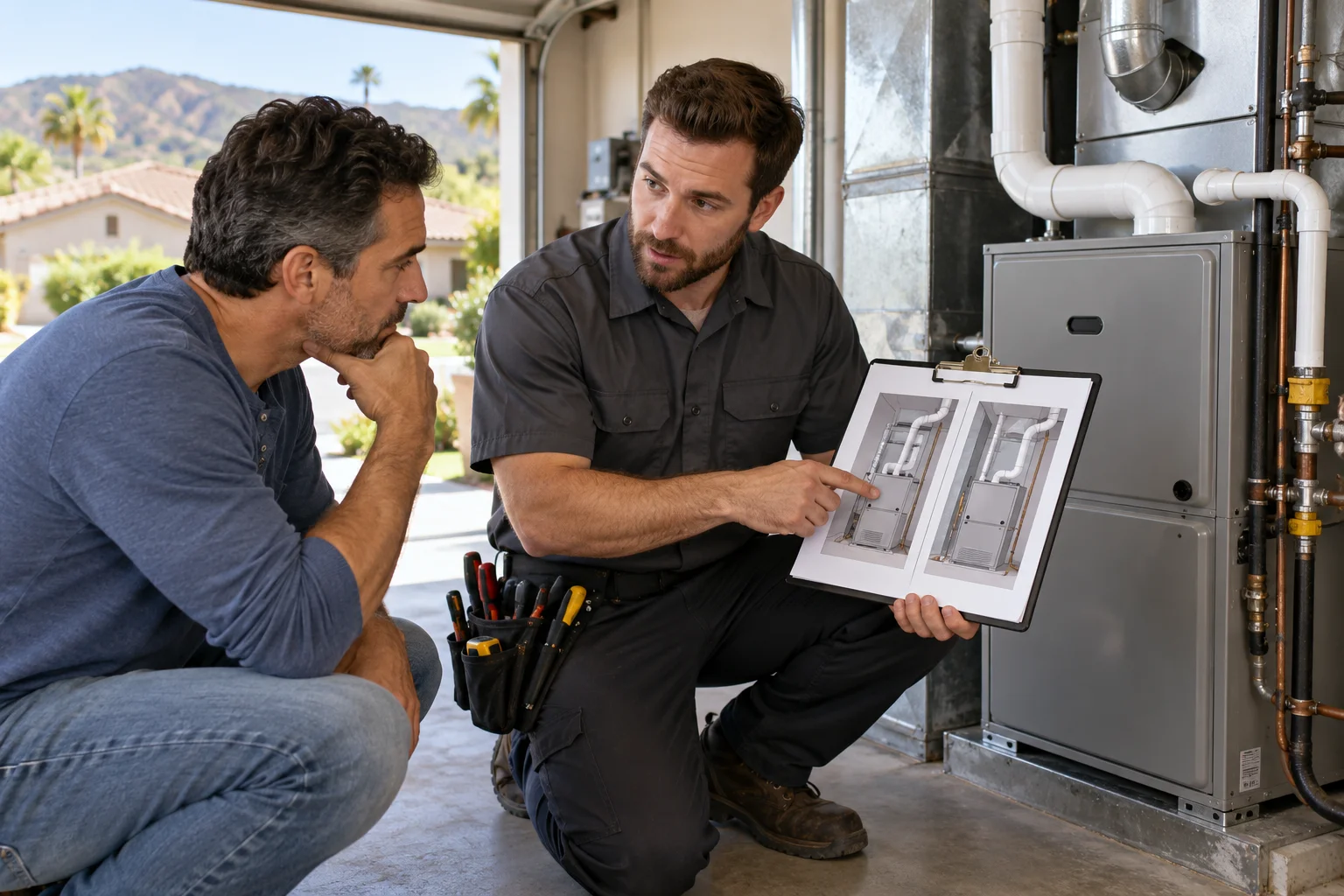
What should an installation scope identify?
Start with the boundaries of the job. A useful scope names the equipment being removed, the equipment being installed, and every connected part the contractor plans to change.
Look for the proposed furnace’s full model number. The scope should also identify its location and configuration. Ask whether the quoted work includes the thermostat, filter setup, venting, electrical connections, fuel connections, drains, and any transition pieces between the furnace and ducts.
Existing ductwork deserves its own line. The proposal should state whether the contractor will leave it unchanged, repair selected sections, or replace part of the system. “Connect to existing ducts” doesn’t explain whether damaged connections, restricted returns, or difficult transitions are included.
Removal also needs clear language. Ask who will disconnect and remove the old equipment. Confirm whether disposal, floor or platform work, access-panel changes, and cleanup are part of the quoted scope.
The final steps matter too. The document should list the startup checks, control testing, airflow review, and homeowner walkthrough included after installation. It shouldn’t rely on broad phrases such as “complete installation.”
If you’re still deciding whether replacement is necessary, compare the proposal with an actual diagnosis. Our furnace repair service connects homeowners with licensed, independent HVAC pros. You can also review the factors discussed in our guide to furnace repair costs in Escondido.
Climate Pros SD is a referral service. It doesn’t install equipment, set contractor prices, or provide a warranty. You’ll contract with and pay the independent professional directly.
Which home and equipment details shape the quote?
Two quotes aren’t comparable when they’re based on different information. Each contractor should inspect the same home conditions before preparing a final scope.
Escondido’s inland climate belongs in that discussion. NOAA’s 1991–2020 normal data for the Escondido #2 station shows a normal high of 87.2°F in July and 89.0°F in August. The normal January low is 44.8°F. Those figures don’t select equipment for a particular house, but they show why the conversation shouldn’t isolate heating from cooling.
Ask each contractor to record the current equipment’s model information, location, fuel or power source, and connection to the cooling system. The inspection should also account for the thermostat, filter arrangement, supply ducts, return path, and access around the unit.
Describe comfort problems room by room. Note spaces that heat unevenly, weak airflow, frequent cycling, or unusual noise. These observations aren’t a substitute for measurements, but they help the pro investigate the right areas.
A contractor should explain how the proposed equipment capacity follows the home inspection. Square footage alone doesn’t document window exposure, insulation conditions, duct layout, ceiling height, or other relevant details. Don’t accept a capacity recommendation that nobody can explain.
Access can also change the work. A furnace in an attic, closet, garage, or tight platform area may require a different installation plan. Ask the contractor to identify any access changes in writing rather than treating them as an unstated assumption.
Bring the same notes to every appointment. That gives each pro a common starting point and makes missing scope items easier to spot.
How should you compare furnace and heat pump options?
Ask for separate scopes when you’re considering different system types. Combining several options into one vague proposal makes equipment, electrical work, controls, and exclusions difficult to compare.
A furnace proposal should identify the heating equipment and its connections. A heat pump proposal should explain which components provide heating and cooling, what happens to the existing furnace and air conditioner, and whether the current thermostat and electrical setup remain part of the plan.
Don’t compare equipment by headline efficiency claims alone. Ask each pro to identify the rating used, the exact matched equipment, and the assumptions behind any energy-use estimate. The US Department of Energy explains that actual savings vary with usage, even when equipment is compared under a defined test method.
Household priorities matter. Discuss cooling performance, winter comfort, noise, equipment location, electrical changes, and how you use the home. Also ask what happens during a power outage and whether any existing equipment remains in service.
Current incentives shouldn’t be assumed. TECH Clean California stopped accepting new single-family heat pump HVAC reservations on November 14, 2025. California’s single-family HEEHRA rebates were fully reserved as of February 24, 2026. The federal Section 25C credit doesn’t cover property placed in service after December 31, 2025. Recheck each program before making a purchase decision, and direct tax questions to a tax professional.
Our heat pump service page explains how Climate Pros SD connects homeowners with licensed local pros. For a broader installation sequence, see the new furnace installation process.
What should the written proposal document?
The written proposal should let you place two scopes side by side. If an item affects the work, ask the contractor to include it before you sign.
The equipment section should contain full model numbers. It should distinguish the furnace from related controls, filters, coils, outdoor equipment, and accessories. If the proposal depends on reusing a component, that decision should appear in writing.
Next, look for a task-level description. It can cover removal, installation, duct transitions, fuel or electrical connections, venting, drainage where applicable, thermostat work, startup checks, and disposal. The proposal should identify anything specifically excluded.
Ask how unexpected conditions will be handled. The document should explain who approves a scope change and how the revised work and price will be recorded. You should hear the price before any work starts.
Permit requirements for an Escondido furnace installation couldn’t be confirmed from the approved local source set used for this page. Don’t rely on a rule written for the City of San Diego, which is a different jurisdiction. Ask the matched contractor to identify the governing authority and required approvals. Confirm that information directly with the authority before work begins. Any permit work belongs to the licensed contractor, not Climate Pros SD.
If warranty coverage appears in the proposal, request the actual written documents. Separate the manufacturer’s equipment coverage from any contractor agreement or optional service contract. Review exclusions, labor terms, registration language, deductibles, and the claims process. Climate Pros SD doesn’t issue or administer warranties.
Finally, document the payment schedule, projected work duration, property-access needs, and final walkthrough. The contractor should confirm the actual schedule and job duration for your home.
When should a licensed pro inspect the home?
A licensed pro should inspect the home before you accept a final installation scope. Photos and phone descriptions may help start the conversation, but they can’t show every connection, access constraint, or duct condition.
An on-site inspection becomes especially important when equipment type, location, or configuration may change. It also matters when the existing system serves rooms unevenly, shares components with the cooling system, or sits in a restricted space.
Ask the pro to inspect the furnace area, connected ducts, return path, thermostat, filter arrangement, fuel or electrical connections, venting, and relevant cooling components. The contractor can then explain which items stay, which change, and which need further investigation.
Use the visit to test the proposal’s clarity. Ask why the recommended capacity fits the home. Ask which measurements support the choice. Request alternatives when a repair, furnace replacement, or heat pump conversion could lead to different scopes.
Check the contractor before signing. Every HVAC pro in the Climate Pros SD network is licensed and insured, but homeowners should still verify the specific business and license status. California’s CSLB license check lets you search the contractor’s information directly.
Don’t treat the lowest total as the only comparison. A smaller number can reflect fewer included tasks, reused components, or unresolved conditions. Compare the same equipment details and scope categories first. Then ask each contractor to correct omissions and explain meaningful differences in writing.
When to call us
A furnace installation needs a licensed HVAC pro when equipment, ducts, controls, fuel connections, or electrical work must be inspected and scoped. Climate Pros SD can connect you with an independent professional serving Escondido. Call us at (442) 777-6440 and we will match you with a licensed local pro.