When the heat stops, record what the furnace is doing before requesting help. For furnace repair in National City, a few panel-closed observations can give the matched contractor a clearer starting point.
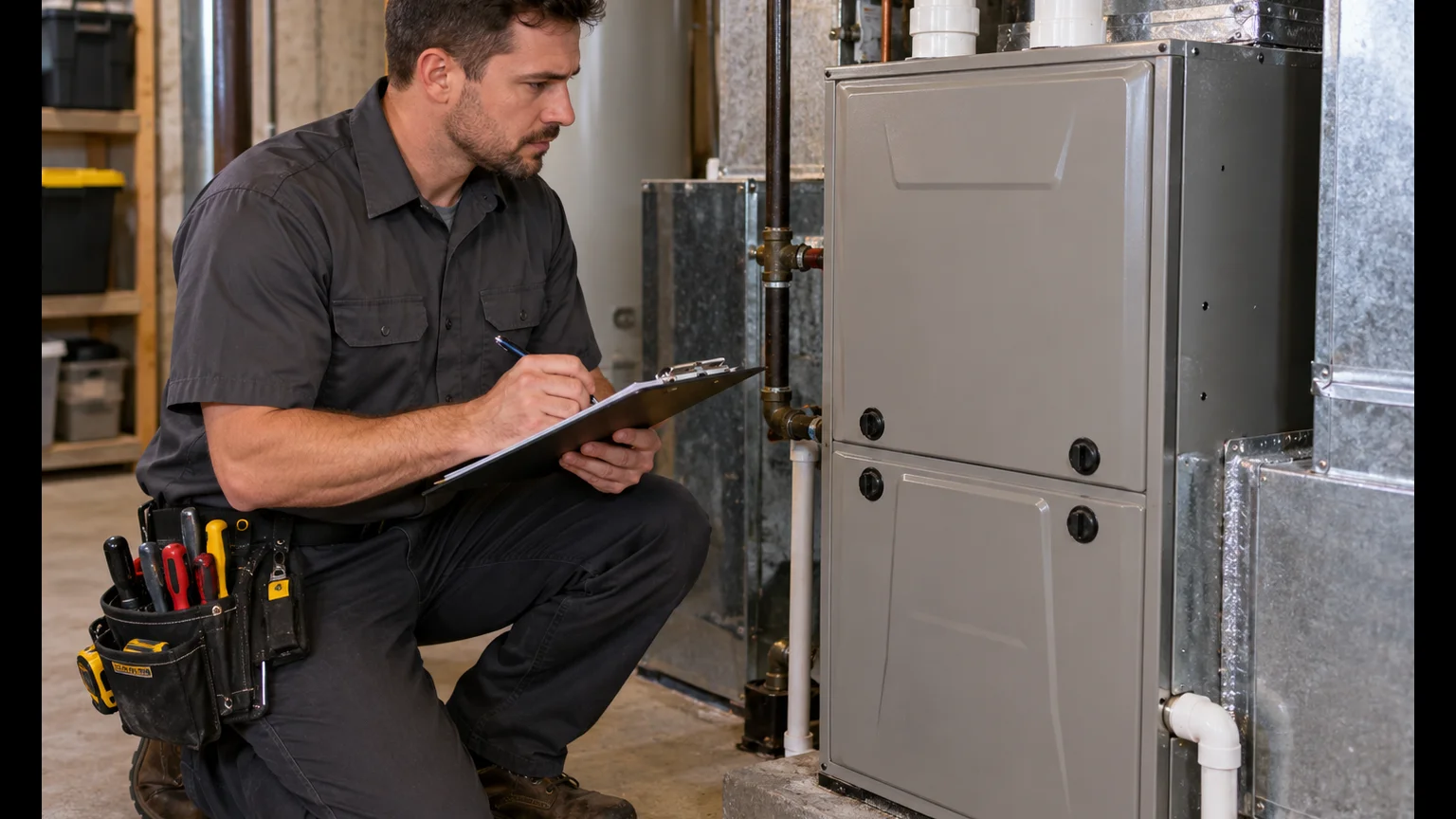
What should you record when the heat stops?
Start with the moment you noticed the problem. Write down whether the home lost heat suddenly or gradually. Note which rooms feel affected and whether any rooms still receive warm air.
Record what happens after someone requests heat at the thermostat. Does the display change? Do you hear the furnace begin a cycle? Does air reach the registers? If it does, describe it as warm, cool, weak, or unchanged.
Keep the description literal. A click, hum, rattle, or silence is more useful than guessing which component failed. If a message or code appears, copy it exactly. Don’t interpret it from an unrelated online chart. Meanings can depend on the equipment.
Include any recent event that may give context. Examples include a power interruption, thermostat change, filter replacement, remodeling work, or a long period without using the heat. Don’t claim that event caused the failure. Just place it in the timeline.
National City’s NOAA reference station is in Chula Vista. Its 1991-2020 January normal low is 46.5°F. That coastal South Bay normal is milder than many inland areas, but a no-heat problem still matters when the house won’t warm as expected.
A short written timeline is enough:
- When you last remember the heat working
- What the thermostat shows
- What you hear from outside the cabinet
- Which rooms are affected
- Whether the condition repeats
These details help distinguish a complete loss of heat from uneven delivery. They also make a request for furnace repair clearer from the first conversation.
Which observations don’t require opening panels?
Keep the furnace cabinet closed. You can document plenty without touching internal parts, disconnecting anything, or attempting a repair.
Look at the thermostat from its normal position. Photograph the screen and requested temperature. Record whether the display is blank, showing a message, or behaving differently than usual. If the system has separate heating and fan settings, capture what the screen currently shows.
Walk through the occupied rooms. Note whether air reaches each accessible register. Compare rooms using plain descriptions, not measurements you can’t confirm. “The back bedroom receives less air than the living room” is useful. “The blower has lost half its capacity” isn’t something a homeowner can verify by observation.
Listen from a normal distance. Write down when a sound begins and ends. Mention whether it comes from the thermostat area, a register, or the closed furnace cabinet. A short phone recording may preserve an intermittent sound better than memory.
You can also note visible conditions around the equipment. Is stored property blocking normal access? Is the cabinet in a closet, garage, attic, or another area? Don’t move equipment, remove covers, or reach into an opening.
If you suspect a gas leak, leave the area immediately. Contact emergency services or SDG&E from a safe location. Don’t smoke, light a flame, or operate electrical switches in the area.
A furnace that won’t start can have several possible causes. Our guide to a furnace that won’t ignite explains what information to gather without assigning an error-code meaning.
What equipment details should you photograph?
Photograph the equipment label only when it’s visible without opening a panel. Capture the entire label first, then take a closer image. Good lighting matters because model and serial characters can be small.
Don’t post an unedited serial number publicly. Share equipment details directly with the contractor when requested. Your photo should preserve the exact characters rather than relying on a typed version.
Take a wider photograph showing where the furnace sits. That image gives the pro context about the working area. Include the path to the equipment when access is tight, elevated, shared, or behind stored items.
Useful images may include:
- The closed furnace cabinet
- The visible manufacturer label
- The thermostat screen
- Accessible supply and return registers
- The filter package, if you still have it
- Any message displayed outside the cabinet
- The surrounding access area
Photograph related equipment only when you can do so from an ordinary walking surface. Don’t climb, enter a cramped area, or remove a cover for a better image. Tell the matched contractor when a label isn’t safely visible.
Also note what type of heat you believe the home has, but mark uncertainty clearly. “I think this is a gas furnace” is better than presenting a guess as confirmed. National City properties can have different heating arrangements, so the equipment label and an on-site inspection matter more than assumptions.
If replacement becomes part of the discussion, ask the pro to identify the installed system first. Pricing depends on the equipment and work proposed. For nearby market context, the Chula Vista furnace repair cost guide explains which questions to ask. Confirm the actual price and scope directly with the contractor.
How can South Bay access shape the visit?
Access details don’t diagnose a furnace, but they help the independent pro prepare for the property. National City homes, apartments, and multi-unit buildings don’t all provide the same route to heating equipment.
Describe the furnace location in everyday terms. It may be inside a hall closet, garage, attic, utility area, or shared space. If you don’t know where it is, say that. Don’t identify equipment by opening cabinets or entering restricted areas.
Mention any steps the contractor must take to reach the unit. Examples include a gate, parking instructions, stairs, a building entrance, or permission from a landlord or property manager. For shared buildings, confirm who can authorize access before the appointment.
Give clear directions within the property. “The furnace is behind the upstairs hall door” helps more than “it’s in the back.” Remove ordinary clutter from the walking path when you can do so safely. Tell the contractor about pets or occupied rooms that affect entry.
National City is part of the South Bay, and furnace repair 91950 requests may involve travel from elsewhere in San Diego County. Climate Pros SD doesn’t set appointment windows or dispatch technicians. The independent contractor confirms availability and access requirements directly with you.
If the property also has a cooling issue, keep the symptoms separate. Explain what happens in heating mode and what happens in cooling mode. The National City AC repair guide covers cooling-specific observations.
Don’t assume the same component caused both problems. A licensed pro needs to inspect the system and connect the evidence. Clear access notes simply reduce avoidable confusion before that inspection begins.
When should an independent licensed pro inspect it?
Request an inspection when the furnace won’t produce heat, stops repeatedly, makes a new sound, or leaves parts of the home noticeably colder. An inspection also makes sense when the cabinet stays closed but the available observations don’t explain the problem.
Climate Pros SD matches homeowners with independent, licensed and insured local HVAC professionals. The contractor inspects the equipment, explains the findings, and proposes the work. You contract with and pay that professional directly.
Ask for the diagnosis in plain language. The proposal should identify what work is recommended and what it costs before you approve it. Each company sets its own diagnostic fee and repair policies, so ask about those terms directly.
If someone recommends replacement, request the reasoning behind that recommendation. The existing equipment’s condition, the confirmed failure, and the proposed scope should guide the conversation. Don’t accept an online age estimate or an unverified error-code explanation as a diagnosis.
You can check a contractor through the California Contractors State License Board. Search using the identifying information supplied by the contractor. Review the current record rather than relying on a logo, advertisement, or verbal claim.
For a National City furnace not heating, your role is documentation and access. The licensed pro’s role is inspection, diagnosis, and any approved repair. That boundary protects the accuracy of the conversation and keeps the cabinet closed until a qualified person examines it.
When to call us
Call when your National City furnace won’t heat, behaves differently, or needs a licensed HVAC inspection. Call us at (442) 777-6440 and we will match you with a licensed local pro.