First, run three fast checks. Look at the breaker, the air filter, and the thermostat. Any one of those can stop a healthy AC cold. If those don’t fix it, get to the coolest part of your home, drink water, close the blinds, and call for help. Call now if anyone in the house feels dizzy, confused, or stops sweating, or if the heat index is climbing and you have an infant, an older adult, or a pet at home.
It’s 4 p.m. in Escondido, the AC just quit, and the house is already past 85. Your first instinct is to panic and your second is to grab your phone. Both are fair. This guide tells you what to do in the next ten minutes, how to stay safe while you wait for a tech, and the exact signs that mean you should call right now.
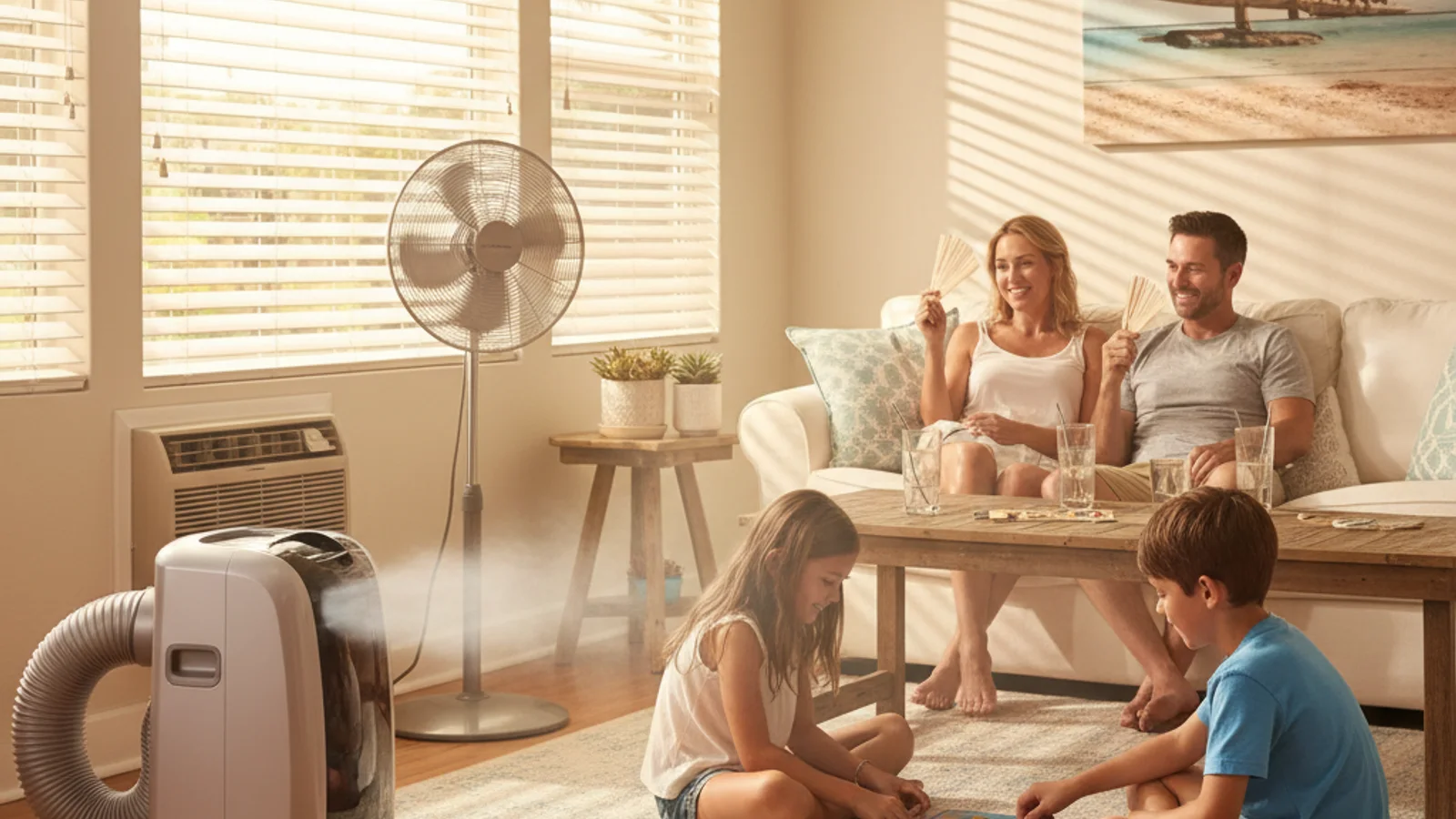
While you wait for AC service in a heat wave
Check filter, breaker, and thermostat first. Then use a cooled public space if the house is unsafe. CDC heat guidance says fans are not enough for older adults in extreme heat. SDG&E publishes heat-wave resources including Cool Zones. Confirm hours before you travel. Equipment quotes are not same-day cooling.
Checklist
- Replace a clogged filter.
- Close west blinds in El Cajon and Escondido houses.
- Drink water and check on people who cannot leave.
- See SDG&E heat-wave page.
- Use AC not cooling checklist.
Related: Emergency HVAC and portable AC guide.
Three fast checks that might fix it
Before you assume the worst, run these. They take five minutes and they’re the most common reasons an AC stops on a hot day. Sometimes you fix it yourself and skip the wait entirely.
Check the breaker. Heat waves push your system hard, and a hard-working AC can trip its breaker. Find your electrical panel. Look for a switch that sits between on and off, or that’s flipped to off. Push it fully off, then back on. If it trips again right away, stop. That’s an electrical fault, and you need a pro. Don’t keep resetting it.
Check the air filter. A clogged filter chokes airflow and can freeze your coil or shut the system down. Pull the filter. If you can’t see light through it, it’s too dirty. Swap in a clean one if you have it, or run the system on fan-only for a bit to let a frozen coil thaw. A filter that’s months overdue is a surprisingly common culprit.
Check the thermostat. Confirm it’s set to cool, not fan or off. Drop the target temperature five degrees below the room reading. Listen for the system to kick on. If it’s a battery thermostat and the screen is dim or blank, the batteries may be dead. New batteries can bring a “dead” AC right back.
If all three check out and the AC still won’t cool, the problem is likely a capacitor, contactor, refrigerant, or compressor. Those need a technician. If you want to understand what’s failing before the tech arrives, our AC not keeping up troubleshooting guide walks through the usual suspects.
How to stay safe and cool while you wait
A repair might be an hour out or it might be later in the day during a heat event. Here’s how to keep the house and your body from overheating in the meantime. Most of this comes straight from Ready.gov’s extreme heat guidance and the American Red Cross.
Block the sun. Close blinds, curtains, and shades on every window the sun hits. Roughly 40% of unwanted heat in a home comes through windows. West-facing rooms get brutal in the afternoon, so shut those down first.
Drop to the lowest floor. Heat rises. A single-story slab home or a downstairs room will run cooler than an upstairs bedroom. If you have a garage or a tile-floor room, those hold heat less.
Drink water before you feel thirsty. Sip steadily. Skip alcohol and heavy, hot meals, since both make your body work harder to cool down. Don’t use the oven.
Use fans the right way. A fan helps your body cool by moving air across your skin. But fans don’t lower the room temperature, and once indoor air passes about 95 degrees, a fan can actually push hot air at you and make things worse. At that point a cool shower does more than a fan.
Cool your body directly. A cool or lukewarm shower, a damp towel on your neck, or wet wrists under the tap all help fast. Wear loose, light clothing.
Have a backup cool spot. If the house keeps climbing, don’t tough it out. San Diego County runs free, air-conditioned Cool Zones at libraries and rec centers across the county. A mall or library works too. No purchase required at a Cool Zone, and you can show up unannounced.
For a longer-term plan so this doesn’t catch you off guard again, see our heat wave prep checklist.
Who’s most at risk in the heat
Not everyone handles heat the same way, and a hot house is genuinely dangerous for some people. According to the CDC and Red Cross, watch these groups closely.
Older adults, especially 65 and up. Bodies regulate temperature less well with age, and some medications make it harder to stay cool. Check on older neighbors and relatives twice a day during a heat wave.
Infants and young children. Kids can’t cool down as efficiently as adults, so they overheat faster. Never leave a child in a parked car, not even for a minute.
People with chronic conditions. Heart disease, diabetes, breathing problems, and obesity all raise the risk during extreme heat.
Pets. Keep them hydrated, shaded, and indoors with you. Pavement can hit 150 degrees and burn paws. Never leave a pet in a parked car.
If anyone in one of these groups is in the house and it’s heating up, treat the AC failure as urgent, not a wait-and-see.
Related service: AC installation.
When to call now
Some situations can wait until tomorrow. Many can’t. Here’s the line.
Call for emergency HVAC service right now if any of these are true:
- Someone in the house feels dizzy, faint, nauseous, or confused
- Someone has a throbbing headache, muscle cramps, or has stopped sweating despite the heat
- The skin feels hot and dry, or there’s a fast, weak pulse
- An infant, an older adult, a pregnant person, or someone with a health condition is in a house that keeps heating up
- The breaker trips again immediately after you reset it, or you smell burning
- The indoor temperature is climbing past the mid-80s and there’s no relief in sight
Hot, dry skin, confusion, and fainting can signal heat stroke, which the CDC flags as a medical emergency. If you see those signs, call 911 first, then move the person somewhere cool and cool them down with water and damp cloths.
For the AC itself, you don’t have to wait for business hours. We connect you with a vetted local pro who quotes the after-hours fee before anyone rolls out.
Call (442) 777-6440 for emergency AC repair. The sooner you call during a heat event, the better your slot, and the schedule fills fast when it’s hot.
FAQs
What should I do if my AC stops during a heat wave?
Run three fast checks first. Reset the breaker once, swap or clean the air filter, and confirm the thermostat is set to cool and reading correctly. If that doesn’t fix it, get to the coolest part of the house, close the blinds, drink water, and call for emergency AC repair. Watch anyone elderly, very young, or with a health condition closely.
What temperature is dangerous indoors?
There’s no single magic number, but caution starts when indoor air climbs past about 80 degrees, and risk rises sharply above that. Once a room passes roughly 95 degrees, a fan stops helping and can make things worse. If your home keeps climbing and you can’t cool it, move to an air-conditioned spot like a San Diego County Cool Zone, a library, or a mall.
How fast can someone fix my AC in a heat wave?
It depends on how booked local pros are that day. Heat waves are the busiest days of the year for HVAC, so calling early gets you a better slot. Expect an after-hours fee for nights and weekends, quoted before anyone heads out.
Can I keep resetting the breaker if my AC keeps tripping it?
No. Reset it once. If the breaker trips again right away, stop and call a pro. A breaker that won’t hold means an electrical fault in the system, and repeatedly resetting it risks damage or a fire. This is one of the clearest signs you need a technician, not another reset.
Is it safe to run just a fan if my AC is out?
A fan helps as long as the room stays below about 95 degrees, because it cools your skin by moving air. Above that, a fan mostly pushes hot air around and can raise your heat risk. The Red Cross is clear that a fan is not a substitute for air conditioning in extreme heat. A cool shower and an air-conditioned backup spot do more.