For many San Diego County ADUs and granny flats, a ductless mini-split heat pump is the practical HVAC choice. There is no trunk in a 600-square-foot garage conversion. One outdoor unit and one or two indoor heads heat and cool without a furnace. Climate Pros SD matches you with licensed, independent HVAC professionals for mini-split installation. Those pros size, permit, and install. We do not publish installed prices.
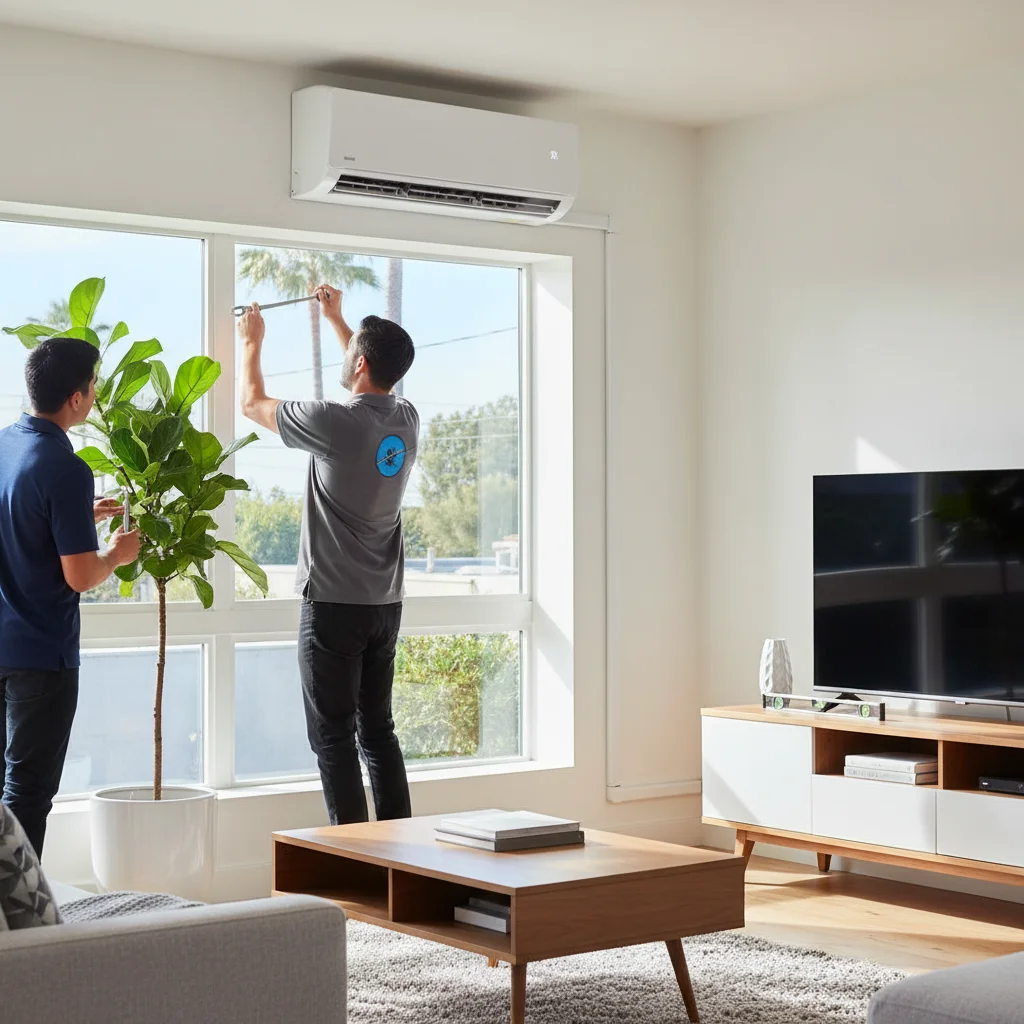
Why do mini-splits show up on so many ADUs?
No duct chase. A small detached unit has nowhere to hide 18-inch trunks.
Heat and cool in one machine. NWS: milder coast, hotter inland valleys, occasional hot easterly winds at the beach. NOAA inland August normals (El Cajon 88.6F, Ramona 90.8F, Escondido 89.0F) still need cooling. Coastal airport August normal 77.3F still sees sticky marine-layer weeks. Heat pumps cover both seasons without a second plant.
Cleaner Title 24 paperwork when the ADU is its own system. Tying the ADU into the main house ducts can drag the whole property into extra testing. A separately served mini-split keeps the energy model simpler. California Title 24 requires field verification when HVAC is altered or replaced, by a CEC-certified rater under current ECC rules. Ask the contractor who files what.
Independent failure domains. Sharing one condenser with the main house means one leak takes down two dwellings. Two small systems isolate that risk.
State ADU statutes made permitting easier. They do not pick your tonnage. The matched pro still runs a load calculation.
How should you think about cost?
Hardware, line-set length, stucco penetrations, electrical capacity, and permit fees vary. Older 100-amp services may need a panel or subpanel the electrician prices separately. Climate Pros SD will not invent a 400-square-foot studio price or a dual-zone ceiling.
Get a site-specific quote. Process background: ductless mini-split cost guide.
How do you size an ADU mini-split?
National rules of thumb oversize mild-climate ADUs and cause short cycles and clammy air. Demand a Manual J (or equivalent) for the actual envelope, glass, and climate band. Manual J.
Qualitative starting point only, then the calc wins:
- Coastal (Encinitas, Pacific Beach, Coronado, Imperial Beach): lower cooling load.
- Mid-city (Mission Valley, Clairemont, La Mesa): in between.
- Inland (El Cajon, Santee, Escondido, Poway, Ramona): higher cooling load.
West glass, a converted uninsulated garage, or a dark flat roof adds load. A tight new Title 24 envelope subtracts. An oversized head that slams off in three minutes is a comfort defect, not a bargain.
What is the 2026 incentive picture (no stack fantasy)?
Section 25C. Qualifying installations placed in service in 2025 may still fall in the credit period. Property placed in service after December 31, 2025 does not. For 2025 property, the taxpayer reports QMID. The IRS annual limit for qualified heat pumps and heat pump water heaters was $2,000. The credit is nonrefundable. A 2026 ADU install does not get a current 25C promise. Tax professional for your return.
TECH Clean California. Single-family heat pump HVAC and heat pump water heater incentives were fully reserved and stopped accepting new reservations on November 14, 2025. Do not treat TECH as open money on a 2026 ADU bid.
HEEHRA. Single-family rebates were fully reserved statewide as of February 24, 2026. No new single-family income-verification applications. Existing approved reservations may continue. Program design allows up to $8,000 below 80% AMI and up to $4,000 from 80% to 150% AMI for qualifying replacement of an existing primary heating source with a heat pump. Those are caps and conditions, not a check. Reservations must be approved before installation. Not retroactive. Recheck before anyone shops.
TECH plus HEEHRA. As of July 15, 2025, a project cannot receive both. Recheck current TECH HEEHRA rules.
Multifamily HEEHRA. TECH reports funding available, but new Stage 1 submissions are paused while existing applications process. Available budget is not an open application window.
SDG&E. Golden State Rebates retail offerings have ended. Do not assume a utility mini-split mail-in. Confirm on sdge.com. Listed residential TOU plans peak 4 p.m. to 9 p.m.
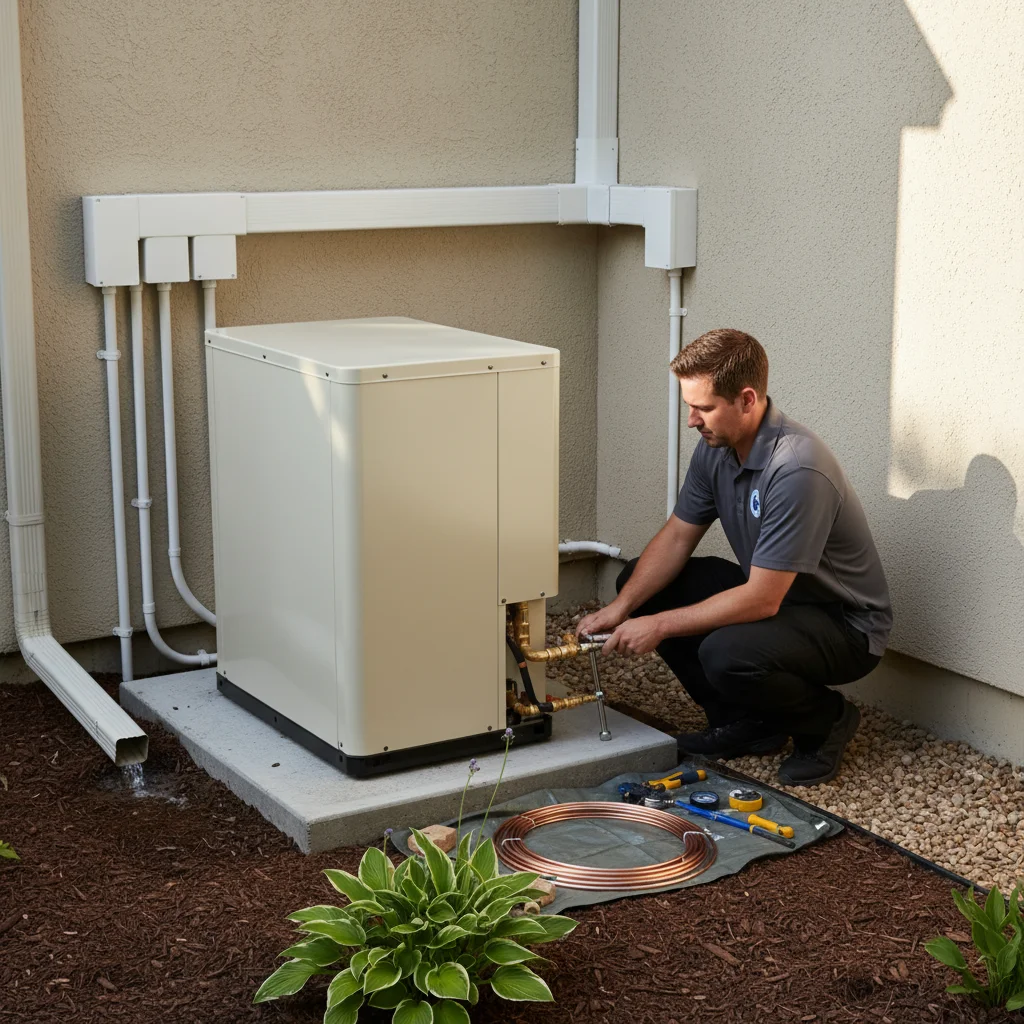
What about permits and inspection?
City of San Diego requires a mechanical permit to install, alter, replace, or repair HVAC or refrigeration. Electrical permits usually follow a new 240V circuit. Other cities and the county have their own fees. The contractor pulls them. We do not list fee tables.
Inspectors typically want line-set protection, pressure test, condensate disposal, disconnect, and manufacturer mounting. Failures we hear about: no permit, kinked line set, condensate into a planter, outdoor unit on the bedroom wall of a rental.
New equipment after the January 1, 2025 manufacture/import date uses low-GWP refrigerant (GWP at or below 700). Existing R-410A mini-splits remain serviceable with R-410A.
More install quality notes: ductless vs ducted.
Single zone or dual zone?
Single zone when the ADU is small, doors stay open, or it is a studio.
Dual zone when a closed bedroom bakes on a west wall, or a long-term tenant wants separate control.
Small central heat pump only when the ADU is large, there is air-handler space, and you refuse wall heads.
Most county ADUs are one or two heads.
Common mistakes
Oversized head, cash install with no inspection, wet vacuum never pulled, drain dumped in landscaping, condenser humming at a bedroom window. Workmanship is the hire. Lowest bid is not.
FAQs
Does the ADU mini-split need its own utility meter?
It needs a dedicated circuit. Sub-metering for rent is a billing choice, not an HVAC law.
Can one head cover 1,000 square feet?
Open coastal plans sometimes. Closed two-bedroom layouts usually want two heads. Manual J decides.
How long do they last in a rental?
Maintenance (wash filters, periodic professional service) matters more than a year claim. Coastal salt argues for coated coils. Ask the contractor. No guaranteed lifespan here.
Does a mini-split satisfy Title 24 for a new ADU?
A current inverter heat pump is the usual compliance path. Your CF-1R lists the model. The rater and plans examiner have the last word.
Can one condenser serve house and ADU?
Technically a multi-zone can. Isolation and energy models usually favor two systems.
Planning a garage conversion or detached flat? Call (442) 777-6440. We will match you with a licensed local pro who will load-calc and permit the job.
Related: AC repair, AC installation.