A mini split installation in Chula Vista starts with one practical decision: which rooms need separate comfort control. A licensed contractor should then document the room conditions, proposed equipment locations, and alternatives before you approve the project.
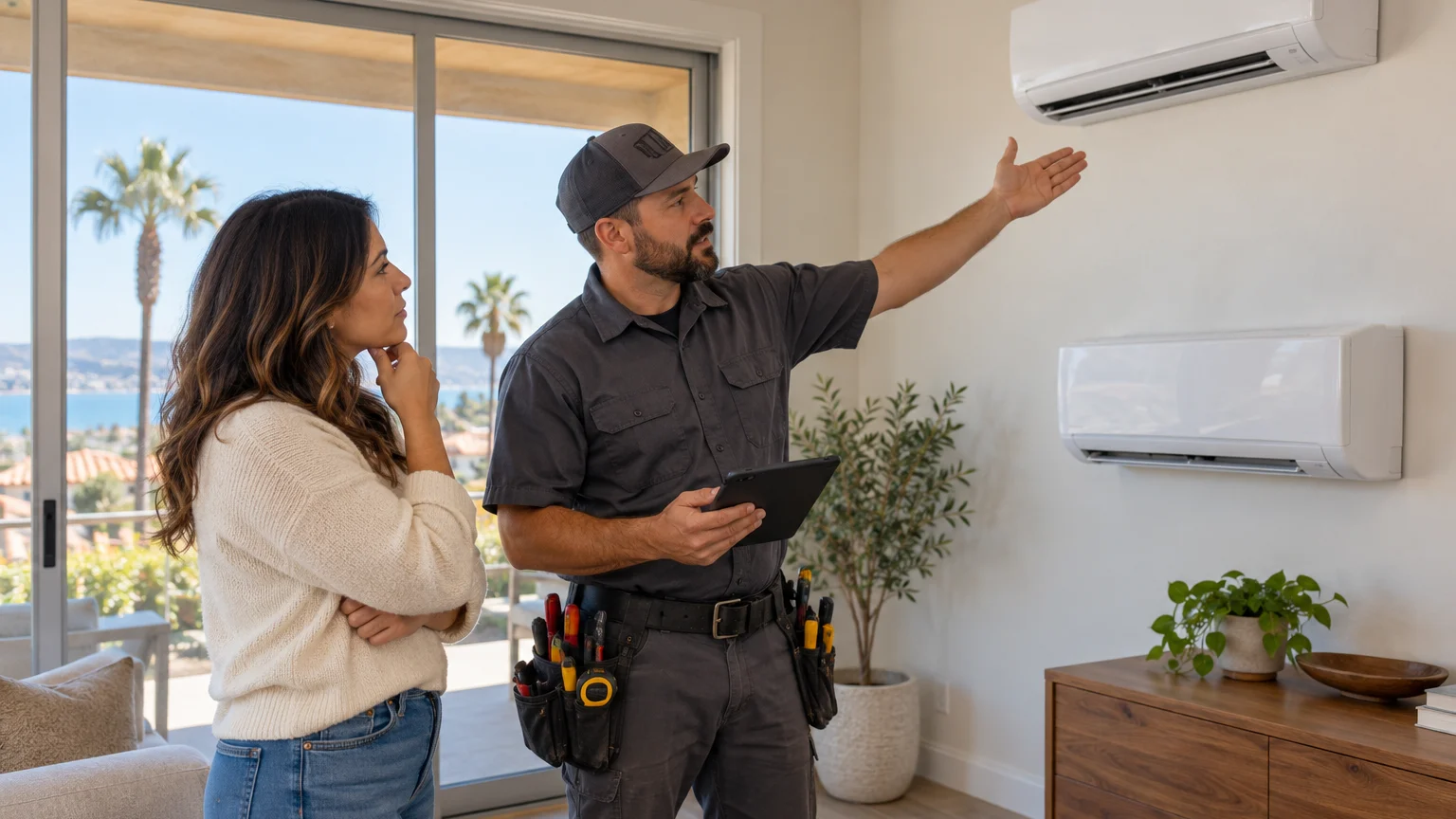
Which rooms are driving the installation decision?
Start with the rooms causing the problem, not an equipment catalog. Write down when each space becomes uncomfortable and how your household uses it. A bedroom occupied overnight presents a different planning question than a home office used each afternoon.
Common starting points include an addition, converted garage, upstairs bedroom, or detached workspace. Some homeowners want one problem room addressed. Others are considering several areas with separate controls. Tell the contractor whether doors usually stay open or closed. Also identify rooms that must remain comfortable at the same time.
Chula Vista’s west and east sides shouldn’t be treated as identical. NOAA’s 1991–2020 climate normals list a normal August high of 76.9°F at the Chula Vista station. San Diego Brown Field, used for eastern Chula Vista and Otay, has a normal August high of 80.6°F. Heat waves can run above those normals. That local difference gives the contractor a reason to examine orientation and room use instead of applying one citywide assumption.
Prepare a short room list before the visit. Include:
- The room’s current use
- Typical occupancy
- Uncomfortable times of day
- Window direction and visible shading
- Doors that usually remain closed
- Existing heating or cooling serving the room
- Planned changes to the space
If several rooms are involved, rank them by priority. That keeps the proposal focused on your actual goal. Our mini split installation referral service can connect you with an independent licensed HVAC pro who serves Chula Vista.
What should a written load assessment document?
Ask for a written assessment tied to each proposed indoor area. A verbal recommendation alone makes competing proposals difficult to compare. The document should show what the contractor observed and what information shaped the recommendation.
Request notes about room dimensions, ceiling conditions, windows, exterior exposure, shading, insulation information available to the contractor, occupancy, and normal room use. Existing equipment and connected spaces should also appear. If the contractor couldn’t inspect something, the assessment should identify that gap instead of presenting an assumption as confirmed.
The proposal should connect those observations to the recommended arrangement. It should identify which room each indoor unit serves and whether several rooms are being treated as one area. Ask the contractor to explain any room grouping that doesn’t match how you use the home.
This is also the right point to separate equipment ratings from expected results. SEER2 is a seasonal cooling-efficiency rating expressed in Btu per watt-hour. The Department of Energy says actual savings vary with usage. A rating doesn’t establish what your household will spend or save.
Ask each contractor to state what’s included in the installation scope. Climate Pros SD doesn’t set prices, sell equipment, or provide warranties. The homeowner contracts with and pays the independent contractor directly. For budgeting questions, use our guide to ductless mini split costs in San Diego, then request a project-specific written price from the matched pro.
Review the assessment before comparing brands. A clear room-by-room explanation matters more than a proposal built around an unexplained model number.
How do indoor-head locations affect daily comfort?
Indoor-head placement should reflect furniture, movement, sightlines, and daily routines. Walk through each proposed location while standing where people normally sit, work, or sleep. A location that looks tidy on an empty wall may feel intrusive after the room is furnished.
Ask the contractor to mark the proposed position before work begins. Then consider:
- Where conditioned air will travel
- Whether tall furniture could interfere with the location
- Whether the unit faces a bed, desk, sofa, or dining area
- How the location looks from adjoining rooms
- How the unit can be reached for routine filter care
- Where lines and drainage will travel
- Whether doors separate the intended comfort areas
Don’t assume one indoor head should serve every nearby room. Ask the contractor to explain what happens when bedroom doors close or when several spaces are occupied. The answer should be connected to your floor plan and household habits.
You can also ask about wall-mounted and less visible indoor-unit formats. Availability and suitability depend on the selected equipment and building conditions. Get the exact model and placement in writing before approving the scope.
Condensate routing deserves its own discussion. Ask where moisture will go, what portions of the route will remain visible, and how the contractor plans to test that route. Don’t accept a vague promise that the details will be decided during installation.
If appearance is a major concern, photograph each proposed wall from the room entrance. Review those images before signing. Our comparison of ductless mini splits and central AC can also help if visible indoor equipment is changing your preference.
What outdoor placement details need confirmation?
The outdoor location affects the appearance and service access around your home. Ask the contractor to identify the exact spot, proposed mounting method, and planned route to every indoor unit. These details should appear in the written scope.
Walk the route in person. Note gates, narrow side yards, patios, windows, walkways, landscaping, and neighboring living areas. Ask what will remain visible from the street, yard, and indoor windows. If exterior line covers are proposed, confirm their route, finish, and termination points.
The contractor should also explain how the selected location supports future access. Ask where a technician would stand and what must remain clear around the equipment. Don’t plan permanent storage or landscaping around the location until the contractor confirms the required access for the chosen model.
Electrical rules and Chula Vista permit requirements weren’t confirmed in the approved research for this page. Don’t rely on a general San Diego rule or another contractor’s website. Ask the matched contractor to identify the applicable authority, required approvals, and electrical scope for your address. Have those items listed in the proposal before work starts.
Climate Pros SD is a referral service and doesn’t pull permits. Any required permit work belongs to the matched licensed contractor. You can verify a contractor’s license through the California Contractors State License Board.
If your property has an HOA or shared exterior area, ask the appropriate property representative what documentation is required. We couldn’t confirm rules for any specific Chula Vista association. Written approval requirements must come from the association governing your property.
When should a licensed pro compare other systems?
A mini split deserves comparison when your project has existing ducts, several connected rooms, or a whole-home comfort goal. The right question isn’t whether ductless equipment is broadly good. It’s whether the proposed arrangement fits this house and how your family uses it.
Ask a licensed pro to compare alternatives when:
- Most rooms need conditioning at the same time
- Existing ducts already reach the problem area
- Several indoor heads would be required
- Visible indoor equipment is a concern
- The project overlaps with a larger remodel
- Existing heating equipment may remain
- Different household members want separate room control
Request the same decision criteria for every option. Each proposal should identify the rooms served, equipment locations, visible routes, excluded work, and assumptions. Ask what existing components remain and what gets removed. If a contractor recommends keeping part of the current system, get its role documented.
For a broader replacement project, review our Chula Vista AC installation guide. It provides a useful comparison point when you’re deciding between a room-focused ductless plan and a central system.
Current incentive claims need caution. The federal Section 25C credit doesn’t apply to property placed in service after December 31, 2025. TECH Clean California single-family heat pump HVAC incentives stopped accepting new reservations on November 14, 2025. HEEHRA single-family rebates were fully reserved statewide as of February 24, 2026. Program status can change, so recheck the California Energy Commission and program administrator before making a purchase decision.
A contractor should compare systems without treating an expired credit or unavailable reservation as money you’ll receive. Keep equipment selection, installation scope, and possible incentives as separate decisions.
When to call us
Call when you need a licensed HVAC pro to assess rooms, document installation options, and compare ductless equipment with other systems. Climate Pros SD matches Chula Vista homeowners with licensed, independent local contractors.
Call us at (442) 777-6440 and we will match you with a licensed local pro.