A 410A AC unit can still appear in a valid 2026 proposal. The key question is when every specified component was manufactured or imported, not whether an online listing still exists.
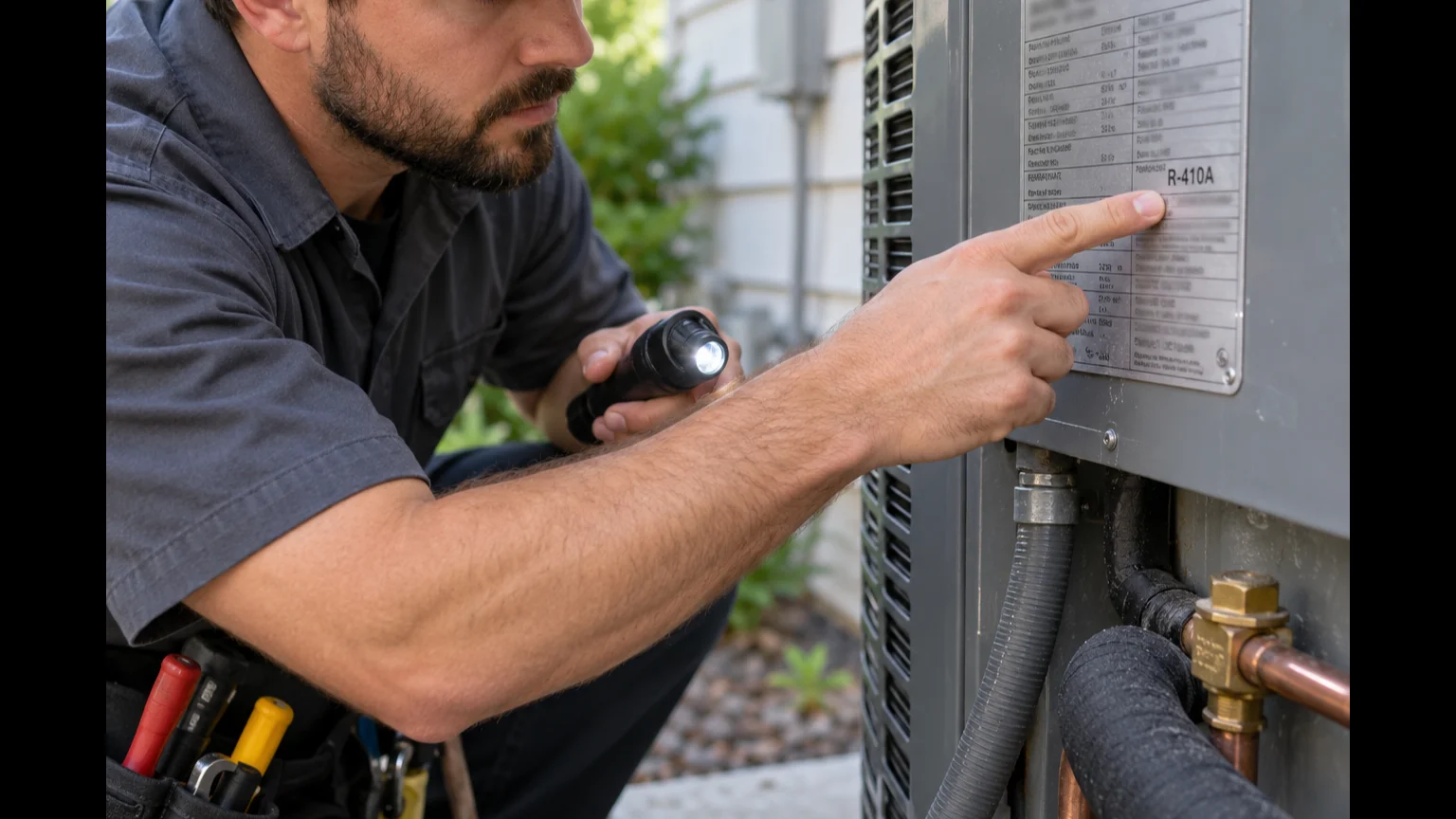
What does R-410A on a data plate tell you?
Start with the outdoor unit’s data plate. If its refrigerant field says R-410A, that label identifies the refrigerant specified for that unit. Photograph the whole plate before requesting service. Keep the model and serial information readable in your private copy.
Don’t identify refrigerant from cabinet color, system age, or a seller’s description. Ask the contractor to compare the outdoor plate with the indoor equipment and manufacturer documentation. If the labels disagree, pause before approving work.
The data plate may also provide information needed to locate the correct manufacturer records. Ask the pro to show how the proposed equipment matches those records. Climate Pros SD doesn’t sell equipment or determine compatibility. The independent contractor makes that assessment and provides the written proposal.
A unit’s cooling capacity doesn’t provide a universal refrigerant charge. We couldn’t confirm one approved charge figure for every four-ton R-410A unit. The correct amount depends on the exact equipment and installation instructions. Ask the contractor where the model-specific charge appears and how the installed line configuration affects it.
The data plate also helps separate two decisions. One concerns servicing equipment already installed. The other concerns buying equipment for a new installation. Federal restrictions treat those situations differently.
For a broader comparison of refrigerant names and equipment generations, read our guide to R-22, R-410A, and R-454B in San Diego. That comparison shouldn’t replace the specifications for your exact model.
How do newer refrigerants change a 2026 quote?
EPA rules set a global-warming-potential limit of 700 for new residential and light-commercial air conditioners and heat pumps beginning January 1, 2025. New equipment manufactured or imported after that date must meet the limit. R-410A doesn’t meet it.
However, the approved EPA record includes an exception for systems whose specified components were manufactured or imported before January 1, 2025. It doesn’t state an installation compliance date for that qualifying inventory. That means a 2026 R-410A proposal isn’t automatically invalid.
The proposal still needs enough detail to verify the equipment. Ask for model numbers and the refrigerant type. If the contractor says the equipment qualifies as pre-2025 inventory, ask for documents supporting that statement. Don’t rely on a product-page screenshot alone.
A newer-refrigerant quote may identify a different equipment family. Don’t assume its parts can be combined with an existing R-410A system. We couldn’t confirm a universal cross-compatibility rule for every manufacturer and model. Ask the manufacturer and contractor to identify the approved indoor and outdoor combination in writing.
We also couldn’t confirm that one replacement refrigerant applies to every new AC. Manufacturer specifications control the refrigerant assigned to each model. Never approve substituting a different refrigerant based only on a verbal claim.
San Diego County also has distinct cooling conditions. The National Weather Service describes ocean moderation near San Diego and warmer summer days in nearby valleys. Equipment selection for a coastal home and an inland home still requires a property-specific assessment. Refrigerant type alone doesn’t settle that decision.
Our AC installation referral service can connect you with an independent licensed local contractor who can prepare a model-specific proposal.
What should a written bid disclose about refrigerant?
A useful written bid identifies what you’re buying. It should name the outdoor unit, indoor equipment, and specified refrigerant. It should also state whether the proposal covers a complete replacement or only selected components.
Ask for these details before comparing bids:
- Manufacturer and model number for each major component
- Refrigerant shown for the proposed system
- Whether the equipment was manufactured or imported before January 1, 2025
- Manufacturer documentation supporting the proposed equipment combination
- Work included and excluded from the bid
- Permit responsibility and any property-specific review
- Written manufacturer warranty terms for the exact models
These are comparison requests, not a claim that every item is legally required in every contract. We couldn’t confirm a universal refrigerant-disclosure format in the approved claims ledger. The contractor can explain which documents apply to the proposed equipment.
Within the City of San Diego, the city’s permit guidance lists condensing units and heat-pump package units among HVAC installations eligible for a Simple No-Plan Mechanical, Electrical and Plumbing Permit for single-family homes and duplexes. That page says repair-only work on the listed systems doesn’t require a permit. This guidance applies to the City of San Diego, not every jurisdiction in the county.
The matched licensed contractor should identify and handle any required permit. Climate Pros SD doesn’t pull permits or perform installations.
Don’t compare quotes by refrigerant name alone. Compare the exact equipment, included work, and manufacturer documentation. Prices and equipment availability weren’t confirmed for this page. Each contractor sets their own price, so request the total in writing before authorizing work.
When is repair of an R-410A system still in play?
EPA’s transition doesn’t require an existing R-410A system to stop operating. R-410A may still be produced, sold, and used to service existing equipment. The EPA source doesn’t state an end date for that service use.
That doesn’t mean every broken R-410A system should be repaired. A licensed contractor needs to identify the failed part, inspect the system, and explain the available options. Ask for separate written scopes when both repair and replacement remain possible.
If refrigerant is low, ask what evidence supports the diagnosis. Our guide to AC refrigerant leak signs and service decisions explains what to document before approving refrigerant-related work. Don’t treat adding refrigerant as proof that the underlying issue was resolved.
R-410A isn’t a universal replacement for other refrigerants. Likewise, a newer refrigerant shouldn’t be placed into R-410A equipment unless the manufacturer specifically approves that use. We couldn’t confirm any universal retrofit method in the approved ledger.
The ledger also doesn’t contain a verified universal statement about the health effects of breathing R-410A. For exposure information, check the current safety data sheet from the refrigerant manufacturer. Seek case-specific medical guidance when exposure is suspected. Don’t rely on a sales page or general summary for that decision.
A working system doesn’t need replacement solely because it uses R-410A. Repair history, the diagnosed failure, equipment condition, and the written alternatives belong in the decision. Our AC repair or replacement guide offers a practical framework without assuming one answer fits every home.
Where can you confirm current equipment rules?
Start with the EPA Technology Transitions page. Check the residential and light-commercial air-conditioning and heat-pump category. Note the page date and any updates affecting pre-2025 equipment.
Next, use the manufacturer’s official product records. Search the exact model numbers from the proposal. Ask for installation instructions, approved equipment combinations, refrigerant identification, and warranty documents. If those records aren’t available, ask the contractor to obtain written confirmation from the manufacturer.
For City of San Diego work, review the Development Services Department’s current permit guidance. Other cities and unincorporated areas may follow different processes. We couldn’t confirm one countywide permit rule for every San Diego County address. Ask the contractor which authority has jurisdiction over the property.
Verify the contractor separately through the California Contractors State License Board. Search the business or license number and review the current record. Every HVAC pro in the Climate Pros SD network is licensed and insured, but homeowners should still verify the contractor named on their agreement.
Rules can change after a quote is prepared. Ask the contractor to identify the rule version and manufacturer documents used for the proposal. Keep those records with the signed agreement.
The practical answer is simple: qualifying pre-2025 R-410A equipment may still be proposed in 2026, while newly manufactured or imported residential equipment must meet the EPA limit. Confirm the dates and exact components before buying.
When to call us
Call when you need a licensed HVAC pro to evaluate an R-410A repair or compare installation proposals. Call us at (442) 777-6440 and we will match you with a licensed local pro.