Choosing a geothermal heat pump installer requires more than comparing equipment names. You need a contractor who can explain the proposed system, document the site work, and identify anything needing outside review.
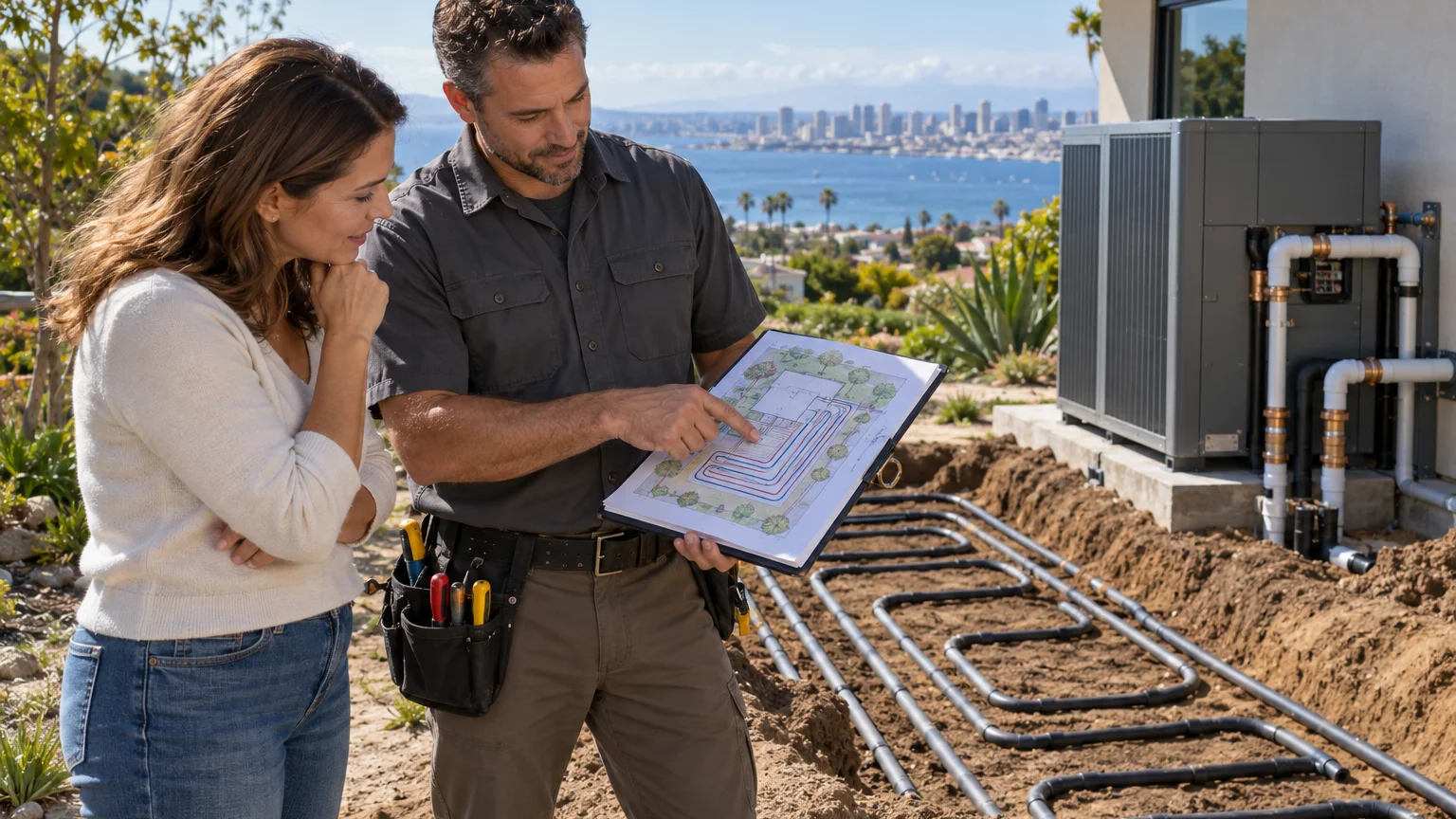
What geothermal experience should the scope document?
Not every HVAC contractor handles geothermal systems. Start by asking whether the company has completed projects using the same general system type being proposed for your property. Don’t accept a broad claim about heat pump experience as a complete answer.
Ask the contractor to describe their role on comparable projects. The written response should separate HVAC work from excavation, drilling, electrical, structural, landscaping, or other site work. It should also name any subcontractors expected to participate. You need to know who controls each part and who answers questions when scopes overlap.
Request a written proposal that identifies the equipment, indoor components, site work, controls, existing systems affected, and startup process. It should also state what isn’t included. An exclusion can matter as much as an included item, especially when several trades may touch the property.
Ask for references or project records you can verify independently. Climate Pros SD doesn’t claim that a contractor completed a particular geothermal project. The contractor should provide the evidence, and the property owner or project contact should confirm it.
Check the contractor through the CSLB license search. Confirm the listed business name, status, personnel, and classification. Then ask the contractor to explain why that classification fits the proposed work. Don’t rely on a logo, vehicle graphic, or license number printed on a proposal without checking it.
For broader hiring questions, use our guide to choosing an HVAC contractor in San Diego.
Which property details require an on-site assessment?
A serious proposal should follow an on-site assessment. Photos, listing details, and a phone conversation can help with screening, but they don’t document the complete property.
Ask the geothermal installer to record where each proposed component would go. The assessment should identify areas needing access, existing HVAC equipment, electrical equipment, indoor distribution, outdoor surfaces, landscaping, and any visible property constraints. If part of the site couldn’t be inspected, the proposal should say so.
San Diego County isn’t one uniform setting. A compact City of San Diego parcel differs from a larger inland or backcountry property. Coastal conditions also differ from nearby valleys. The National Weather Service describes ocean moderation near San Diego and warmer summer days in nearby valleys. Those differences make a property-specific review more useful than a countywide sales pitch.
The contractor should also identify the authority they believe governs the address. A property may fall within the City of San Diego, another incorporated city, or an unincorporated county area. Specific geothermal drilling and permit rules weren’t confirmed in the approved research for this page. Ask the contractor to identify the reviewing agency and provide a source for each requirement.
Don’t let an installer treat unknown underground conditions as settled facts. Ask what has been observed, what comes from property records, and what still needs investigation. The proposal should distinguish confirmed conditions from allowances or assumptions.
If you’re still deciding whether the system type fits the property, read our San Diego geothermal heat pump overview before comparing contractors.
How should you compare system and site proposals?
Compare geothermal installation proposals by scope, not by the final number alone. Put each document beside the others and mark where they describe the same task differently. A shorter proposal may simply leave more questions unanswered.
Begin with equipment identification. Ask each contractor to list the proposed model information, indoor components, controls, and connections. Then compare the site-work sections. Look for clear responsibility for access, excavation or drilling, restoration, electrical work, existing-equipment removal, testing, and project closeout.
Next, compare assumptions and exclusions. One proposal might depend on work supplied by the homeowner. Another might assign that work to a subcontractor. Neither approach is automatically wrong, but the responsibility must be clear before you sign.
Use the same questions for every bidder:
- What property information supports this design?
- Which conditions remain unconfirmed?
- Who performs each portion of the work?
- Which subcontractors haven’t been selected?
- What permits or outside approvals does the contractor expect?
- What documentation will the owner receive?
- What happens if site conditions differ from the written assumptions?
Ask each contractor to answer in writing. Verbal explanations can be helpful, but the signed scope controls the practical comparison. If a proposal changes, request a revised document instead of relying on handwritten notes from a conversation.
Prices, payment terms, warranties, and change-order policies belong to the independent contractor. Climate Pros SD doesn’t set them or warrant another company’s work. Ask for each term in writing and compare the exact documents.
A geothermal proposal may also include conventional indoor HVAC work. Our pages on heat pump service and AC installation can help you organize questions about those portions.
Which claims need outside verification?
Treat licensing, permits, incentives, savings, warranties, and system performance as verification items. A confident statement from a salesperson isn’t the same as evidence from the responsible authority.
Start with the contractor’s license. Search the CSLB database yourself and match the result to the contracting business. If another company will perform part of the project, ask who that company is and verify it separately. Climate Pros SD matches homeowners with licensed, independent local HVAC professionals, but you should still review the contractor’s current record before signing.
Ask the contractor to cite the agency responsible for permits or site approvals. City of San Diego guidance can’t establish the rules for every other city or an unincorporated address. Geothermal-specific drilling requirements weren’t verified for this article. Confirm them with the authority governing the actual property.
Don’t accept an estimated savings claim as a guaranteed result. The approved claims ledger contains no verified geothermal savings percentage or local performance figure. Ask what assumptions support any projection, including energy use, utility plan, equipment selection, and household operation. Current SDG&E residential time-of-use plans include an on-peak period from 4 p.m. to 9 p.m., but the customer’s exact plan and current rates still require confirmation.
Verify warranty language against the manufacturer’s written certificate and the contractor’s separate agreement. Ask which party handles a claim, what labor is excluded, and whether registration or another step applies to the selected product.
Current geothermal prices, rebates, tax credits, and drilling fees also weren’t confirmed for this page. Check the responsible program, tax authority, utility, or agency before treating any amount as available.
When should another specialist review the plan?
Bring in another specialist when the proposal reaches beyond the HVAC contractor’s documented role. The goal isn’t to add people automatically. It’s to get qualified review where property conditions, design questions, or separate trades require it.
Ask who should review underground work, electrical changes, structural impacts, drainage, landscaping, property boundaries, or site access. The geothermal installer should explain which parts they control and which parts need another professional. If the answer stays vague, pause before signing.
A second review also helps when proposals conflict. One contractor may describe a site condition as confirmed while another treats it as unknown. Ask both for the source behind their position. Property records, agency guidance, written calculations, and direct inspection carry more weight than an unsupported sales claim.
Consider independent review when:
- The proposed route crosses an area with uncertain ownership or access.
- The contractor relies on records that haven’t been provided.
- Major exclusions shift responsibility to the homeowner.
- Different bidders identify different reviewing agencies.
- The design changes without a revised written scope.
- A performance or savings claim lacks documented assumptions.
- One company will contract while another performs key work.
Don’t assume every HVAC professional can review every part of a geothermal plan. Ask each specialist to define their responsibility in writing. You should also know who coordinates revisions when one review changes another company’s scope.
The final agreement should reflect those reviews. If an outside specialist adds a condition, get it incorporated into the contractor’s proposal before work begins.
When to call us
Call when you need a licensed HVAC pro to assess the indoor system or explain the HVAC portion of a geothermal proposal. Climate Pros SD serves San Diego County as a referral service, and you contract with the independent professional directly. Call us at (442) 777-6440 and we will match you with a licensed local pro.