TL;DR

  • San Diego winter overnight lows hit 40–50°F inland and push heating use 3x higher than fall. Components that survived October fail in December.
  • Run this 8-point checklist between Thanksgiving and mid-December, before the first cold snap and before holiday travel.
  • The single most-skipped item is the condensate drain check on 90%+ efficient furnaces. A blocked drain trips the safety switch and kills heat on the coldest morning of the year.
  • Skipping costs $185–$1,200 in emergency repairs plus $25–$75/night for emergency heating if it fails while you’re traveling.

San Diego doesn’t get real winter the way the Midwest does. We get something more dangerous to HVAC equipment: long stretches of mild weather where the system barely runs, punctuated by week-long cold snaps where it runs constantly. That on-off pattern punishes weak components.

By December, heating use across our service area runs roughly 3x what it did in October. The faults that were dormant or marginal in October show up now. This is the checklist to run before that happens.

It’s the third in our seasonal series. See also: spring AC tune-up checklist and fall HVAC checklist.
Why winter matters in San Diego specifically

The conventional wisdom is that San Diego doesn’t need a winter HVAC plan. The conventional wisdom is wrong.

Three things make San Diego winter heating riskier than people assume:

  1. High daily delta-T: Coastal afternoons hit 64°F, then inland overnight drops to 41°F. That 23°F swing forces the system to cycle hard, on for the morning warm-up, off all afternoon, on again at dusk. Cycling kills igniters, contactors, and relays faster than steady-state running.
  2. High humidity from coastal moisture: Coastal homes deal with 65–80% relative humidity at night. That moisture condenses inside vented attics on cold metal ducts and around 90%+ furnaces. Condensate drain problems are a winter issue here, not a summer one.
  3. Holiday travel + cold snap collisions: The week of December 23 through January 2 hosts both the year’s coldest mornings and the highest rate of empty houses. A furnace failure at 6 a.m. on December 26 with the homeowner in Phoenix becomes a $400+ emergency call plus pipe-burst risk if it goes unnoticed.

The 8-point winter HVAC checklist

Run this before Thanksgiving if you can, before December 15 at the latest.

1. Test heat pump defrost cycle

Skip this if you have a gas furnace only. If you have a heat pump (with or without backup), this is the most-skipped winter test in the county.

Heat pumps build frost on the outdoor coil when running heat in humid air below 45°F. The defrost cycle reverses operation for 5–10 minutes to melt the frost. If the defrost board or sensor fails, the coil ices over until the system goes into protection mode and stops heating.

To test: on a cool morning (under 55°F), force a defrost cycle from the thermostat or service mode (technician-level), or watch the outdoor unit during heat operation. You should see:

  • Frost build-up after 30–45 minutes of continuous heat call
  • Auto-reversal: outdoor fan stops, indoor blower may pause, you hear the reversing valve “thunk”
  • Steam from the outdoor coil for 5–10 minutes
  • Return to heat mode

If the unit ices over and never reverses, the defrost board, sensor, or reversing valve is failed. Repair runs $285–$650.

2. Combustion test on gas furnaces

For gas furnaces only. This is the non-negotiable winter safety check.

A combustion analyzer measures O2, CO, and stack temperature at the flue while the furnace runs. Healthy ranges:

  • CO at flue: under 50 ppm steady-state (some new units run sub-25)
  • O2 at flue: 5–9%
  • Stack temperature: 300–500°F (varies by furnace type)
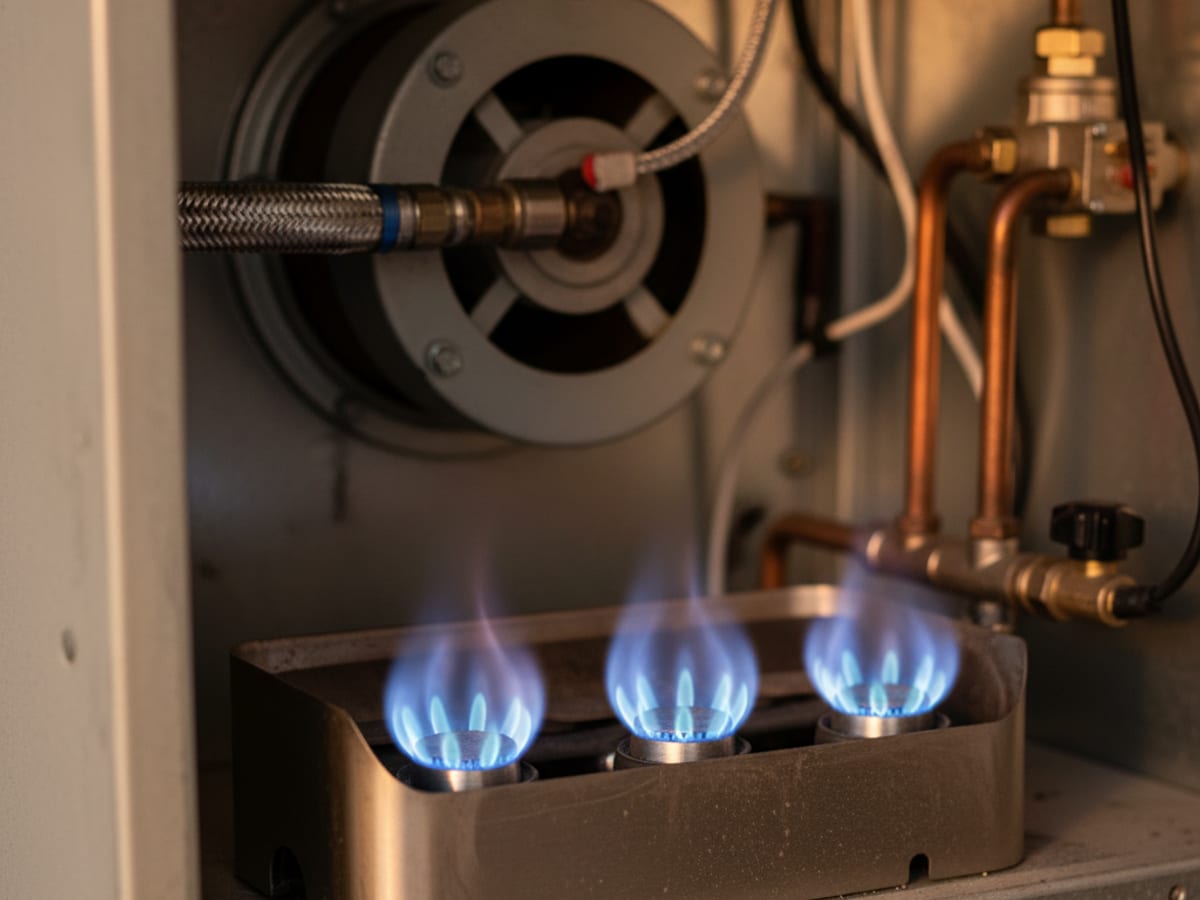
  • Flame appearance: clean blue cone with crisp inner edges. Yellow, lazy, or rolling flames are a stop-immediately sign

A reading above 100 ppm CO at the flue means the burner is producing more CO than it should. Above 400 ppm means shut it off until repaired. This test isn’t a visual inspection, it requires a calibrated analyzer.

Skipping cost: A cracked heat exchanger can leak CO into the home. Beyond the dollar cost ($1,200–$3,200 to replace heat exchanger, often equals the furnace cost), CO at chronic low levels causes headaches, fatigue, and confusion that homeowners blame on flu or stress.

3. CO detector battery check (do it now)

You did this in fall. Do it again before holiday travel. CO detector lifespan is 5–7 years (the sensor, not the battery). Replace any unit that doesn’t have a “manufactured” date on the back, those predate the standardized labeling and are probably older than the sensor life.

A working CO detector costs $25. A funeral costs $9,000.

4. Condensate drain check on high-efficiency furnaces

Skip this if your furnace is 80% efficient (most older units) or you have a heat pump. For 90%+ efficient furnaces (AFUE 90 and up), this is the highest-impact winter check.

High-efficiency furnaces condense water from the flue gases (the heat-extraction process literally rains inside the secondary heat exchanger). That condensate, slightly acidic, drains through a PVC line to a floor drain, condensate pump, or laundry standpipe.

Failure modes:

  • Trap dries out over summer when furnace isn’t running, then debris gets sucked in once it restarts. Clogged trap backs up into the heat exchanger and trips the pressure switch.
  • Condensate pump fails (5–7 year lifespan), pump float switch closes the safety, furnace won’t start.
  • Drain line freezes if any portion runs through unconditioned space (rare in San Diego but happens in Julian or backcountry attics).

Test: pour a cup of water down the condensate trap. It should drain within 30 seconds. If it backs up or drains slowly, the trap or line is clogged. Flush with white vinegar or distilled water and a soft brush. If it has a condensate pump, listen for it cycling and inspect for cracks or scale on the float.

Skipping cost: A blocked condensate drain trips the pressure switch and shuts down the furnace. Same-day diagnostic + clear runs $135–$295. Same fault on December 25 with emergency rates runs $325–$525.

5. Thermostat schedule audit for heating

San Diego winter schedules look nothing like Minneapolis schedules. The setbacks are bigger because the outdoor temperature is mild enough that recovery is fast.

TimeSetpointLogic
6:00 AM68°FMorning warm-up before shower
8:00 AM62°FAway
5:30 PM68°FEvening warm-up before dinner
10:00 PM64°FSleep

Why 62°F away and not 55°F? In San Diego the outdoor temperature is rarely below 55°F during the day, so dropping below 60°F costs no comfort and saves no energy (the system isn’t running anyway because the house holds 60°F+ passively). The big savings are in the overnight 64°F, which is 4°F lower than wake and saves 8–12% on overnight heating.

Smart thermostat note: Nest’s “Heat Pump Balance” and Ecobee’s “Smart Recovery” features both work well in our climate. Don’t disable them. See our thermostat comparison.

6. Filter change (yes, again)

A summer-soiled filter that you swapped in October is now 60 days into winter. Heating runs the blower harder than cooling does because winter air is denser. Change the filter every 60 days during heating season, not every 90.

This is the cheapest, highest-ROI item on the checklist.

7. Vacation prep (if leaving for the holidays)

If you’ll be gone more than 3 days during December or early January, before you leave:

  • Do not turn the heat off entirely. Set it to 58°F. Returning to a 38°F house means the heat has to run for 6–10 hours straight to recover, and any plumbing fixtures in exterior walls have been at freezing risk.
  • If you have a heat pump only (no gas), and inland zones expect a cold snap, set 60°F minimum. Heat pumps lose efficiency below 35°F outdoor temp, so a deeper recovery from a cold house is more painful.
  • Tell a neighbor what to do if your house alarms or the heat is off when they look in. Give them a contractor’s number to call (ours works).
  • Drain or insulate any hose bibs and exterior plumbing if backcountry zones are forecast under 32°F.

Skipping cost: A failed furnace + 6-day absence in inland San Diego can mean pipe burst risk (rare but not zero), and a return-home recovery cost of 4–6 hours of constant heating which is roughly $8–$15 in additional gas.

8. Book the spring tune-up now

Counterintuitive. Why book April work in December? Because our March/April calendar fills by early February most years. If you call in March, you’re booking late April. If you call now, you pick the week.

Most contractors offer maintenance plans that auto-schedule spring and fall. If you don’t want a plan, just book the appointment. See our maintenance contract breakdown for whether a plan makes sense.

Repair cost reality: caught now vs. failed in January

FaultCaught in checklistFailed on coldest morning
Weak igniter$20–$45$185–$385 + emergency markup
Cracked heat exchanger$1,200–$3,200 (planned replace)$1,800–$4,200 + 2–5 days of no heat
Blocked condensate drain$135–$295$325–$525 + same-day rate
Failed defrost board$285–$650$385–$950 + emergency markup
Worn blower motor$385–$650$485–$1,200 + emergency markup

The pattern is consistent: caught early, the repair is 30–50% cheaper, and the home stays warm. Caught at failure, you’re paying emergency rates, sleeping in 55°F, and probably canceling holiday plans.

Frequently asked questions

Do San Diego homes really need a winter HVAC checklist?

Yes, especially if you have a gas furnace or a heat pump. Inland overnight lows hit 40–50°F, and heating use in December runs roughly 3x what it ran in October. Components that survived fall (igniters, capacitors, defrost boards, condensate drains) fail under the heavier December load. The checklist catches them before the failure.

What’s the most-skipped winter task on this list?

The condensate drain check on high-efficiency furnaces. Most homeowners don’t know their furnace produces condensate, and most $79 tune-ups skip it. A blocked drain is the most common cause of “furnace won’t start” calls between December 15 and January 15.

When should I do a winter HVAC tune-up in San Diego?

Between Thanksgiving and December 15. After that, two things happen: holiday travel limits scheduling, and once the first cold snap arrives, the calendar shifts to emergency repair priority. By January 1, tune-up bookings push out 2–3 weeks.

Should I turn off my heat when I leave for the holidays?

No. Set it to 58°F. Turning it off completely means 6–10 hours of recovery time when you return, more wear on the system from cold-start, and pipe-burst risk in inland zones during a cold snap. The savings from “off” versus “58°F set-back” is small ($3–$8 per week of absence) and not worth the risk.

How do I know if my furnace is high-efficiency (and needs the condensate check)?

Look for a PVC pipe exiting the furnace (typically 1.5 to 2 inches in diameter) running to a floor drain or condensate pump. If you have a metal flue going up through the roof and no PVC drain line, it’s an 80% efficient older unit and you can skip the condensate check (but everything else still applies).

What’s a fair price for a winter heating tune-up in San Diego?

$129–$199 single-visit, or roughly $189/year for the spring + fall combo on a maintenance plan. A tune-up under $89 is almost certainly a 20-minute visual inspection with no combustion analysis, not a real heating tune-up. See our tune-up cost breakdown for what’s included in each price tier.


Want a proper winter heating tune-up with combustion analysis and condensate-drain inspection? Call us. December bookings tighten fast after the first cold snap. Best to lock it in by early December.

We serve Escondido, Vista, Carlsbad, El Cajon, Poway, and all of San Diego County.