Warm air from the vents changes the day quickly in Ramona. Before requesting AC repair, record what the system is doing, when the problem began, and which rooms feel affected.
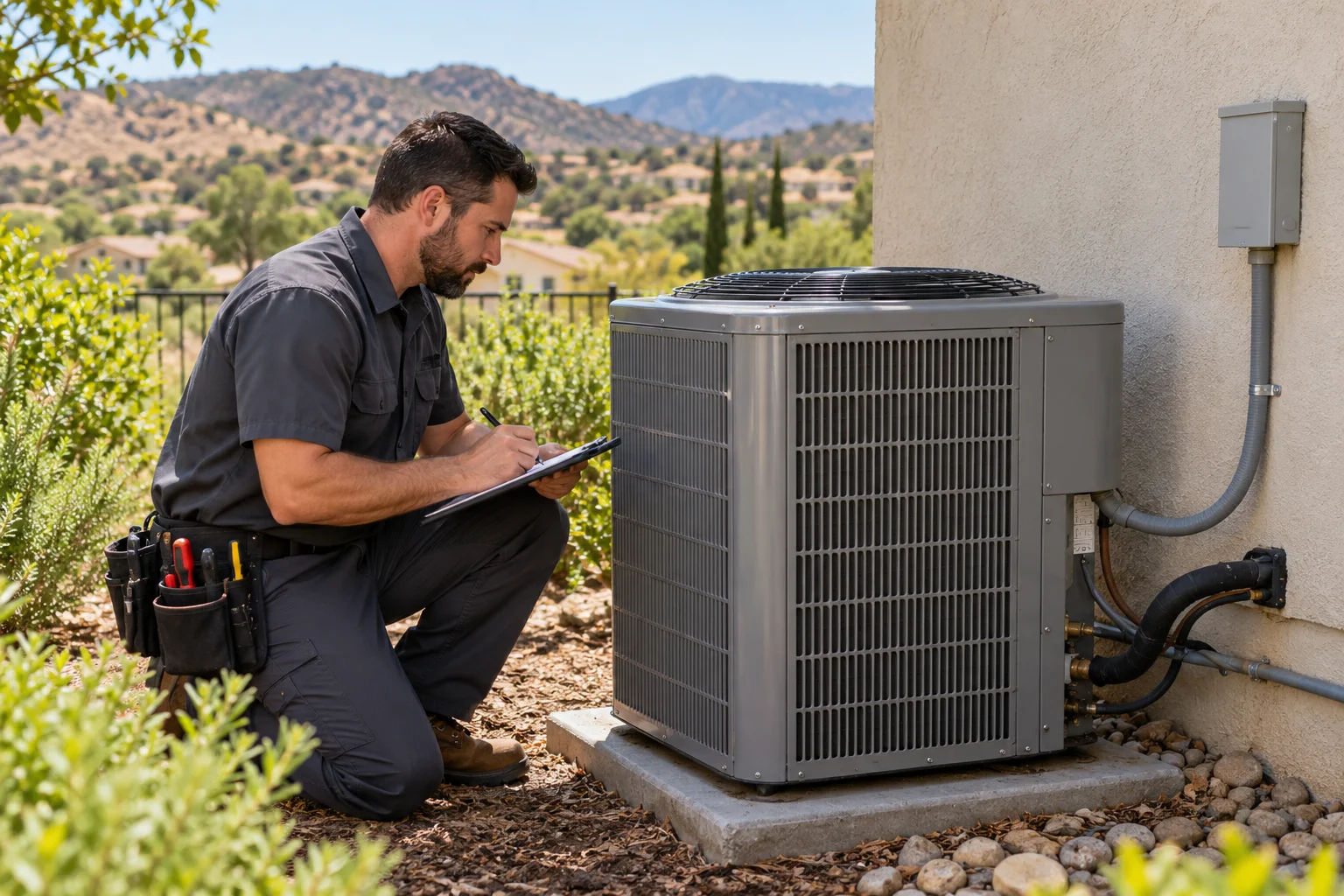
Clear notes give the matched contractor a useful starting point. They also help you describe the same problem consistently when symptoms change.
What should you record before requesting a match?
Start with the symptom you can observe. “The AC isn’t working” leaves several possibilities open. A more useful report says whether the system won’t start, runs without cooling, stops repeatedly, or cools some rooms but not others.
Write down the thermostat display and selected mode. Note the temperature shown, but don’t treat that reading as a diagnosis. Include whether air reaches the vents and whether that air feels warm, cool, or unchanged.
Record when you first noticed the problem. If it began after a power interruption, thermostat change, unusual sound, or long cooling cycle, include that sequence. Don’t guess which event caused the failure. Just report what happened before and after it.
Useful observations include:
- Whether the indoor system sounds active
- Whether air comes from every supply register
- Which rooms feel noticeably different
- Whether the outdoor unit appears still or active
- Any repeated clicking, banging, squealing, or hissing
- Any visible water near indoor equipment
- Any message or code shown on the thermostat
- Whether the problem happens continuously or only sometimes
A short phone video can preserve a sound that later disappears. A photo of the thermostat display may also help. Keep your notes factual and avoid naming a failed part.
For a broader symptom list, use the AC not cooling checklist. Climate Pros SD can then match you with an independent licensed contractor for AC repair.
Which checks stay outside the equipment cabinet?
Keep the first report focused on visible controls and conditions. You don’t need to remove a panel, reach into equipment, or identify electrical and refrigerant components.
Begin at the thermostat. Record what its screen shows and whether the cooling setting appears selected. If the screen is blank, include that fact. If it displays an alert, copy the wording exactly or take a clear photo.
Walk through the occupied rooms and compare airflow. You can note a weak room, a silent register, or a section of the house that stays warmer. Don’t dismantle a register or reach into ductwork. The contractor can inspect the system and decide which measurements matter.
From a normal viewing position, look at the closed outdoor unit. Report whether it appears to be running. Note unusual sound, visible debris around the exterior, or a clear obstruction near the unit. Don’t open its cabinet or attempt to move internal parts.
At the indoor equipment area, record visible water, staining, or an unusual sound. If you can read the exterior equipment label without moving anything, photograph it. The model and serial details may help the contractor prepare for the inspection.
These observations aren’t a diagnosis. Several different faults can produce similar homeowner-visible symptoms. Your job is to describe the failed-cooling moment accurately. The licensed pro’s job is to inspect the equipment and identify the cause.
How can inland conditions shape the inspection?
Ramona’s inland climate makes timing important when you describe a cooling complaint. NOAA’s 1991–2020 climate normals for Ramona Airport list a normal July high of 88.9°F and a normal August high of 90.8°F. Heat waves can run well above those normals.
Record the outdoor conditions in plain language. You don’t need an exact weather reading. Say whether the failure appeared during a hot afternoon, after several hours of operation, or during a cooler part of the day.
Also note whether cooling changes as the day progresses. A system that feels acceptable in the morning but falls behind later presents a different observation pattern than one producing warm air from startup. That distinction doesn’t identify the cause, but it gives the contractor a clearer timeline.
Room location matters too. Tell the pro if the issue is strongest in a west-facing room, an upper level, a converted space, or the far end of the house. Only include features that actually apply to your property.
If visible dust, leaves, or other material surrounds the outdoor unit, mention it without assigning blame. Likewise, report any recent power interruption if the timing overlaps with the cooling problem.
Ramona’s July and August normals differ from the milder conditions recorded at coastal San Diego County stations. That local context is why an air conditioning repair report for Ramona should include time of day, affected rooms, and the system’s operating pattern. Nearby inland homeowners can compare this process with our guide to AC repair in Lakeside.
What access details should rural properties include?
If your Ramona home sits on a larger parcel or has an unusual approach, include access details before the contractor visits. Don’t assume an address alone explains the route to the equipment.
State whether the entrance is gated. Explain how the matched contractor should reach the correct building after entering the property. If several homes, workshops, guest spaces, or equipment areas share the parcel, identify the structure with the cooling problem.
Mention animals that may be loose near the route or equipment. Describe where the indoor and outdoor units are located. Examples include an outdoor unit behind a side gate, indoor equipment in an attic, or a thermostat inside a detached living space. These are reporting examples, not claims about every Ramona property.
Useful access notes may cover:
- Gate instructions provided directly to the contractor
- The correct driveway or building entrance
- Parking limits or narrow approach areas
- Dogs, livestock, or other animals near the work area
- Stairs, attic access, or locked equipment spaces
- A tenant, caretaker, or owner who must provide entry
- Weak mobile reception at the property, if applicable
Don’t publish gate codes or private access details in a public message. Give them directly to the matched company.
The goal is simple: help the independent contractor understand which system needs inspection and how to reach it. Climate Pros SD doesn’t dispatch technicians or control a contractor’s schedule. The homeowner contracts with and pays the matched professional directly.
Ramona homeowners preparing for a heating visit can use the related guide on what to report for furnace repair.
When should an independent licensed pro inspect it?
Request a professional inspection when cooling doesn’t return, the system repeatedly stops, airflow changes sharply, or an unfamiliar sound continues. Visible water near equipment and recurring thermostat alerts also belong in your report.
Avoid choosing a repair before the inspection. Warm air, weak airflow, repeated stopping, and a silent outdoor unit describe symptoms. They don’t prove which component needs attention.
Ask the contractor to explain the diagnosis in plain language. You can also ask which observations or measurements support that conclusion. Before authorizing work, request the proposed scope and price from the contractor. Each independent company sets its own fees and policies.
If replacement enters the conversation, ask why repair was ruled out. Equipment age, condition, system compatibility, and the diagnosed failure can all become part of that discussion. Don’t accept an unsupported conclusion based only on a single symptom.
Every HVAC professional in the Climate Pros SD network is licensed and insured. Homeowners can also check a contractor’s status through the California Contractors State License Board. Search using the contractor’s license number, business name, or personnel name.
A strong first report won’t replace an inspection. It gives the licensed professional a cleaner account of what happened and helps keep the initial conversation focused.
When to call us
Call when your Ramona AC won’t cool, behaves inconsistently, or needs inspection by a licensed HVAC professional. Climate Pros SD will connect you with an independent local contractor who can evaluate the system.
Call us at (442) 777-6440 and we will match you with a licensed local pro.