Your Ramona furnace has stopped heating, and the house is getting colder. Before requesting furnace repair, record what the system does, what you hear, and what changed before the problem began.
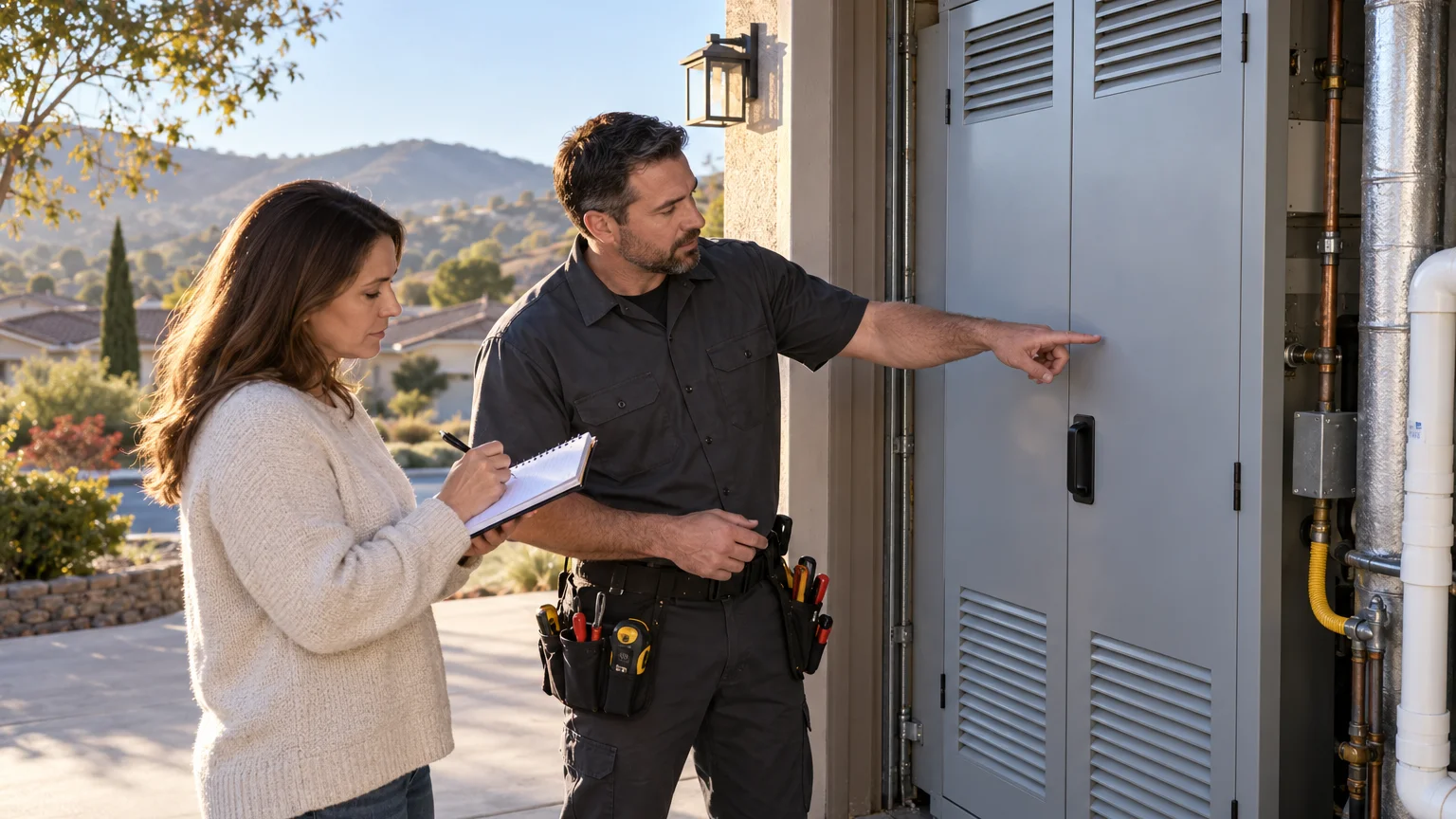
What to write down when the heat stops
Start with the thermostat. Record the displayed room temperature and the setting you requested. Note whether the screen is blank, showing a message, or behaving normally. Don’t interpret an error message. Copy it exactly or take a clear photo.
Next, describe what happens after the thermostat requests heat. You might hear nothing, hear the system start and stop, or notice air moving without enough warmth. Write down the sequence in plain language. Include any clicking, humming, rattling, or repeated starting. Don’t guess which component made the noise.
Record when you first noticed the problem. Mention whether it began after a power interruption, thermostat change, filter change, or other work around the home. If the problem comes and goes, note what was happening each time. These details give the contractor a cleaner starting point.
Also list which rooms feel affected. A whole-house no-heat problem differs from one cold bedroom or weak airflow at certain registers. Don’t remove registers or reach into the ductwork. Just describe what you notice from the room.
If you smell gas, leave the area immediately. From a safe location, contact emergency services or SDG&E. Don’t smoke, light a flame, or operate electrical switches or appliances in the affected area.
For broader preparation, review our furnace repair service page before speaking with an operator.
Which checks stay outside the furnace cabinet
Keep your checks limited to controls and items you can see without opening equipment. The furnace cabinet should remain closed. Don’t remove panels, reach toward wiring, handle gas components, or attempt an ignition repair.
Confirm what the thermostat screen shows. Check whether its selected mode matches your heating request. If you recently changed a schedule, record that change. Don’t keep changing settings while trying to force the system to start. That can make the original sequence harder to describe.
Look at the filter only if it sits in a homeowner-accessible slot outside the furnace cabinet. Photograph its condition and any size markings you can read. Don’t claim the filter caused the failure. A photo simply gives the pro more context.
From a normal standing position, note whether accessible registers are open or blocked by furniture. Don’t dismantle a register or duct. If airflow differs noticeably between rooms, write down which rooms are affected.
Check the surrounding floor for visible water without touching the equipment. Photograph what you see from a safe distance. Don’t open a drain, move tubing, or clear an internal blockage.
A Ramona furnace that won’t ignite can have several possible causes. A symptom alone doesn’t confirm which part failed. Our guide to a furnace that won’t ignite explains what information helps during that conversation, without treating an error code as a diagnosis.
How Ramona nights and ranch lots affect the visit
Ramona’s inland conditions differ sharply from coastal San Diego. NOAA’s 1991–2020 normal for Ramona Airport lists an August high of 90.8°F and a January low of 36.5°F. The station recorded an average of 39.3 nights at or below freezing per winter during the ten winters studied from 2015 through 2025.
Those figures make a heating failure more than a generic San Diego comfort issue. Tell the operator about household needs that affect scheduling discussions. The matched contractor confirms their own availability. Climate Pros SD doesn’t promise an arrival time.
Property layout matters too. Whether the furnace serves a ranch property, a tract home, or another Ramona residence, explain where the equipment is located. Mention gates, animals, detached structures, narrow access, or parking limitations that a visitor needs to know about. Give directions based on your actual property rather than assuming online mapping shows every entrance.
Ask where the prospective contractor will be traveling from and whether Ramona falls within its normal service area. Also ask whether travel affects the quoted diagnostic fee. Each company sets its own prices and policies.
Ramona’s conditions aren’t interchangeable with the coast or lower East County. For comparison, our El Cajon furnace repair guide addresses a different inland setting. Homeowners managing both heating and cooling can also review the Lakeside AC repair guide.
What model details to photograph on the data plate
A clear data-plate photo can reduce confusion before an inspection. Don’t open the furnace cabinet to find it. Photograph the label only when it’s visible from the equipment’s exterior or another normally accessible position.
Take one wide photo showing the full label. Then take closer photos with readable text. Keep the camera straight to reduce glare and distortion. Review each image before leaving the area.
Try to capture these items when they appear:
- Manufacturer name
- Model number
- Serial number
- Any listed fuel or electrical information
- Any existing service labels
- The furnace and its surrounding area
Copy model and serial details exactly. Similar-looking letters and numbers can identify different equipment. A photograph is usually more reliable than a handwritten transcription.
Don’t post the serial number publicly. Send it only to the contractor when requested. Ask what equipment details the company needs before the visit.
Photograph the thermostat screen separately. If it displays a code or message, capture the full screen. Don’t rely on an online error-code list as a final diagnosis. Codes can guide a qualified pro, but they don’t establish the complete cause by themselves.
If the label isn’t visible without moving or opening something, stop there. Tell the contractor you couldn’t access it safely. The pro can locate and read it during the inspection.
When should an independent licensed pro inspect it?
Request an inspection when the furnace doesn’t produce heat, repeatedly stops, makes a new noise, or behaves differently from its normal cycle. A licensed HVAC contractor can examine the equipment and explain the findings. Climate Pros SD matches Ramona homeowners with independent licensed and insured local pros. The homeowner contracts with and pays the professional directly.
Ask the pro to separate the diagnosis from the recommendation. You should understand what was observed, which component needs attention, and whether the quoted work is repair or replacement. You hear the price before authorizing any work.
No verified Ramona furnace-repair price appears in the approved claims ledger. The final amount depends on the contractor’s diagnosis and policies. Ask for the diagnostic fee as a dollar figure, whether it applies toward authorized work, and what parts and labor the quote includes.
You can confirm a contractor through the California Contractors State License Board license check. Search using the business name or license information the contractor provides.
Don’t assume one symptom identifies the first failed part. No universal component-failure order could be confirmed for Ramona furnaces. The system type, equipment condition, and inspection findings control the diagnosis.
How does the $5,000 rule fit this decision?
The $5,000 rule is a trade heuristic, not a law or guarantee. It multiplies the system’s age by the proposed repair amount, then compares that result with 5,000. Some homeowners use it as one input when weighing repair against replacement.
It shouldn’t replace an equipment inspection or a written quote. It also doesn’t account for every home’s needs, equipment condition, or competing proposal. Ask the pro to explain both options using the actual furnace findings. Our full guide to the HVAC $5,000 rule gives the calculation more context.
When to call us
Call when your Ramona furnace stops heating, cycles unexpectedly, or needs a licensed HVAC inspection. Climate Pros SD will connect you with an independent licensed local professional, without setting the contractor’s price or timing. Call us at (442) 777-6440 and we will match you with a licensed local pro.