A Fujitsu wall head that runs without cooling needs careful observation, not a guessed repair. Confirm the displayed mode, target temperature, airflow, and visible outdoor-unit behavior without removing covers. If those checks don’t explain the problem, a licensed independent HVAC pro should test the system.
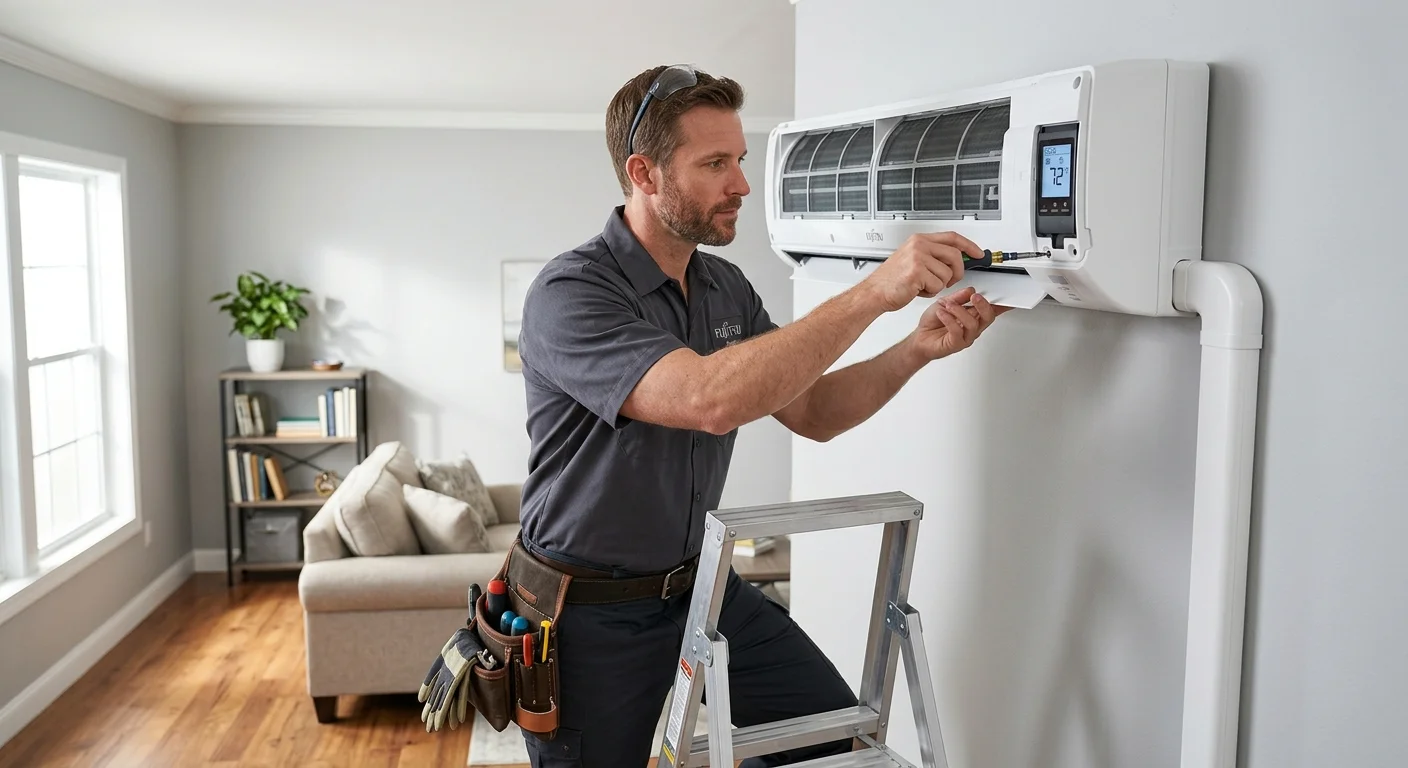
Fujitsu not cooling: read the indoor display first
Confirm mode is Cool, setpoint is below room temperature, airflow is not on a dry or fan-only setting, and the outdoor unit actually runs. Do not guess a refrigerant leak from the living room. Climate Pros SD is not Fujitsu factory service. The matched licensed contractor tests the circuit you have.
Checklist
- Photograph the indoor display including any error code.
- Listen for the outdoor fan.
- Check the indoor filter behind the cover.
- See mini split head dripping if you also have water.
- Use mini split repair in Scripps Ranch for attic-head contrast.
Related: Mini split installation and AC repair.
What is the indoor head doing?
Start by watching the indoor head from the floor. Don’t climb, remove its cover, or reach into the outlet. Note whether the display or indicator lights are on. Then record whether the louvers move and whether you feel airflow.
Describe the air in plain terms. It might feel cool, room temperature, or warm. Note whether the airflow stays steady or changes while you watch. Write down any visible symbols exactly as shown. A photo is better than a description from memory.
Don’t assign a meaning to a blinking light or displayed code yet. Fujitsu procedures and indicators may differ by model. A chart for another unit may send you toward the wrong conclusion.
If your home has several indoor heads, observe each one. Record whether the problem affects one room or every room. Don’t treat that pattern as a diagnosis. It simply gives the contractor a clearer starting point.
Room conditions also belong in your notes. San Diego County’s coastal areas generally have milder temperatures than inland valleys. Include your neighborhood, which rooms are affected, and what the system was doing when you noticed the change.
A Fujitsu AC repair conversation becomes more useful when the symptoms are specific. “The display is on, the louver moves, and the air doesn’t feel cool” gives a pro more context than “the AC is broken.”
Which checks don’t require opening the unit?
Use the controller to confirm that cooling mode is selected. Check the target temperature shown on its display. If another controller operates the same system, record what that controller shows as well. Don’t enter hidden menus or try an online reset sequence.
Look around the indoor head without touching it. Curtains, furniture, or stored items shouldn’t sit directly across its outlet. Check the visible intake and discharge areas for an obvious obstruction. Leave the cover closed, even if a video says the next step is easy.
Confirm whether the controller screen responds when you press its normal buttons. If it doesn’t, consult the exact model’s official instructions before changing batteries or settings. Avoid procedures written for a similar-looking controller.
From a safe position, observe the outdoor unit. Note whether it appears quiet, starts and stops, or makes a sound you haven’t heard before. Don’t touch the cabinet, remove panels, or enter a locked roof or mechanical area. Renters and condo owners should follow the property’s access rules.
You can also note whether the rest of the home has power. Don’t flip breakers repeatedly or copy a generic power-cycle sequence. Use only homeowner instructions from the matching Fujitsu manual.
These checks gather information without attempting a repair. For broader symptom comparisons, read our San Diego mini split repair guide. It explains how to prepare for a service conversation without guessing at the failed part.
How can an equipment fault resemble a control problem?
The indoor display can show a cooling command while the room stays warm. From inside the room, that mismatch doesn’t identify the cause. A controller issue and an equipment condition may produce similar visible symptoms.
For example, you may see an active display and moving louvers. You may also feel airflow that isn’t cooling the room. Those observations confirm what the head is doing. They don’t reveal whether the command, indoor equipment, outdoor equipment, or another part of the system needs attention.
Treat unfamiliar lights, tones, and symbols as model-specific information. Photograph the full display and write down the sequence you observed. Don’t use an error-code list unless it comes from the official manual for the exact model. No model-specific Fujitsu error-code meaning or reset procedure is confirmed for this page.
Before changing settings, photograph the current controller screen. Also record recent events you already know about, such as a power interruption, maintenance visit, or controller change. Don’t take the unit apart to search for more clues.
A licensed HVAC pro can identify the equipment and decide what testing is appropriate. The contractor may need access that homeowners shouldn’t attempt, including covered components and service connections. Our HVAC brand repair guide explains what to ask when choosing someone for brand-specific troubleshooting.
Where can you find the model-specific Fujitsu manual?
Begin with the paperwork supplied with the system. If you rent or live in a managed property, ask the owner or manager for the equipment records. You can also search the official Fujitsu support or document library using the complete model number.
Use an exact match. A manual for a unit that looks similar isn’t enough. Match every letter, number, and separator shown on the equipment. Indoor and outdoor equipment may have separate identifiers, so collect both when they’re visible without opening anything.
Photograph a model label only when you can reach it from the floor without moving a cover. Don’t use a ladder, remove a panel, or reach behind operating equipment. A licensed pro can gather an inaccessible identifier during the visit.
No model-specific procedure could be confirmed from the approved sources used for this article. That means we won’t publish a reset sequence, error-code definition, or internal cleaning procedure based on guesswork. The matching official manual is the authority for homeowner controls and documented operating steps.
Follow only the actions clearly assigned to the equipment owner. Stop when instructions call for tools, disassembly, internal wiring, or service access. Those steps belong in the contractor’s scope.
Climate Pros SD isn’t Fujitsu and doesn’t claim manufacturer authorization. For manufacturer support or warranty questions, contact Fujitsu through its official channel with the complete equipment details. If your repair discussion expands into a system decision, our mini split installation overview can help you organize the questions to ask.
When should an independent licensed pro test it?
Bring in a licensed independent HVAC pro when the simple observations don’t explain the lost cooling. The same applies when the next step requires opening equipment, using tools, accessing wiring, or connecting service instruments. Don’t turn a symptom check into an invasive repair attempt.
Call when the problem returns after normal controller use. Also call when the indoor head runs without delivering the expected cooling, or different heads behave differently. These patterns give the pro useful context, but they don’t prove which component needs work.
Before speaking with a contractor, gather the indoor and outdoor model photos you can take safely. Include controller photos, displayed symbols, affected rooms, and a short symptom timeline. Mention any recent service or power interruption you know about.
Ask whether the contractor works on your exact Fujitsu model. Ask what testing they propose before authorizing repairs. You should also ask for the diagnostic fee as a dollar figure and whether that company’s policy applies it toward approved work. Each contractor sets its own prices and policies.
Every HVAC pro in the Climate Pros SD network is licensed and insured. You can independently check a contractor through the California Contractors State License Board. Climate Pros SD is a referral service, not the contractor. You contract with and pay the matched professional directly.
Our AC repair service connects San Diego County homeowners with licensed local pros. Share the model and symptom notes when you call so the matched contractor understands what you’ve already observed.
When to call us
When your observations don’t explain the lost cooling, or the next step requires tools or opening equipment, it’s time for a licensed HVAC pro. Call us at (442) 777-6440 and we will match you with a licensed local pro.