A furnace installation proposal can look complete while leaving major decisions unwritten. Carlsbad homeowners should compare the equipment, home assessment, supporting work, and final testing before choosing a contractor.
What should the installation scope identify?
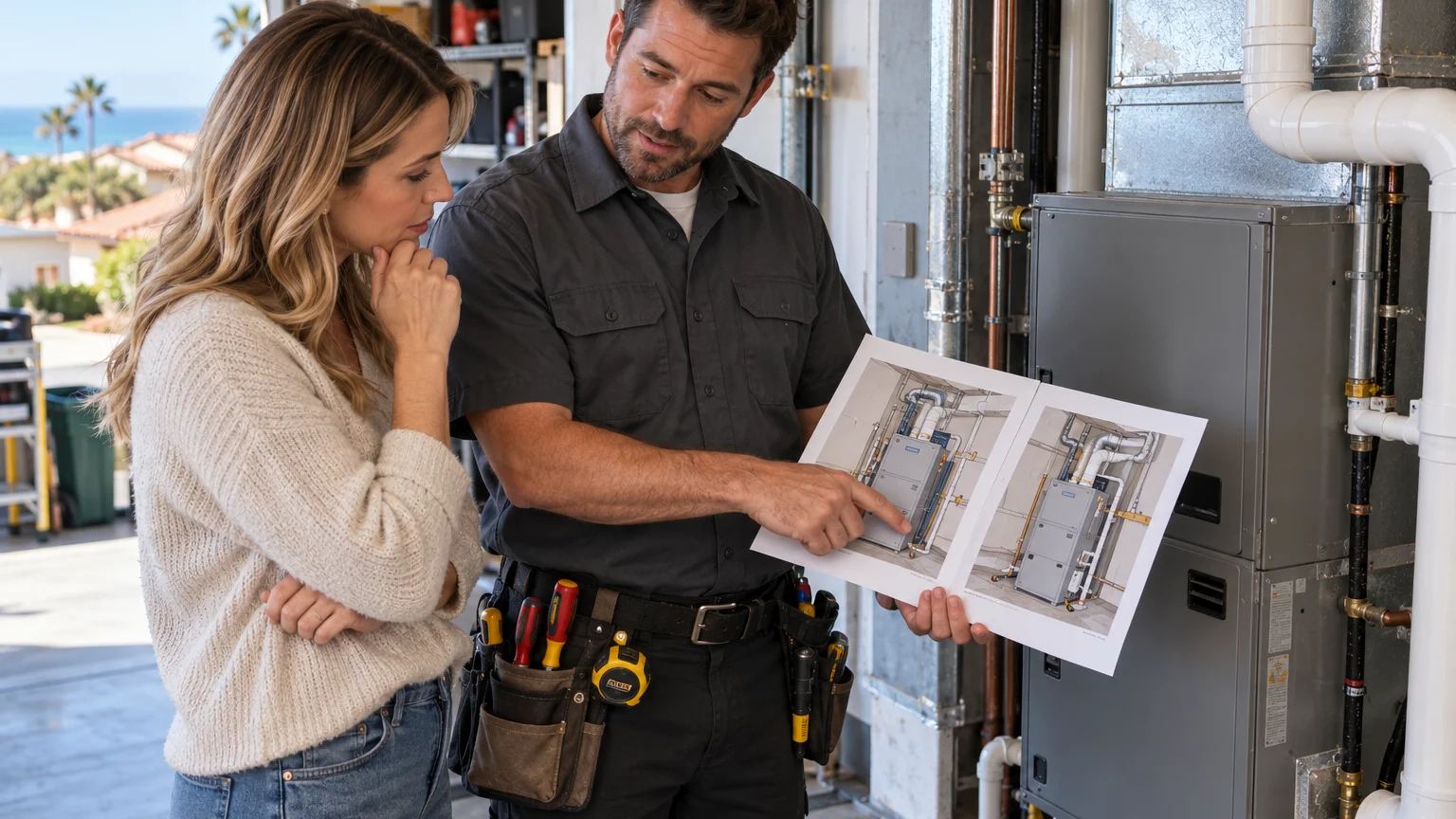
A useful scope starts with the exact equipment being proposed. It should identify the manufacturer, model, fuel or power source, and included controls. If the model isn’t selected yet, the proposal should explain what remains undecided.
The scope should also show what happens around the furnace. Look for written answers to these points:
- Is the existing furnace being removed?
- Does disposal appear in the scope?
- Will the contractor reuse or change the equipment platform?
- Are supply and return connections included?
- Does the scope address the venting or exhaust path?
- Are gas, electrical, drain, or control connections involved?
- Will any thermostat work be needed?
- Which startup checks and final tests are included?
These questions matter because two proposals may cover different projects. One might describe only the new furnace. Another might include changes to the surrounding system. A lower total doesn’t tell you which scope is more complete.
Ask the contractor to separate included work from optional work. Also request a written list of exclusions. That prevents a vague phrase such as “standard installation” from carrying too much weight.
Carlsbad permitting requirements couldn’t be confirmed from the approved research for this page. Ask each contractor to identify the authority governing your address and explain any permit or inspection steps. The matched licensed contractor, not Climate Pros SD, handles any required permit work.
For a broader sequence, read our guide to the new furnace installation process in San Diego. It can help you spot missing steps without assuming every home needs the same work.
Which home details should the assessment document?
A furnace proposal should follow an in-home assessment. The contractor needs enough information to explain why the proposed setup fits your property. A model number alone doesn’t show that connection.
Ask the contractor to document the furnace location and access path. A garage installation presents a different working area than an attic, closet, or enclosed mechanical space. The proposal should note stairs, hatches, doors, finished surfaces, or other access limits that affect the scope.
The assessment should also record the existing duct connections, return-air path, supply layout, thermostat, electrical connection, gas connection when applicable, and venting arrangement. If any part can’t be inspected, that limitation should appear in writing.
Room-by-room comfort concerns belong in the assessment too. Tell the contractor about areas that stay cooler, rooms with weak airflow, closed vents, additions, remodeled spaces, or changes since the existing system was installed. These observations don’t determine the solution by themselves. They give the pro issues to investigate before recommending equipment.
Carlsbad’s coastal position also deserves a direct conversation. The National Weather Service describes ocean moderation near San Diego and warmer summer conditions in nearby valleys. Conditions can therefore feel different between homes near Carlsbad Village and properties farther inland toward Bressi Ranch or La Costa. Ask how the contractor accounted for your exact address, rather than accepting a generic North County description.
If the existing system has a specific fault, consider a furnace repair assessment before treating replacement as the only answer. Our guide to furnace repair in coastal Carlsbad explains what details to report during that conversation.
How should you compare furnace and heat pump options?
A contractor may present a furnace replacement beside a heat pump option. Compare those proposals as different systems, not as two equipment prices.
Start with the full equipment list. Ask whether each option changes only the indoor unit or also adds or replaces outdoor equipment. The proposal should identify any duct, thermostat, electrical, gas, venting, drain, or equipment-location changes tied to that choice.
Next, ask the contractor to explain how each option would operate in your home. Keep the discussion tied to documented conditions. Those include the existing connections, available equipment space, duct configuration, electrical setup, and the heating or cooling concerns you reported.
Don’t accept an estimated savings claim without its assumptions. Electricity use depends on equipment, operating time, settings, weather, and the customer’s rate plan. SDG&E residential plans can use time-of-use pricing. Current listed plans place the on-peak period from 4 p.m. to 9 p.m., but rates and plan terms can change. Confirm your exact plan with SDG&E before using projected operating costs to choose equipment.
Current incentive status also needs checking before purchase. The approved research says TECH Clean California single-family heat pump HVAC incentives were fully reserved and stopped accepting new reservations in November 2025. Single-family HEEHRA rebates were fully reserved statewide in February 2026. The federal Section 25C credit doesn’t apply to property placed in service after December 31, 2025. Don’t treat any of these programs as available money for a 2027 project without new verification.
A licensed contractor can explain the technical differences for your property. You can also review our heat pump service overview before comparing scopes.
What should each written proposal include?
Put every proposal into the same comparison format. This makes missing details easier to see and keeps the decision from resting on one total.
Each written proposal should identify:
- The proposed equipment and included controls
- Work performed at the furnace location
- Duct or airflow-related work in the scope
- Gas, electrical, venting, drain, and thermostat work
- Removal and disposal responsibilities
- Surface protection and cleanup responsibilities
- Startup checks and final testing
- Permit or inspection responsibility, if required
- Work specifically excluded
- Optional items shown separately
- The total price and payment terms
- The person or company responsible for the work
Climate Pros SD doesn’t set contractor prices. Each independent company sets its own. Ask for the price in writing before work begins, then compare matching scope items.
Don’t rely on verbal promises. If a salesperson says an item, service, or document is included, ask for that detail in the proposal. The same applies to equipment coverage and service-contract terms. Request the exact written documents and read their exclusions.
Confirm the contractor’s identity before signing. Every pro in the Climate Pros SD network is licensed and insured. You can also verify a contractor’s status through the California Contractors State License Board license check.
Finally, identify who will approve changes. Hidden conditions can appear after equipment is removed or an enclosed area is opened. The proposal should explain how additional work will be documented and authorized. Don’t leave that process to an informal conversation during installation.
When should a licensed pro inspect the home?
A licensed pro should inspect the home before you accept a furnace installation proposal. Photos, model numbers, and phone descriptions can help start the conversation, but they may not show access, connections, duct conditions, or the complete equipment area.
An inspection is especially useful when proposals disagree. One contractor may include duct changes while another plans to reuse existing connections. One may flag electrical or venting work that another doesn’t mention. Ask both contractors to explain the difference using conditions they observed.
Schedule an inspection before making a replacement decision when the current furnace still operates but has recurring problems. A repair assessment may show whether the immediate fault is separate from the larger installation decision. It also creates a clearer record of the existing system’s condition.
A new assessment also makes sense after remodeling. Added rooms, changed walls, new windows, converted spaces, or altered ducts may make the old system description incomplete. Tell the contractor exactly what changed and when.
Don’t operate a furnace if you suspect a gas leak. SDG&E’s natural gas safety guidance says to leave the area immediately. From a safe location, call 9-1-1 or the utility. Don’t smoke, light a flame, or switch electrical appliances or lights on or off. That situation calls for emergency safety action, not a proposal comparison.
For an ordinary furnace replacement, use the inspection to turn assumptions into written scope. The contractor should explain what was observed, what remains unconfirmed, and what work the proposal includes.
When to call us
Call when you need a licensed HVAC pro to inspect an existing furnace, compare replacement options, or define a complete installation scope. Climate Pros SD matches Carlsbad homeowners with licensed, independent local contractors.
Call us at (442) 777-6440 and we will match you with a licensed local pro.