Garage conversions are common in San Diego County, driven by ADU rules and the need for extra living space. The HVAC question almost always lands the same way: a single-zone ductless mini-split, not a duct run from the house. Extending the home’s central system into a former garage is usually a mistake because the existing ducts were not sized for the new load and the slab and walls were not built as conditioned space.
Climate Pros SD is a referral service. It does not install equipment or set prices. The matched licensed contractor quotes after they see attached versus detached, electrical capacity, and whether the space will be habitable.
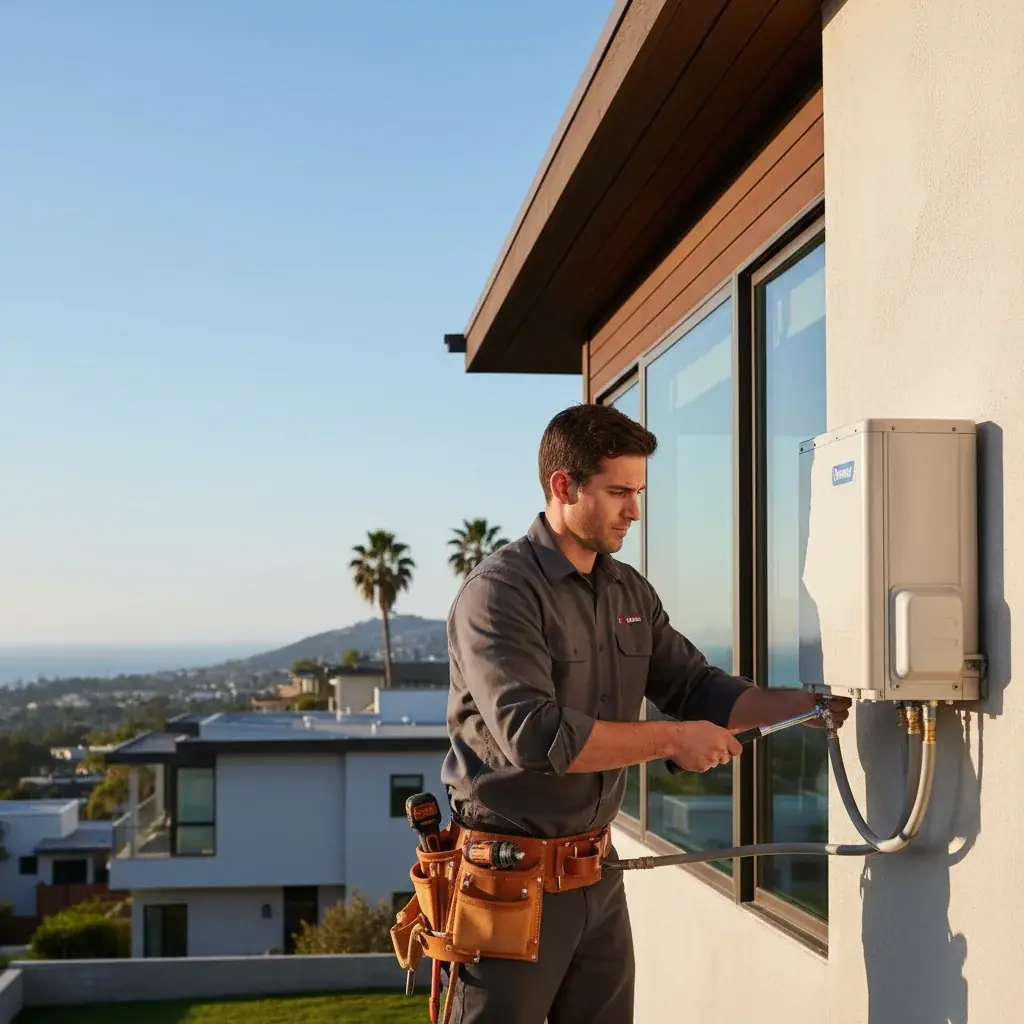
Why mini-splits are the default for garage conversions
Garages were not built as living spaces. They have uninsulated slabs, low ceilings, no return-air paths, and usually no ducts. Extending the home’s central AC means cutting new runs through finished walls, derating a system sized for the original house, and stealing airflow from the rest of the home.
A single-zone ductless mini-split is one outdoor condenser, one indoor head, and a short line set through the wall. Inverter heat pumps cool in summer and heat in winter. California requires habitable space to be heated. A heat-pump mini-split can satisfy heating without a separate furnace or gas line.
Coastal garages in Pacific Beach, OB, Encinitas, and Carlsbad often land on a smaller head. Inland conversions in Escondido, El Cajon, Santee, and Poway often need more capacity because slab and west-wall heat are real. A Manual J still beats a rule of thumb.
DOE describes SEER2 as a seasonal cooling-efficiency rating. Actual savings vary with usage. Quiet indoor operation is a product spec on the submittal, not a brand decibel claim for every head.
Attached vs detached garage: the install changes
Attached garages share a wall with the house, which makes electrical and condenser placement easier. The outdoor unit typically sits on a pad or wall bracket. Lines run through the shared wall. Electrical comes off the main panel on a dedicated circuit. In the City of San Diego, that is a mechanical and electrical permit pair.
Detached garages need a path for power. A 15 or 20 amp garage circuit for door openers will not carry a heat pump. Ask for sub-panel or buried conduit as its own dollar line. Metering and ADU utility rules are a separate conversation with the building department. Do not treat a blog fee as the permit total.
The slab matters. Garage slabs were often poured uninsulated. Adding a sleeper floor with rigid foam raises the floor and can steal headroom. Skipping slab insulation and sizing a larger head is a tradeoff some owners make. Be honest about it on the load calc.
What a 2026 garage HVAC quote should list
Climate Pros SD does not publish 9,000 or 12,000 BTU installed bands, line-set adders, panel-upgrade adders, or HOA fees. Ask for:
- Equipment size from Manual J
- Line-set length and stucco patching
- Electrical circuit or sub-panel
- Permit, pulled by the licensed contractor
- Condensate drain to a legal termination
- Disconnect in sight of the condenser
If the conversion is a full ADU (insulation, drywall, kitchen, bath), HVAC is one trade among several. Line sets need a clear path before drywall.
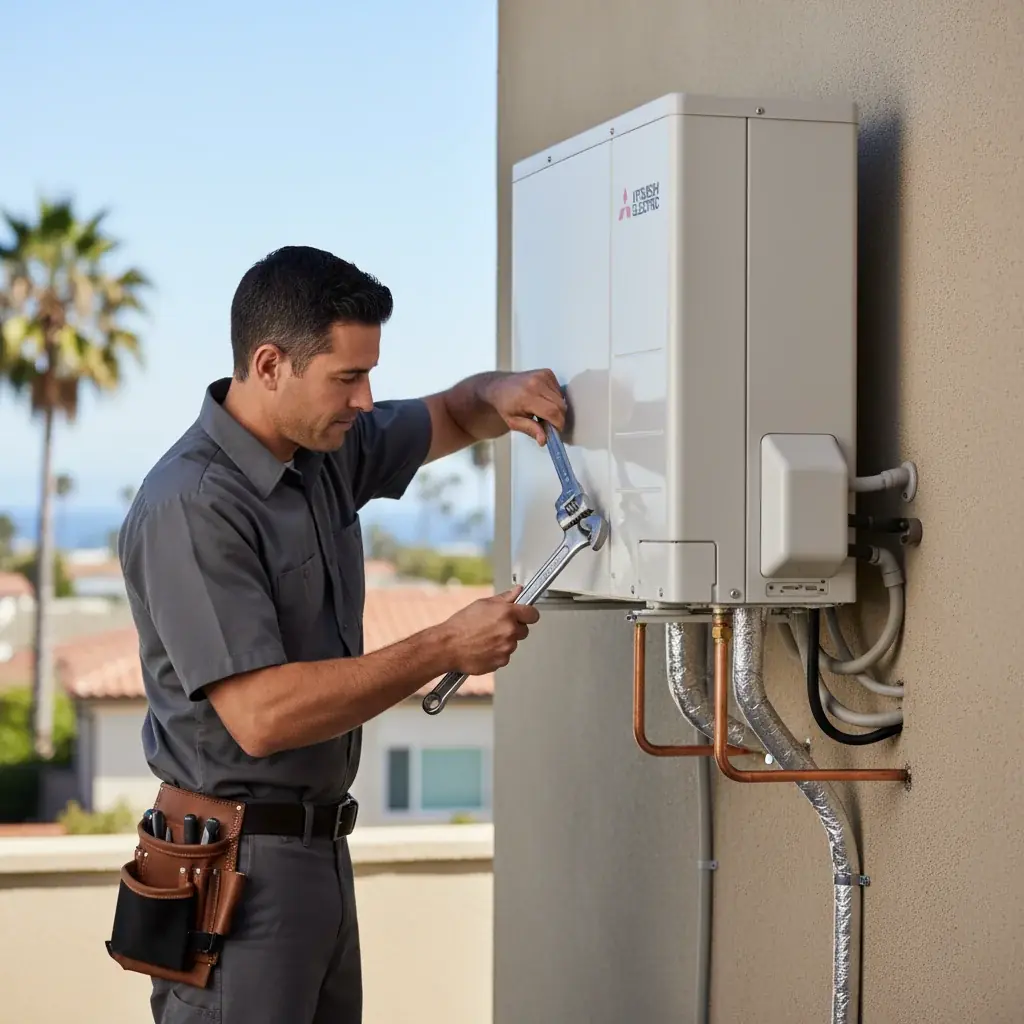
Title 24, permits, and what inspectors look for
California Title 24 Part 6 applies when a garage conversion creates habitable space. The conditioning system has to meet current efficiency rules, the envelope has to be insulated, and ventilation has to be addressed. A heat-pump mini-split handles the equipment side. The envelope is often the harder part because garage walls and ceilings were rarely insulated to current code. Ask the architect or GC for the current climate-zone insulation values. This page does not publish R-value minimums from memory.
In the City of San Diego you typically need:
- Building permit for the conversion
- Mechanical permit for the HVAC
- Electrical permit for the new circuit
- Plumbing permit if you add a bath or kitchen
- Title 24 documentation, with field verification by a CEC-certified rater under the current ECC program (the old HERS field-testing scope moved January 1, 2026)
Inspectors look at line-set insulation, charge documentation, condensate routing, the disconnect, and smoke and CO detectors in habitable space. Plan HVAC final after drywall so the head mounts on a finished wall.
Other cities (Carlsbad, Escondido, Oceanside, Chula Vista, El Cajon, and the rest of the 67) have their own portals and fees. This page does not publish a county-wide permit total.
Decision framework
If you are converting an attached garage to a bedroom, office, or rec room and the home’s central system is healthy: dedicated mini-split. Do not extend the central system.
If you are converting to a full ADU: dedicated heat-pump mini-split sized to the conditioned space.
If you are converting a detached garage: dedicated mini-split plus a real electrical plan.
If it will stay a workshop you do not permit as habitable space: portable equipment is a stopgap. It will not pass as primary HVAC for a permitted ADU.
If it stays a garage: do not install HVAC. The door opening makes conditioning a losing battle.
Do not budget Section 25C for a 2026 install. TECH single-family reservations stopped November 14, 2025. HEEHRA single-family applications were not being accepted as of February 24, 2026. SDG&E Golden State retail rebate offerings have ended.
Frequently asked questions
Can I just extend my home’s central AC into the converted garage?
Almost never. Existing trunks were not sized for the extra load. A rater signing Title 24 documentation will often reject this. A dedicated mini-split is usually cleaner than rebuilding the central system.
What size mini-split do I need for a 400 square foot garage conversion?
Coastal, well insulated: often a smaller head. Inland or west-facing, or an uninsulated slab: larger. Size off Manual J, which Title 24 documentation needs anyway.
Do I need a permit for HVAC in a garage conversion?
Yes for fixed HVAC in habitable space. Skipping permits creates disclosure issues at sale.
Will a mini-split for a garage qualify for SDG&E or federal rebates?
Not Section 25C for a 2026 install. Confirm TECH, HEEHRA, and SDG&E on the live pages. Do not count reserved or closed money.
How long does a garage HVAC install take?
Ask the matched company. A standalone mini-split in an already-framed garage is often a short job. In a full ADU it splits into rough-in and final around the other trades. The brand does not promise a day count.
Can I use a window AC instead of a mini-split for a garage conversion?
Not as the primary system for permitted habitable space. Title 24 wants fixed, documented equipment.
Call (442) 777-6440 to be matched with a licensed local pro. Related reading: mini-split HVAC for San Diego ADUs, ductless mini-split cost in San Diego, and HVAC new construction Title 24. See mini-split installation.
Related services: AC repair and AC installation.