For a San Diego home, start with a temperature that keeps everyone comfortable, then test small adjustments. SDG&E suggests precooling earlier in the day and, health permitting, setting the thermostat to 78°F or higher from 4 to 9 p.m. That is energy-saving guidance, not a temperature every household must tolerate. Your health needs, room conditions and electricity plan come first. Read SDG&E’s heat-wave guidance.
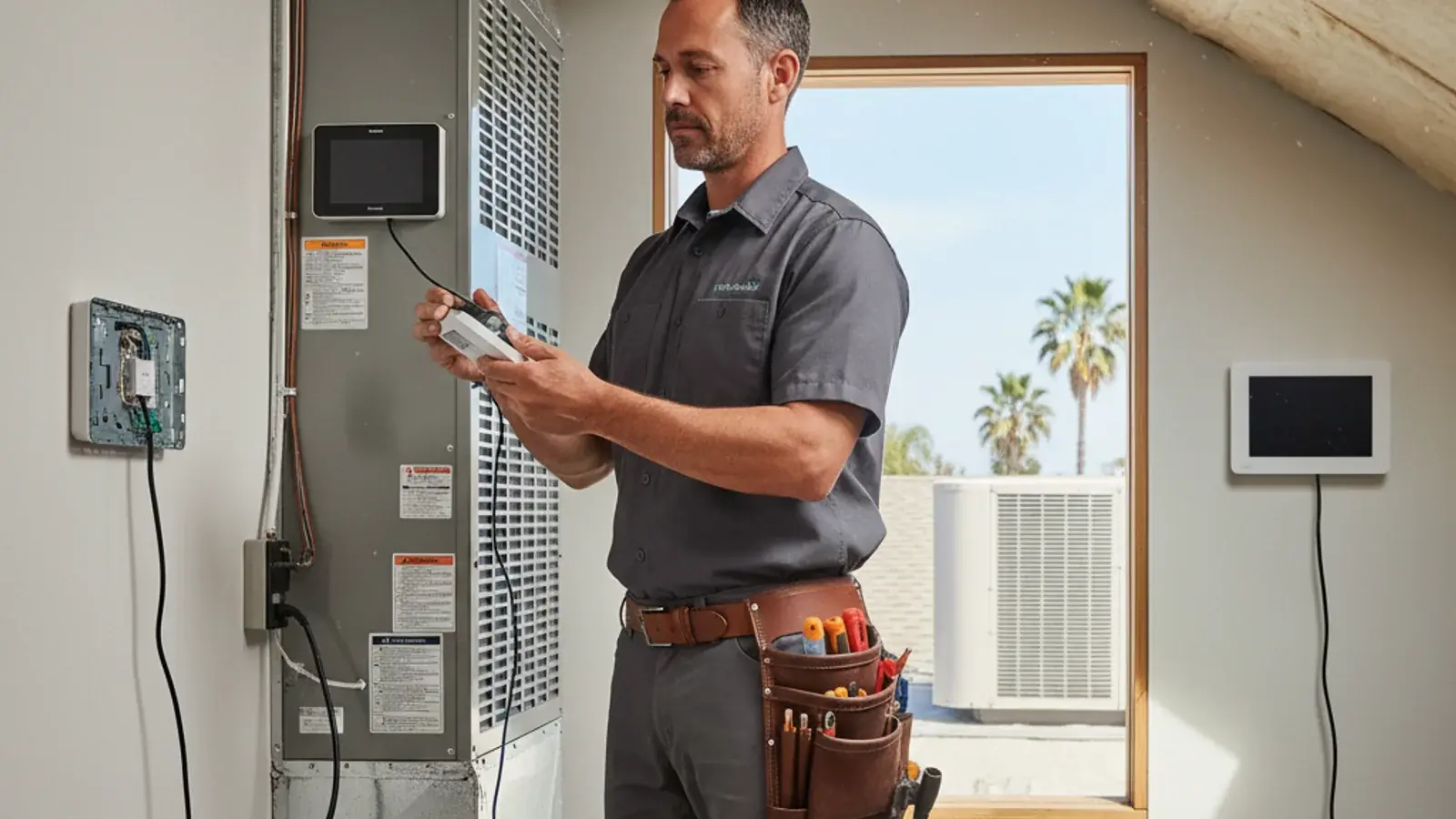
Choose a setting you can actually use
Try a small increase from your current comfortable setting while someone is home to evaluate it. Check the rooms people occupy, especially bedrooms and upstairs spaces. The number beside a hallway thermostat may not describe how another room feels.
Keep a short record of the setting, indoor conditions and whether the system reaches the target. If a warmer setting leaves someone uncomfortable, lower it. Do not keep raising the temperature to meet a savings target.
San Diego’s coast and inland valleys have different outdoor conditions. The National Weather Service describes ocean moderation near the coast and warmer summer days in nearby valleys. That helps explain different cooling needs; it does not establish a correct indoor setting for every ZIP code. NWS San Diego climate background.
Match the schedule to your SDG&E plan
Check the plan name and current time periods on your bill or in My Energy Center. SDG&E’s residential plan page identifies 4 to 9 p.m. as the on-peak period for its listed time-of-use plans. Rates and other periods vary by plan. Check current SDG&E pricing plans.
For a household trying SDG&E’s precooling approach:
- Cool the home earlier, before the expensive period, using a setting the household finds comfortable.
- At 4 p.m., try the utility’s 78°F-or-higher guidance only if health and comfort allow.
- Return to your normal evening schedule after the peak period.
- Check both comfort and actual electricity use before keeping the schedule.
There is no universal requirement to precool to 70°F. A house that warms quickly may need cooling throughout the peak period. Moving electricity use to a cheaper hour and reducing total electricity use are different results; check both before deciding the experiment saved money.
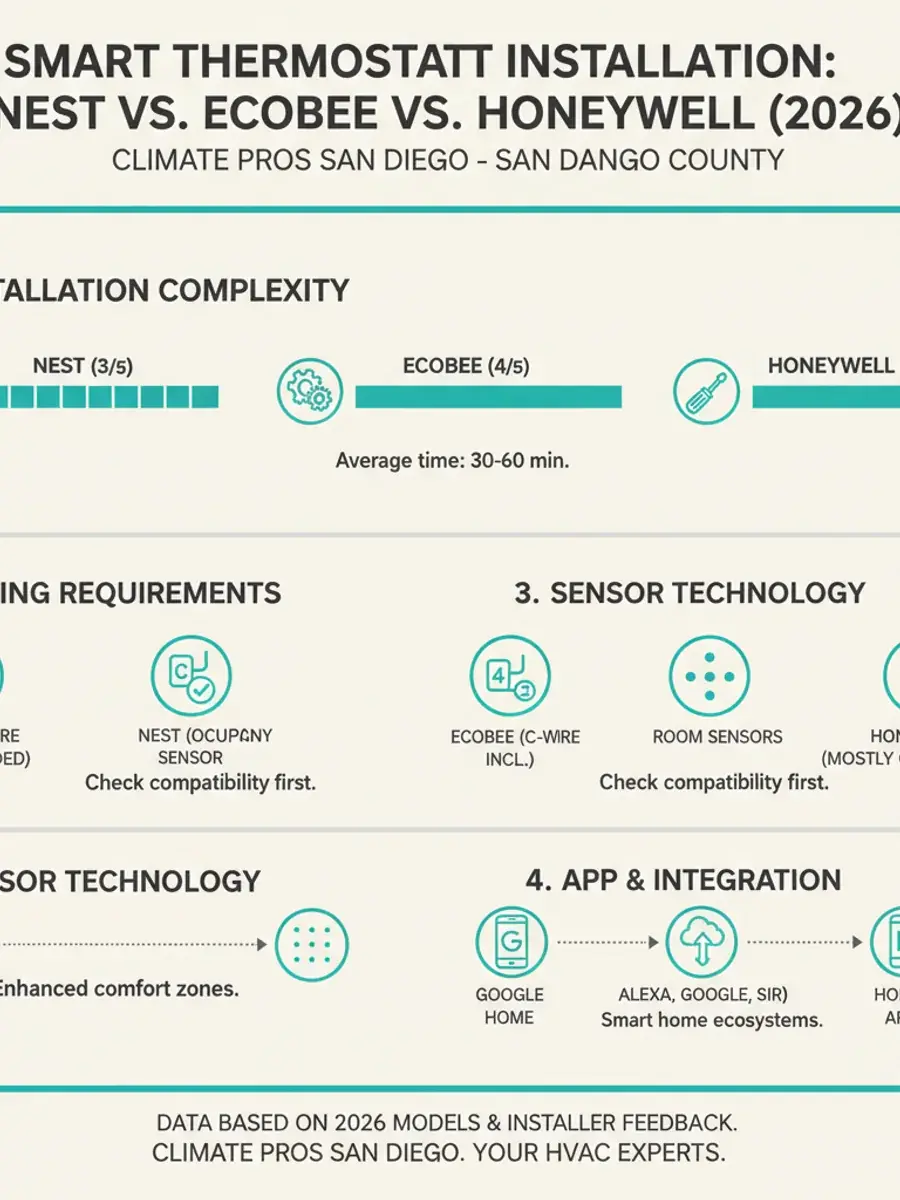
Home, away and sleeping settings
| Situation | What to decide |
|---|---|
| People are home | Choose comfort first, then test a small change while you can observe the result. |
| Everyone is away | Review the thermostat’s away schedule alongside pets, indoor conditions and equipment instructions. Avoid copying a setting intended for a different household. |
| People are sleeping | Use a setting that lets the occupants sleep comfortably. Check bedroom conditions rather than assuming the hallway matches. |
| A heat-sensitive person is home | Put their cooling needs ahead of the energy-saving schedule. Ask their clinician about individual precautions. |
| A heat wave or power outage affects the home | Check current local heat guidance and arrange access to a cooled place if home cooling is inadequate. |
The CDC advises older adults to spend time in air-conditioned buildings during hot weather and warns against relying on a fan as the main cooling source when it is very hot. Its guidance does not prescribe the same thermostat number for every older adult. CDC heat guidance for older adults.
Measure savings without a percent-per-degree promise
A one-degree change does not guarantee a fixed percentage reduction in your whole SDG&E bill. That bill includes other electricity use and charges that a thermostat adjustment does not control.
Compare electricity use over periods with similar weather and occupancy. Note other changes, such as electric-vehicle charging or having guests. For time-of-use service, look at when the electricity was consumed as well as total kWh. One lower bill by itself does not establish that a new setting caused the reduction.
Our AC running-cost guide shows how measured power, operating hours and the applicable variable rate fit together. Use your current plan details instead of a fixed cents-per-kWh estimate copied from an older article.
Common questions
Is 78°F the right setting for everyone?
No. It is part of SDG&E’s health-permitting peak-period conservation guidance. Adjust for the occupants and conditions in the home rather than treating it as a medical or comfort requirement.
Will a smart thermostat pay for itself in one summer?
There is no dependable payback promise for every San Diego home. A schedule that fits your routine and rate plan may help, but the result depends on what changes from your current operation. Compare the equipment and installation quote with a realistic estimate based on your own use. Ask the matched company for fees in dollars.
Should I turn the temperature far down to cool faster?
Use the temperature you actually want and follow the equipment instructions. Thermostats and single-stage, staged and variable-capacity systems do not all control cooling in the same way. An unusually low setting is not a reliable shortcut or a substitute for diagnosing poor cooling.
What if the upstairs stays warm?
Record the room, time and conditions and ask a contractor to assess the cause. Do not assume a second thermostat or a new system is automatically the answer. See our HVAC zoning guide for questions to discuss.
When a schedule change is not enough
If the home cannot reach a comfortable temperature, or different rooms behave very differently, describe that problem when requesting service. Climate Pros SD connects homeowners with vetted local HVAC contractors. The matched company can confirm its diagnostic process, availability and fees.
Call (442) 777-6440, or visit AC repair and thermostat installation to choose the appropriate next step.