If your San Diego AC keeps tripping the breaker, the breaker is doing its job. Something downstream is pulling more current than the circuit is rated for, and the breaker is cutting power before the wire overheats or the compressor cooks. The fix is finding what’s causing the overdraw, not resetting the breaker again and again. Reset it more than twice in a day and you risk welding contactor contacts shut, frying the compressor, or starting a fire inside the disconnect box.
Below are the real causes ranked by how often they show up on San Diego service calls, with how to tell them apart before a tech ever shows up. Climate Pros SD matches you with licensed companies. We do not publish a repair menu. The matched pro sets the diagnostic fee and confirms it before the visit.
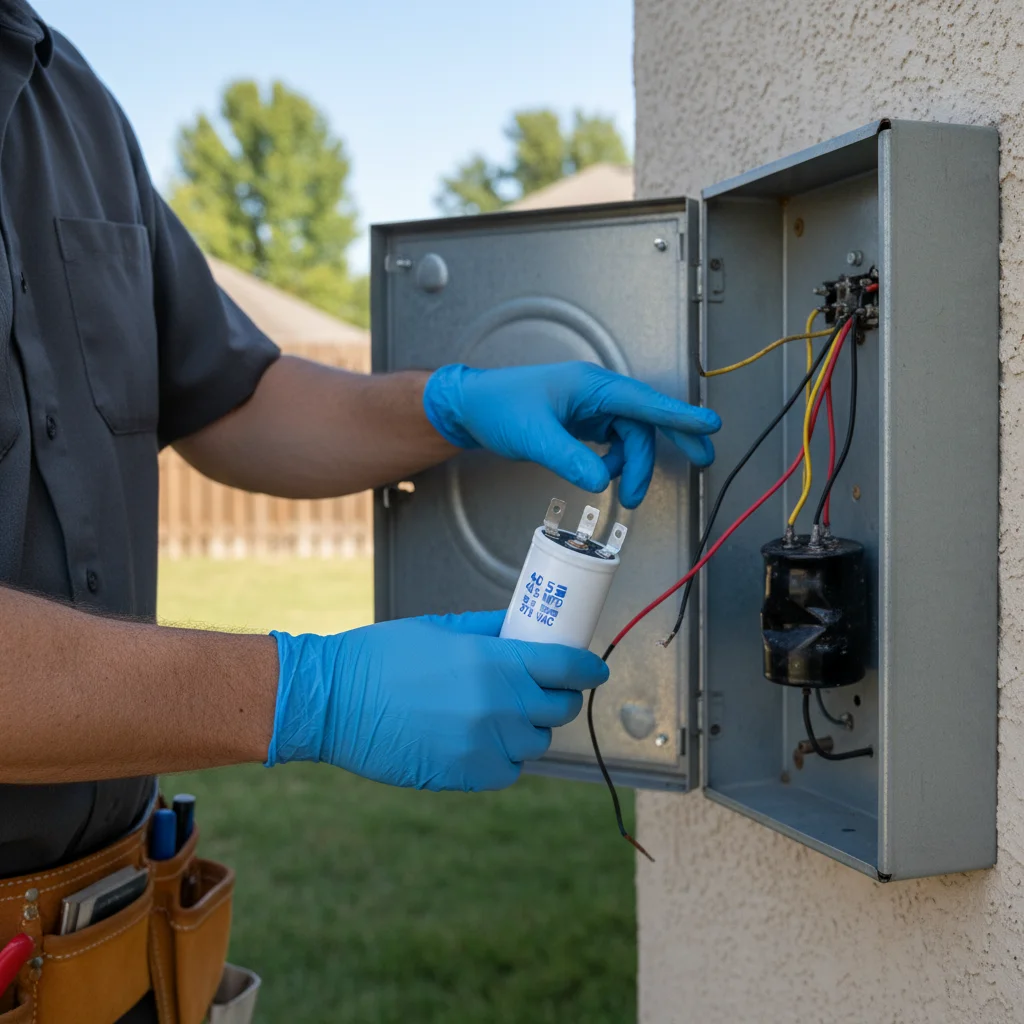
The five real causes, ranked by likelihood
1. Dirty condenser coil (most common in San Diego)
The condenser is the outdoor unit. Its job is to dump heat from inside your house into the outside air. When the coil is matted with cottonwood, dust, lawn-mower grass, or salt-air corrosion (huge issue from Coronado through Del Mar), the unit can’t shed heat fast enough. Pressure climbs. The compressor pulls more amps to keep going. The breaker trips, usually 10 to 30 minutes after startup on a hot afternoon.
How to tell: it runs fine first thing in the morning and trips in the afternoon, or trips faster on hotter days. The outdoor coil looks gray, brown, or visibly clogged when you peek through the top grille.
What to do: a garden-hose rinse (power off at the disconnect first) can buy time on surface dirt. It will not restore full performance on a heavily fouled coil. A licensed tech removes the top fan, applies coil cleaner, and rinses from the inside out. Ask for that as a named line, not a bundled guess.
2. Weak or failed run capacitor
The capacitor is a small cylindrical part that gives the compressor and fan motor the kick they need to start. When it weakens (and San Diego heat shortens capacitor life noticeably, especially in inland zones like El Cajon, Santee, and Escondido), the compressor draws huge amperage trying to start, and the breaker trips almost immediately. Often within seconds of the outdoor unit kicking on.
How to tell: you hear a brief hum or click from the outdoor unit, then silence, then the breaker trips. The fan may spin slow or not at all. Sometimes the capacitor visibly bulges on top.
What to ask: capacitor test first, then the named part if it failed. It is often a short visit when the part is on the truck. See our AC capacitor replacement guide for the sequence. Climate Pros SD does not publish a capacitor price.
3. Shorted or grounded compressor
This is the expensive one. The compressor’s internal motor windings can short to the casing after years of heat stress. Once that happens, it dead-shorts the circuit the instant power is applied. Breaker trips immediately, every time, no matter what.
How to tell: trips the instant you turn the breaker back on, even before the thermostat calls for cool. A tech will pull the wires off the compressor terminals, megger-test the windings to ground, and read a short. There is no fix that lasts. Compressor replacement on a 10+ year old unit usually means replacing the whole system.
What to ask: compressor swap as one bid, full system as the other, on the same visit. On a 10-plus-year unit, replacement often wins. Compare those quotes, not a blog menu. We covered that decision in AC replacement vs repair.
4. Oversized or wrong breaker (rare but worth checking)
If a previous owner or a sloppy installer swapped in a bigger breaker to stop nuisance trips, the breaker may now be undersized for what the wire can handle, or oversized for what the AC nameplate calls for. Either way it’s a code violation and a fire risk.
How to tell: check the AC’s data plate on the condenser. It lists a “Max Fuse / HACR Breaker” size, usually 30, 35, 40, 45, or 50 amps. The installed breaker should not exceed that number, and the wire gauge has to match. If the breaker exceeds the rating, that’s the problem and it needs to come back into spec.
What to ask: a licensed electrician, like the crew at Bright Pro Electric, to put the breaker back to nameplate and check whether the panel is at capacity. Worth doing right away, both for safety and because California Title 24 inspections will flag it on resale. That bid is electrical, not HVAC.
5. Wiring short or burnt disconnect
The disconnect box mounted on the wall next to your condenser is a common failure point in San Diego coastal homes. Salt air corrodes the lugs. Heat from inland sun bakes the insulation. After 12 to 20 years, a connection can arc, melt, or short across to the box itself.
How to tell: smell of burning plastic near the outdoor unit. Visible scorching inside the disconnect. Sometimes the breaker trips without the AC even calling for cool. This is a call-someone-now problem.
What to ask: disconnect replacement plus any damaged whip as named lines. If the short tracks back into the house, that is a separate electrical bid.
When breaker tripping means stop, do not reset
Reset the breaker once, using the proper AC reset sequence with the full 30-minute wait. If it holds, you bought yourself time to schedule a service call. If it trips again right away, leave it off. Don’t be the homeowner who reset a tripping breaker eight times and ended up replacing a compressor and a panel feeder.
The four warning signs that mean stop immediately:
- Smell of burning plastic, hot metal, or electrical ozone near the outdoor unit or panel
- Visible scorch marks on the breaker, disconnect, or any wiring
- Breaker won’t even stay reset (snaps right back to off)
- Lights flicker elsewhere in the house when the AC tries to start
In all four cases, leave the breaker off and call for service. An electrical fire costs more than any diagnostic.
Quick diagnostic sequence before you call
- Note when it trips. Immediately on startup, or after 10 to 30 minutes of running? Immediate points to capacitor or short. Delayed points to dirty coil or refrigerant issue.
- Inspect the outdoor coil. Take the cover off the top fan and look at the inside of the fins. Gray, brown, fuzzy? Coil cleaning.
- Look at the capacitor (after killing power at the disconnect, with the panel cover off). Bulged top or oily residue? Capacitor.
- Check the disconnect for scorch or melted plastic. Anything visible? Stop and call.
- Check the breaker amperage against the condenser data plate. Mismatch? Electrician.
Most San Diego AC trips trace to causes 1 or 2 above (coil or capacitor). Causes 3 through 5 are bigger but rarer. Knowing which one before the tech arrives helps you weigh repair versus replace honestly. The matched company quotes the visit; this brand does not.
Frequently asked questions
Is it safe to keep resetting a tripping AC breaker?
No. Once or twice to confirm the trip wasn’t a one-off is fine. Beyond that, you risk welding the contactor contacts shut, frying the compressor’s start winding, or starting a fire in the disconnect. If it trips twice in a row, leave it off and schedule service.
Why does my AC only trip the breaker on hot days?
Almost always a dirty condenser coil or low refrigerant. Both cause the compressor to work harder as outdoor temperature climbs. On a 72-degree morning the coil sheds heat fine. On a 95-degree afternoon in El Cajon it can’t keep up, head pressure spikes, amp draw spikes, breaker trips.
Can a bad thermostat trip the AC breaker?
Rarely. A thermostat can short-cycle the AC, which stresses the compressor and capacitor and can lead to a downstream trip, but the thermostat itself doesn’t pull enough current to trip a 30 or 40 amp circuit. If you’ve just replaced a thermostat and the AC is now tripping, double-check the C-wire and the low-voltage wiring at the air handler. A pinched 24V wire shorting to the chassis is the usual culprit.
How much does it cost to diagnose an AC tripping a breaker in San Diego?
Ask the matched licensed contractor for the diagnostic fee in dollars before they come out. Avoid anyone who quotes a repair over the phone without seeing the unit. A coil rinse and a shorted compressor are not the same ticket.
Can I clean the condenser coil myself to stop the trips?
You can rinse the outside fins with a garden hose (low pressure, never a pressure washer) after killing power at the disconnect. That handles surface dirt. It won’t reach the inside of the coil where heavy buildup sits, and it won’t address bent fins from salt corrosion. A proper coil cleaning involves removing the top fan, applying coil cleaner, and rinsing from the inside out. Coastal homes within five miles of the water often need that professional rinse every two to three years.
Is a shorted compressor always a full system replacement?
On units under 8 years old still under parts warranty, a compressor swap can make sense. Labor is still a real invoice even when parts are covered. Ask for that labor line in writing. On units 10+ years old, the math often favors a full system replacement because you also get the new coil, new line dryer, new warranty, and current SEER2 efficiency instead of sinking a large repair into aging equipment that will need other work soon.
What to do next
If your AC is tripping the breaker right now and you’ve ruled out the four “stop immediately” signs above, leave the breaker off and book a diagnostic. Call (442) 777-6440 to get matched with a licensed San Diego HVAC company from our network. Climate Pros SD does not dispatch a truck, does not offer a free diagnosis, and does not promise same-day arrival. The matched company confirms timing. Network coverage includes Oceanside through Imperial Beach.
Related reading: AC capacitor replacement in San Diego · AC short cycling causes · AC repair cost in San Diego 2026
Related services: AC repair, AC installation and HVAC maintenance. Not sure this is your symptom? Our HVAC symptom finder matches what the system is actually doing to the likely cause.