Most furnace trouble in Encinitas comes from disuse, not overuse. A unit here can sit idle for long stretches, and that stillness can be hard on parts.
That’s a different failure pattern than the one furnace guides written for cold climates describe. Nothing wore out. Something seized, corroded, or got nested in while the system sat.
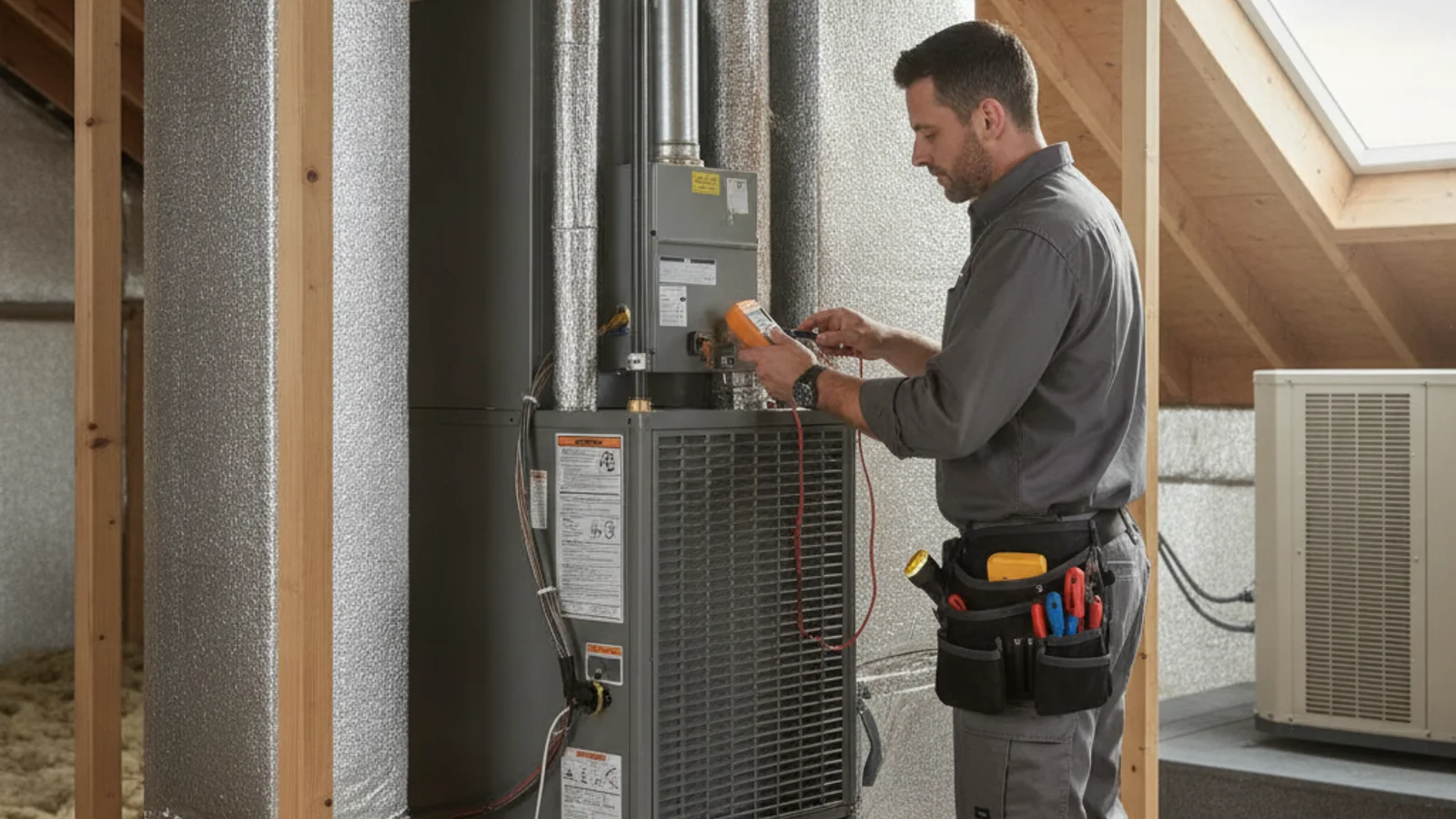
Encinitas furnace failures often come from sitting still
A coastal furnace that does not run for months can nest, rust, or lose ignition reliability. Describe the startup sequence before anyone orders a board. This is not a high-runtime mountain climate. Disuse is the local fact.
Checklist
- Record whether the inducer starts.
- Note any flashing LED through the sight window.
- Change the filter if it is packed with marine dust.
- See furnace maintenance in Encinitas.
- Verify C-20 status at CSLB before work.
Related: Encinitas HVAC and furnace repair.
What a long idle stretch does to a furnace
A furnace is mostly motors, bearings, and metal in a damp garage. All three degrade faster standing still than they do running.
The inducer motor is the clearest example. It’s the small fan that pulls combustion gases through the heat exchanger and out the flue, and it has to spin up before the burners will light. Its bearings hold a film of lubricant that spreads when the motor turns. After a long idle stretch, that film may not be evenly distributed. The first cold night, the motor either grinds, hums without turning, or spins slowly enough that the pressure switch never closes. No pressure switch, no ignition.
Capacitors sit in a similar spot. They hold a charge to start the blower and inducer, and they dry out on a shelf as readily as they do in service. A capacitor that tested fine last spring can read well below its rating by the time you need it.
Then there’s condensate. Coastal garages in Encinitas run humid through the marine layer months, and a high-efficiency furnace’s condensate trap holds water year round. A trap that sits full and unmoved grows biofilm, plugs, and trips the overflow switch the moment the furnace fires.
None of this is unusual or a sign the equipment was bad. It’s the ordinary cost of a heating system that spends most of the year as decoration.
The failures that show up on the first cold night
Encinitas furnace failures can appear together during a cold snap, when furnaces across the area start up again on the same evening.
Ignition is the leading complaint. A hot surface igniter is a brittle ceramic element, and thermal cycling over years leaves hairline cracks that finally open on a cold start. A flame sensor coated in oxide won’t confirm the flame, so the board shuts the gas off and may retry before a lockout. Both symptoms look identical from the hallway: the furnace tries, then quits. Our walkthrough on why a furnace won’t ignite covers how a tech separates those two.
Blowers are the second cluster. A blower wheel coated with dust can run out of balance, which sounds like a low rumble or a rattle that changes pitch as the fan ramps up. A failing blower motor squeals on startup then goes quiet. If the blower doesn’t move at all, the furnace will heat, hit its limit switch, and shut down, cycling every few minutes without warming anything. That pattern is worth reading up on in our piece on furnace blower motor repair.
Third is the limit and rollout switch family. These are safety devices, and when one opens, it’s telling you something else is wrong: restricted airflow, a blocked flue, or a cracked heat exchanger. Resetting one repeatedly is the single worst thing a homeowner can do with a gas appliance.
Salt air reaches some parts before others
Corrosion in Encinitas isn’t uniform, and knowing where it lands first helps you read a repair quote.
Homes west of Coast Highway 101 in Leucadia and along the bluffs in Cardiff take the heaviest salt load, and they take it as damp aerosol carried on the onshore breeze rather than as spray. That mist finds bare metal and electrical contacts. Inside a furnace cabinet, the parts that show it first are the sheet metal flue connections, the burner assembly, and any exposed screw terminal on the control board.
The flue matters most. A galvanized vent pipe that’s rusted through at a joint spills combustion gas into the garage instead of out the roof. That’s a repair, not a maintenance item, and it doesn’t get better with time.
Heat exchangers corrode too, though usually from the inside out rather than from the salt. What salt air does is speed up the exterior surface rust that makes a marginal exchanger fail inspection sooner. A tech should be putting a camera or a mirror on the exchanger during a repair call when the furnace’s age or condition raises concern.
Homes farther inland, out toward Olivenhain and the eastern edge of 92024, see far less of this. Same city, meaningfully different corrosion clock. A quote that treats an Olivenhain furnace and a Neptune Avenue furnace the same way isn’t looking closely. The same coastal split shows up in nearby furnace repair in Carlsbad.
Rodents, wiring, and what’s living in the ductwork
This one surprises people, and it’s common enough in North County that a good tech checks for it early.
An unused furnace cabinet is dark, sheltered, and slightly warm from the pilot or standing electronics. Roof rats and mice get into attics and garages through vent gaps and open soffits, and they nest against the blower housing or inside the return plenum. The damage is chewed low-voltage thermostat wire, chewed insulation on the blower harness, and nesting material packed against the burners.
The symptoms are strange enough to be diagnostic. A thermostat that goes blank intermittently often means a nicked common wire. A furnace that runs but smells sharply of burning on the first cycle usually means debris on a hot surface, and it should be shut off and inspected rather than run until the smell fades.
Ductwork under the older single-story homes off Requeza and Santa Fe Drive is worth a look at the same time. Some of that housing stock dates to earlier buildouts, when returns were undersized and duct runs were stapled to floor joists in shallow crawl spaces. Those runs are easy for rodents to reach and awkward for anyone else to inspect, so damage there can go unnoticed. Flex duct with rodent damage leaks heated air into a crawl space, which reads to a homeowner as a furnace that can’t keep up when the furnace is fine.
What to have ready before a pro comes out
Write down these three things before the visit.
First, the exact sequence. Does the furnace click and go quiet, click and light and then shut off, or make no sound at all? Note the ignition attempts. That sequence helps narrow the fault.
Second, the error code. If your furnace flashes a diagnostic code on an LED behind the lower access panel, photograph it. If there’s a legend inside the door, photograph that too.
Third, the model and serial number from the data plate, plus the age if you know it. That helps the pro check whether parts are still stocked and whether furnace repair is the sensible call for the unit’s condition.
While you’re getting quotes, run the contractor’s license number through the CSLB license check. California requires a C-20 license for HVAC work over $1,000 or work that needs a permit, and the lookup shows status, bond, and workers’ comp. Every HVAC pro in the network is licensed and insured, and you can verify any of them the same way.
When to call us
Anything involving gas, a flue, a safety switch that keeps tripping, or a suspected cracked heat exchanger belongs to a licensed technician, not a weekend fix. The same goes for a furnace that’s been sitting through Encinitas winters without a look inside. Call us at (442) 777-6440 and we will match you with a licensed local pro.