For the full San Diego HVAC picture (system types, costs, rebates, contractor vetting), see our complete guide to San Diego HVAC in 2026. This post is the dedicated zone-by-zone failure-mode deep-dive.

San Diego HVAC systems fail differently depending on where the house sits. Within 30 miles, the climate shifts from salt-soaked marine air at Coronado to 100-degree valley heat in Ramona. Each zone wears down a different part of the system first. Coastal homes lose condensers to corrosion. Inland homes burn out compressors from runtime. Knowing which failure mode is likely in your zip code makes repair decisions faster and cheaper.

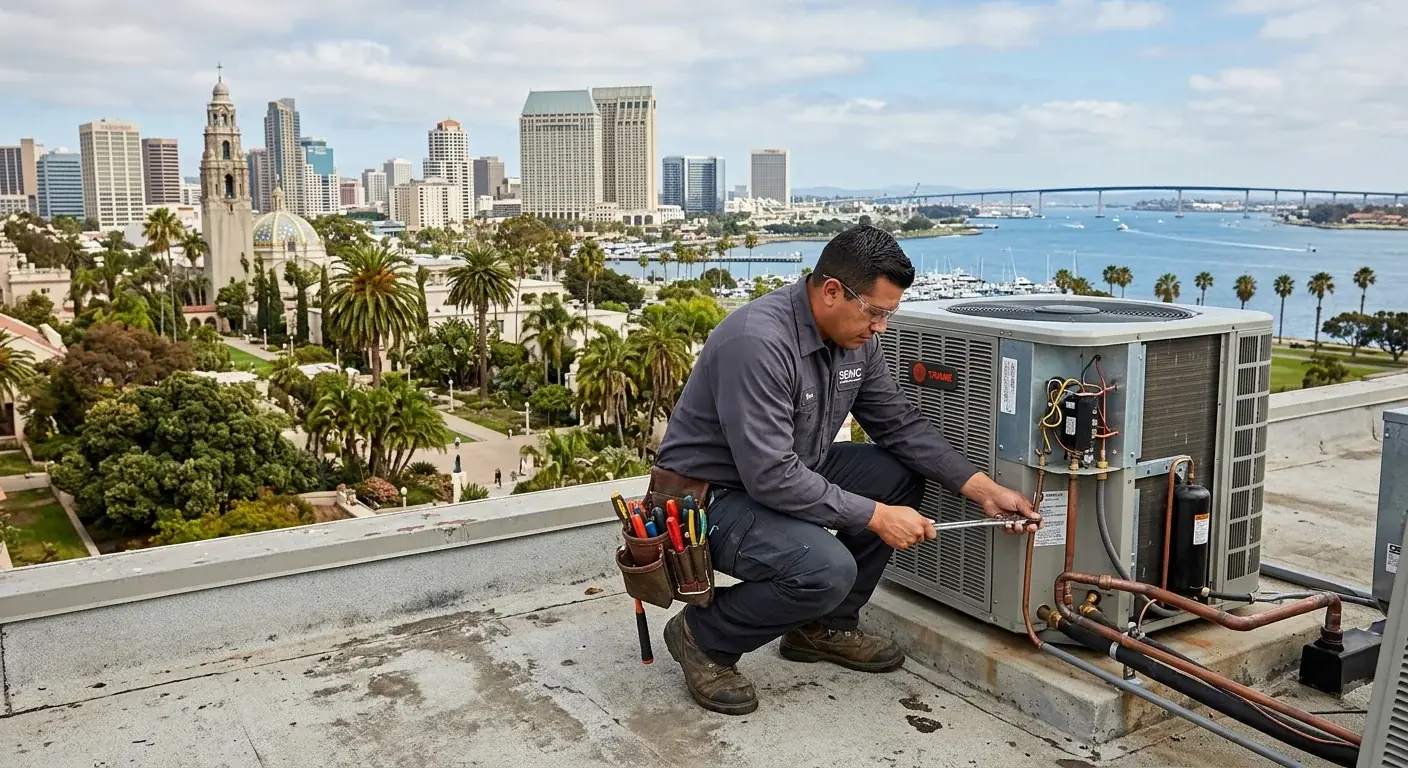
San Diego skyline from Balboa Park with coastal and inland zones visible

The 4 climate zones that matter for HVAC

San Diego County splits into four working zones for HVAC. These aren’t official California Building Climate Zones (the state uses Zone 7 for coastal SD and Zone 10 for inland), but they’re the practical lines that show up in failure data when you sort repair calls by zip code.

Coastal zone runs from the ocean to about 3 miles inland. Coronado (92118), Imperial Beach (91932), Ocean Beach (92107), La Jolla (92037), Del Mar (92014), Encinitas (92024), and Carlsbad (92008) sit here. Average high in August: 75 to 78 degrees. Marine layer dominates June and July. Salt air is the constant.

Central zone covers most of the city proper. Hillcrest, North Park, Kensington, Linda Vista, Mission Valley, Clairemont, Tierrasanta. Average August high: 79 to 82. Less salt, less heat than inland, balanced wear pattern.

Inland zone sits east of the I-15 and north of the I-8. Scripps Ranch (92131), Rancho Bernardo (92127), Poway (92064), San Marcos (92069), Vista (92084), Escondido west side (92025). August highs: 88 to 94. Compressors run hard.

Valley zone is the eastern and northern county: El Cajon (92020, 92021), Santee (92071), Lakeside (92040), Ramona (92065), Alpine (91901), Escondido east (92027), Fallbrook (92028). August highs: 92 to 102. This is where systems actually die from heat, not just wear.

The breakdown matters because a $400 capacitor replacement in Coronado is a different repair from a $400 capacitor replacement in Ramona. The Coronado one is usually about salt corrosion of the contacts. The Ramona one is usually about heat-cycling fatigue from a unit running 10 hours a day. Same part, different root cause, different second-failure timing.

Coastal zone: salt corrosion is the killer

If you live within 3 miles of the Pacific, every metal part of your outdoor condenser is in a slow-motion battle with sodium chloride aerosol. The marine layer carries microscopic salt particles inland on the prevailing southwest wind, and they settle on the condenser coil, the contactor, the fan motor housing, and the copper line set.

The failure pattern in coastal zips looks like this:

  • Years 1-4: cosmetic only. Fin discoloration. Light surface oxidation on the cabinet.
  • Years 5-7: electrical contacts start pitting. Contactor chatter on startup. Intermittent no-cool calls. Capacitor failures jump because the contactor isn’t switching cleanly.
  • Years 8-10: condenser coil fin loss begins. Heat transfer efficiency drops 10 to 20 percent. The system runs longer to hit setpoint, which accelerates the next failure.
  • Years 10-12: coil leaks. Refrigerant loss. Compressor damage from low-charge operation.

A coastal homeowner who never washes the condenser typically sees the first real failure (contactor or capacitor) at year 6 instead of year 10. The fix isn’t expensive on its own, but the underlying corrosion shortens the runway for everything else.

Coastal repair cost ranges (San Diego, 2026):

RepairCoastal cost rangeWhy it’s higher here
Capacitor replacement$185 to $425Contactor often needs replacement at the same visit
Contactor replacement$215 to $475Pitted contacts are common, not rare
Condenser coil cleaning (proper, with coil cleaner)$225 to $385Recommended annually instead of biennially
Fan motor replacement$475 to $895Bearings corrode faster
Full condenser replacement$2,800 to $4,800Often needed at year 10-12 instead of 15+

The single best thing a coastal homeowner can do is rinse the condenser with a garden hose monthly during summer. Not pressure wash, just a gentle rinse to dilute the salt deposits before they cure into the fins. This single habit extends coastal HVAC life by 2 to 4 years.

For deeper coastal-specific tactics, see our guide on AC repair in Encinitas and AC repair in Coronado.

Central zone: the balanced wear pattern

Central San Diego sees the least dramatic failure mode. Salt exposure is muted (the ocean is still close enough to matter, but the marine layer thins by the time it crosses Pacific Beach inland). Heat load is moderate. Systems here tend to wear evenly across components.

The dominant failure pattern is age-related, not environment-related. Most central-zone repair calls fall into these buckets:

  • Capacitor failure at year 8-12. Standard fatigue, not corrosion-driven.
  • Refrigerant loss at year 10-15. Usually from a slow leak at a brazed joint or a Schrader valve, not from coil pitting.
  • Blower motor bearings at year 12-18. Usage-hour driven.
  • Thermostat or control board issues anytime. Lightning and power flicker matter more here than corrosion.

Central-zone homes often outlast their HVAC manufacturer warranty by a wide margin if the unit is reasonably maintained. A central San Diego HVAC system installed in 2014 should still be running fine in 2026 with two service visits behind it. If it’s not, the repair-or-replace math leans toward repair until at least year 13.

Central repair cost ranges:

RepairCentral cost range
Capacitor replacement$165 to $385
Refrigerant recharge (R-410A, 2-3 lbs)$295 to $625
Leak detection and seal$385 to $895
Blower motor$625 to $1,250
Thermostat install (smart)$295 to $525

If you’re in central San Diego and your unit is under 12 years old, almost every failure is worth repairing. The replace-instead-of-repair conversation realistically starts at year 14.

Inland zone: compressor runtime is the enemy

Inland San Diego is where HVAC systems start working for their living. From late June through early October, a Scripps Ranch or Poway condenser commonly runs 8 to 12 hours per day. Compare that to a Coronado unit that might run 2 to 3 hours on the same calendar day.

That runtime ratio is everything. Compressor lifespan is measured in operating hours, not calendar years. A compressor rated for 50,000 hours of operation dies after 13 years at 11 hours per day. The same compressor in Coronado at 2 hours per day lasts 70 years on paper, which means it’ll die from corrosion or refrigerant issues long before runtime.

Failure pattern in inland zips:

  • Years 4-6: first capacitor failure. Heat cycling fatigues the capacitor faster.
  • Years 6-8: refrigerant slow leaks become common. Heat expansion stresses brazed joints, vibration loosens flare fittings.
  • Years 8-11: compressor short-cycling. Often misdiagnosed as a refrigerant problem when the real issue is a failing run capacitor or a dirty coil reducing heat rejection.
  • Years 10-14: compressor failure. This is the expensive one.

Inland homeowners should expect their HVAC system to need real money put into it in years 8 through 12. The two biggest preventable failures are dirty condenser coils (reduces heat rejection, raises head pressure, kills compressors) and undersized or restricted ductwork (forces longer runtimes than necessary).

If your inland AC system is running constantly during a heat wave and your house still won’t cool below 78, the system isn’t broken yet, but it’s about to be. The runtime that’s failing to cool you is the same runtime that’s pushing the compressor toward end of life. That’s the call to make for a load calculation, not a repair.

Inland repair cost ranges:

RepairInland cost range
Capacitor replacement$185 to $425
Refrigerant recharge + leak repair$585 to $1,485
Hard-start kit install$295 to $475
Compressor replacement$1,850 to $3,950
Full condenser replacement$3,200 to $5,400

For inland specifics, see AC repair in Escondido and HVAC repair in El Cajon.

Valley zone: extreme heat shortens everything

Valley zips see real heat. Ramona and Alpine routinely hit 100 degrees in August and September. El Cajon and Santee can run 4 to 8 consecutive days above 95. This isn’t San Diego’s reputation, but it’s the reality 20 miles east of downtown.

Valley HVAC systems work harder than the same system would in any other zone, and they age faster. A 16 SEER unit in Coronado has effectively unlimited margin. The same unit in Ramona is at its capacity ceiling on the hottest days of the year. When the system is running flat-out at design conditions, every component is at maximum stress: highest head pressure, hottest discharge temperatures, longest runtime, most thermal cycling.

Failure pattern in valley zips:

  • Years 3-5: capacitor failures start. Often multiple over the lifespan.
  • Years 5-7: refrigerant issues. Heat expansion is severe; joints fatigue.
  • Years 6-9: condenser fan motor failure. Bearings run hot, fail early.
  • Years 8-12: compressor failure. Sometimes earlier if the unit is undersized for the actual load.

The most common diagnostic mistake in valley homes is a tech reading “system not cooling enough” as a refrigerant or compressor issue when the real problem is the system is properly charged but undersized. A 3-ton system in a 2,400 square foot Ramona home is undersized at design conditions. It’ll run continuously, fail to cool below 78, and burn itself out in 10 years instead of 15.

For valley homes, repair-or-replace decisions should account for sizing, not just age. If a 12-year-old undersized unit needs a $2,000 compressor, replacing with a properly sized 4-ton system is the better dollar. If a 12-year-old correctly sized unit needs the same compressor, repair is fine.

Valley repair cost ranges:

RepairValley cost range
Capacitor replacement$185 to $445
Refrigerant recharge + leak repair$625 to $1,685
Fan motor replacement$525 to $985
Compressor replacement$1,950 to $4,250
Full system replacement (3-ton, properly sized upgrade)$9,800 to $15,500

Decision framework: repair or replace, by zone

Use this table when you’ve got a repair quote in hand and you’re trying to decide if the money is worth spending.

ZoneSystem ageRepair quoteDecision
CoastalUnder 8 yearsAnyRepair
Coastal8-12 yearsUnder $1,200Repair
Coastal8-12 years$1,200 to $2,500Get a second opinion and a replacement quote
CoastalOver 12 yearsOver $1,500Replace, factor corrosion-resistant coil
CentralUnder 12 yearsAnyRepair
Central12-15 yearsUnder $1,800Repair
CentralOver 15 yearsOver $2,000Replace
InlandUnder 8 yearsAnyRepair
Inland8-12 yearsUnder $1,500Repair
Inland8-12 yearsOver $2,500Replace, verify sizing first
InlandOver 12 yearsOver $1,800Replace
ValleyUnder 7 yearsAnyRepair
Valley7-10 yearsUnder $1,200Repair
Valley7-10 yearsOver $2,000Replace, verify sizing first
ValleyOver 10 yearsOver $1,500Replace

The sizing check matters more in valley and inland zones than people expect. A Manual J load calculation before replacement catches the most common San Diego sizing mistake: same-tonnage replacement when the original unit was undersized.

When same-day repair matters

A San Diego HVAC failure in February is rarely an emergency. A failure in August in El Cajon at 1 p.m. is. The cost of waiting 3 days for a repair in valley summer is real: indoor temperatures hitting 90 by mid-afternoon, sleep disruption, and risk for elderly residents.

For coastal and central zones, scheduling repair within 24 to 48 hours is usually fine. For inland and valley zones during a heat event, same-day emergency HVAC service is worth the dispatch fee. The math: a $150 emergency fee on top of a $400 repair beats a hotel night for a family of four, and it beats the spoilage and stress.

Frequently asked questions

What’s the average HVAC repair cost in San Diego in 2026?

For a typical service call with one mid-grade repair (capacitor, contactor, or thermostat), $285 to $525 covers it across most zones. Larger repairs (refrigerant work, blower motors) run $475 to $1,485. Compressor replacements run $1,850 to $4,250 depending on tonnage and zone. See our AC repair cost guide for 2026 for a more complete breakdown.

Does the marine layer really damage HVAC systems?

Yes, but the damage is mechanical, not magical. Salt aerosol in the marine layer settles on metal surfaces and creates galvanic corrosion at electrical contacts and aluminum-copper interfaces. Coastal homes within 3 miles of the ocean see contactor and capacitor failures about 30 percent earlier than inland homes. Monthly rinses of the condenser cabinet measurably extend life.

Why does my Ramona AC run all day and still not cool the house?

Two possibilities. Either the system is properly sized but the load is real (104 degrees outside is at or beyond the design condition for many SD systems), or the system is undersized for the actual square footage. A Manual J load calculation answers it definitively. If sizing checks out, look at duct losses, attic insulation, and solar gain on west-facing windows before assuming the unit is failing.

Are repair costs really different by zip code in San Diego?

Labor rates are similar across the county (most companies charge a flat dispatch fee plus per-hour labor regardless of location), but the repair severity varies. The same capacitor failure in Coronado usually means an additional contactor needs replacement at the same visit. The same failure in central San Diego usually doesn’t. So average ticket size differs even when hourly rates don’t.

How often should I service my HVAC system in San Diego?

Coastal: twice yearly (spring and fall) with a condenser rinse monthly during summer. Central: annually. Inland: twice yearly, especially before summer. Valley: twice yearly minimum, with coil cleaning every visit. See our AC tune-up cost guide for what a real maintenance visit includes.

Is it cheaper to repair or replace a 12-year-old HVAC system in San Diego?

The break-even rule of thumb: if the repair quote exceeds 30 percent of replacement cost AND the system is over 10 years old, replacement is usually the better dollar. The exception is central-zone systems, where 12-year-old units often have 5-7 years of clean life left. Inland and valley systems at 12 years are closer to end of life because they’ve accumulated more operating hours.

Get the right repair for your zone

If you’re not sure which failure mode you’re looking at, the technician dispatched to your home should be able to identify the root cause, not just swap the failed part. A good repair diagnosis names the underlying environmental cause (salt corrosion, runtime fatigue, sizing issue, refrigerant leak source) and explains what’s likely next, not just what’s failed now.

Climate Pros SD dispatches to all four zones in San Diego County. Call (442) 777-6440 for a same-day estimate, or browse our AC repair service page or emergency HVAC service to start with a specific concern.